
train の英語での意味
traintrain1 /treɪn/ noun [countable] 
 すべての翻訳を見る1
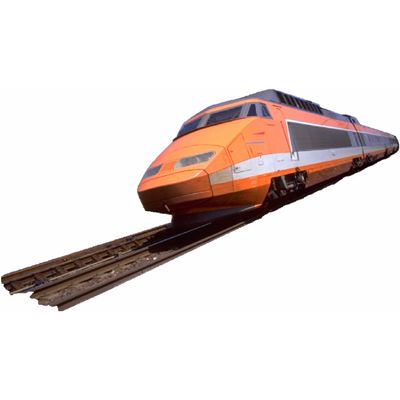 railway a set of several carriages that are connected to each other and pulled along a railway line by an engine機関車に引かれて鉄道路線上を走る複数の連結車両;列車train to
 the train to Munichミュンヘン行きの列車by train We went all the way to Inverness by train.私たちは列車でインヴァネスまでずっと行った。 → boat train2series a train of something a series of events or actions that are related互いに関連した一連の出来事や行動: The decision set off a train of events which led to his resignation.その決断が一連の出来事を引き起こし、彼の辞任につながった。3train of thought a related series of thoughts that are developing in your mind頭の中で展開していく一連の関連した思考: The phone interrupted my train of thought.電話が私の思考の流れを遮った。 I’ve lost my train of thought.考えの流れを見失ってしまった。4bring something in its train formalフォーマル if an action or event brings something in its train, that thing happens as a result of itある行動や出来事がその後に何かをもたらす場合、それは結果として生じるということ: a decision that brought disaster in its train災禍をもたらした決断5set something in train British English formalフォーマル to make a process start happeningあるプロセスを開始させる: Plans to modernize have been set in train.近代化計画が始動した。6people/animals a long line of moving people, animals, or vehicles移動する人、動物、または乗り物の長い列: a camel trainラクダの隊列7dress a part of a long dress that spreads out over the ground behind the person wearing it着用者の後ろで地面に広がる長いドレスの部分;トレーン: a wedding dress with a long train長いトレーンのついたウェディングドレス8servants a group of servants or officers following an important person, especially in the past特に過去において重要人物に従う従者や家臣の一団;随行団GRAMMAR: Patterns with train文法:trainを使った表現パターン• You usually say get on a train: · I got on the train at Bristol.• 通常はget on a trainと言います:· 私はブリストルで列車に乗った。• You usually say get off a train: · She got off the train in Geneva.• 通常はget off a trainと言います:· 彼女はジュネーブで列車を降りた。• You say that someone is on a train: · There were a lot of tourists on the train.• 誰かが列車に乗っているときはon a trainと言います:· 列車にはたくさんの観光客がいた。• You go somewhere by train: · He travels to work by train. ✗Don’t say: go by the train | travel by the train• 列車でどこかへ行くときはby trainと言います:· 彼は電車で通勤している。✗次のようには言いません:go by the train | travel by the train• You often talk about the train: · It’s easier if you take the train.• the trainということも多いです:· 列車を使った方が楽です。COLLOCATIONSコロケーションverbs動詞take/get a train· I took the first train home.私は始発の列車で家に帰った。catch a train· He was in a hurry to catch a train.彼は急いで列車に乗ろうとしていた。go by/travel by train· We decided to go by train.私たちは列車で行くことにした。get on/board a train· At Stoke, another passenger boarded the train.ストークで、別の乗客が列車に乗り込んだ。get off a train· He got off the train at Flushing.彼はフラッシングで列車を降りた。wait for a train· She sat on the railway platform for half an hour, waiting for a train.彼女はホームに半時間座って列車を待った。miss a train (=be too late to get on a train)· I just missed the last train.終電に乗り遅れてしまった。trains run (=take people from one place to another at fixed times)· Trains run from two main London stations, Victoria and Charing Cross, every hour.列車はロンドンの二大主要駅、ヴィクトリアとチャリング・クロスから毎時間運行している。a train arrives· The train arrived on time.列車は定刻に到着した。a train leaves/departs· Trains depart from Rugby at half-hourly intervals until 4.00 pm.ラグビーからの列車は午後4時まで30分間隔で出発する。a train pulls into/out of a station· The train pulled into Euston station and I got off.列車がユーストン駅に入り、私は降りた。a train derails/is derailed (=comes off the rails)· Most of the passengers escaped injury when their train was derailed.列車が脱線したとき、乗客のほとんどは怪我を免れた。ADJECTIVES/NOUN + train形容詞/名詞 + traina freight/goods train· a freight train carrying hazardous chemicals危険な化学物質を運ぶ貨物列車a passenger train· a passenger train bound for Genevaジュネーブ行きの旅客列車a commuter train (=a train that people going to work use)· a crash involving two crowded commuter trains混雑した通勤列車二本が関係する衝突事故an express train/a fast train (=one that does not stop at many places)· He boarded the express train to London.彼はロンドン行きの急行列車に乗り込んだ。a slow train (also a stopping train British English) (=one that stops at a lot of places)· We got on the stopping train by mistake and it took hours to get home.間違えて各駅停車に乗ってしまい、家に帰るのに何時間もかかった。a steam train· Railway enthusiasts have the opportunity to take a nostalgic trip on a steam train.鉄道愛好家は蒸気機関車に乗って郷愁あふれる旅を楽しむ機会がある。a tube/underground train (=one that runs under London)· The condition of many tube trains is a disgrace.多くの地下鉄車両の状態は恥ずかしいほどだ。train + NOUNtrain + 名詞a train journey British English, a train trip American English· They were not looking forward to the long train journey.彼らは長い列車の旅を楽しみにしていなかった。a train fare· How much is the train fare to Derby?ダービーまでの列車の運賃はいくらですか?a train driver· The train driver apologized for the late departure.列車の運転士は出発の遅延を謝罪した。a train crash (also a train wreck American English)· Ten people were killed in the train crash.列車事故で10人が死亡した。
すべての翻訳を見る1railway a set of several carriages that are connected to each other and pulled along a railway line by an engine機関車に引かれて鉄道路線上を走る複数の連結車両;列車train to the train to Munichミュンヘン行きの列車by train We went all the way to Inverness by train.私たちは列車でインヴァネスまでずっと行った。 → boat train2series a train of something a series of events or actions that are related互いに関連した一連の出来事や行動: The decision set off a train of events which led to his resignation.その決断が一連の出来事を引き起こし、彼の辞任につながった。3train of thought a related series of thoughts that are developing in your mind頭の中で展開していく一連の関連した思考: The phone interrupted my train of thought.電話が私の思考の流れを遮った。 I’ve lost my train of thought.考えの流れを見失ってしまった。4bring something in its train formalフォーマル if an action or event brings something in its train, that thing happens as a result of itある行動や出来事がその後に何かをもたらす場合、それは結果として生じるということ: a decision that brought disaster in its train災禍をもたらした決断5set something in train British English formalフォーマル to make a process start happeningあるプロセスを開始させる: Plans to modernize have been set in train.近代化計画が始動した。6people/animals a long line of moving people, animals, or vehicles移動する人、動物、または乗り物の長い列: a camel trainラクダの隊列7dress a part of a long dress that spreads out over the ground behind the person wearing it着用者の後ろで地面に広がる長いドレスの部分;トレーン: a wedding dress with a long train長いトレーンのついたウェディングドレス8servants a group of servants or officers following an important person, especially in the past特に過去において重要人物に従う従者や家臣の一団;随行団GRAMMAR: Patterns with train文法:trainを使った表現パターン• You usually say get on a train: · I got on the train at Bristol.• 通常はget on a trainと言います:· 私はブリストルで列車に乗った。• You usually say get off a train: · She got off the train in Geneva.• 通常はget off a trainと言います:· 彼女はジュネーブで列車を降りた。• You say that someone is on a train: · There were a lot of tourists on the train.• 誰かが列車に乗っているときはon a trainと言います:· 列車にはたくさんの観光客がいた。• You go somewhere by train: · He travels to work by train. ✗Don’t say: go by the train | travel by the train• 列車でどこかへ行くときはby trainと言います:· 彼は電車で通勤している。✗次のようには言いません:go by the train | travel by the train• You often talk about the train: · It’s easier if you take the train.• the trainということも多いです:· 列車を使った方が楽です。COLLOCATIONSコロケーションverbs動詞take/get a train· I took the first train home.私は始発の列車で家に帰った。catch a train· He was in a hurry to catch a train.彼は急いで列車に乗ろうとしていた。go by/travel by train· We decided to go by train.私たちは列車で行くことにした。get on/board a train· At Stoke, another passenger boarded the train.ストークで、別の乗客が列車に乗り込んだ。get off a train· He got off the train at Flushing.彼はフラッシングで列車を降りた。wait for a train· She sat on the railway platform for half an hour, waiting for a train.彼女はホームに半時間座って列車を待った。miss a train (=be too late to get on a train)· I just missed the last train.終電に乗り遅れてしまった。trains run (=take people from one place to another at fixed times)· Trains run from two main London stations, Victoria and Charing Cross, every hour.列車はロンドンの二大主要駅、ヴィクトリアとチャリング・クロスから毎時間運行している。a train arrives· The train arrived on time.列車は定刻に到着した。a train leaves/departs· Trains depart from Rugby at half-hourly intervals until 4.00 pm.ラグビーからの列車は午後4時まで30分間隔で出発する。a train pulls into/out of a station· The train pulled into Euston station and I got off.列車がユーストン駅に入り、私は降りた。a train derails/is derailed (=comes off the rails)· Most of the passengers escaped injury when their train was derailed.列車が脱線したとき、乗客のほとんどは怪我を免れた。ADJECTIVES/NOUN + train形容詞/名詞 + traina freight/goods train· a freight train carrying hazardous chemicals危険な化学物質を運ぶ貨物列車a passenger train· a passenger train bound for Genevaジュネーブ行きの旅客列車a commuter train (=a train that people going to work use)· a crash involving two crowded commuter trains混雑した通勤列車二本が関係する衝突事故an express train/a fast train (=one that does not stop at many places)· He boarded the express train to London.彼はロンドン行きの急行列車に乗り込んだ。a slow train (also a stopping train British English) (=one that stops at a lot of places)· We got on the stopping train by mistake and it took hours to get home.間違えて各駅停車に乗ってしまい、家に帰るのに何時間もかかった。a steam train· Railway enthusiasts have the opportunity to take a nostalgic trip on a steam train.鉄道愛好家は蒸気機関車に乗って郷愁あふれる旅を楽しむ機会がある。a tube/underground train (=one that runs under London)· The condition of many tube trains is a disgrace.多くの地下鉄車両の状態は恥ずかしいほどだ。train + NOUNtrain + 名詞a train journey British English, a train trip American English· They were not looking forward to the long train journey.彼らは長い列車の旅を楽しみにしていなかった。a train fare· How much is the train fare to Derby?ダービーまでの列車の運賃はいくらですか?a train driver· The train driver apologized for the late departure.列車の運転士は出発の遅延を謝罪した。a train crash (also a train wreck American English)· Ten people were killed in the train crash.列車事故で10人が死亡した。traintrain2 verb 1teach somebody [intransitive, transitive] to teach someone the skills of a particular job or activity, or to be taught these skills特定の仕事や活動に必要なスキルを人に教える、またはそれらのスキルを習得するtrain somebody in something All staff will be trained in customer service skills.全スタッフが顧客サービスのスキルについて研修を受ける。train to do something She’s training to be a doctor.彼女は医師になるための訓練を受けている。train somebody to do something Employees are trained to deal with emergency situations.従業員は緊急事態に対処するための訓練を受けている。train as Nadia trained as a singer.ナディアは歌手として訓練を受けた。 a highly trained workforce高度に訓練された労働力 Trained staff will be available to deal with your queries.研修を受けたスタッフがお問い合わせに対応いたします。► see thesaurus at learn, teach2teach an animal [transitive] to teach an animal to do something or to behave correctly動物に何かをするよう、または正しく行動するよう教える: a well-trained puppyよく訓練された子犬train something to do something These dogs are trained to detect drugs.これらの犬は麻薬を探知するよう訓練されている。3prepare for sport [intransitive, transitive] to prepare for a sports event or tell someone how to prepare for it, especially by exercising特に運動を通じてスポーツ競技に備える、またはその準備方法を他者に指導するtrain for Brenda spends two hours a day training for the marathon.ブレンダは毎日2時間マラソンのためにトレーニングをしている。► see thesaurus at practise4aim something [transitive] to aim something such as a gun or camera at someone or something銃やカメラなどを人や物に向けるtrain something on/at somebody/something She trained her binoculars on the bird.彼女は双眼鏡をその鳥に向けた。5develop something [transitive] to develop and improve a natural ability or quality生まれつきの能力や資質を伸ばして磨く: You can train your mind to relax.心をリラックスさせるよう鍛えることができる。 To the trained eye the difference between these flowers is obvious (=the difference is clear to someone who has developed skills to notice something).訓練された目には、これらの花の違いは明らかだ(=何かを見分けるスキルを身につけた人には違いが明白である)。6plant [transitive] to make a plant grow in a particular direction by bending, cutting, or tying it曲げたり切ったり縛ったりして植物を特定の方向に育てる
1teach somebody [intransitive, transitive] to teach someone the skills of a particular job or activity, or to be taught these skills特定の仕事や活動に必要なスキルを人に教える、またはそれらのスキルを習得するtrain somebody in something All staff will be trained in customer service skills.全スタッフが顧客サービスのスキルについて研修を受ける。train to do something She’s training to be a doctor.彼女は医師になるための訓練を受けている。train somebody to do something Employees are trained to deal with emergency situations.従業員は緊急事態に対処するための訓練を受けている。train as Nadia trained as a singer.ナディアは歌手として訓練を受けた。 a highly trained workforce高度に訓練された労働力 Trained staff will be available to deal with your queries.研修を受けたスタッフがお問い合わせに対応いたします。► see thesaurus at learn, teach2teach an animal [transitive] to teach an animal to do something or to behave correctly動物に何かをするよう、または正しく行動するよう教える: a well-trained puppyよく訓練された子犬train something to do something These dogs are trained to detect drugs.これらの犬は麻薬を探知するよう訓練されている。3prepare for sport [intransitive, transitive] to prepare for a sports event or tell someone how to prepare for it, especially by exercising特に運動を通じてスポーツ競技に備える、またはその準備方法を他者に指導するtrain for Brenda spends two hours a day training for the marathon.ブレンダは毎日2時間マラソンのためにトレーニングをしている。► see thesaurus at practise4aim something [transitive] to aim something such as a gun or camera at someone or something銃やカメラなどを人や物に向けるtrain something on/at somebody/something She trained her binoculars on the bird.彼女は双眼鏡をその鳥に向けた。5develop something [transitive] to develop and improve a natural ability or quality生まれつきの能力や資質を伸ばして磨く: You can train your mind to relax.心をリラックスさせるよう鍛えることができる。 To the trained eye the difference between these flowers is obvious (=the difference is clear to someone who has developed skills to notice something).訓練された目には、これらの花の違いは明らかだ(=何かを見分けるスキルを身につけた人には違いが明白である)。6plant [transitive] to make a plant grow in a particular direction by bending, cutting, or tying it曲げたり切ったり縛ったりして植物を特定の方向に育てる