
traintrain1 /treɪn/ noun [countable] 
 1
1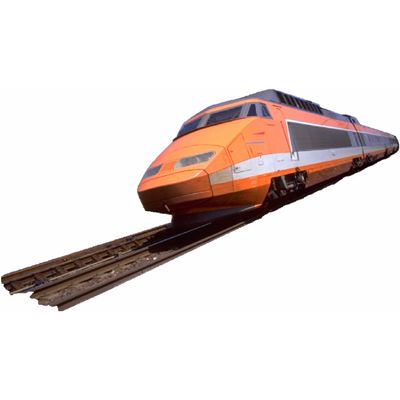 railway a set of several carriages that are connected to each other and pulled along a railway line by an engine由机车牵引、沿铁路线行驶的若干节相互连接的车厢;列车conjunto de vagones conectados entre sí y arrastrados por una locomotora a lo largo de una vía de ferrocarrilconjunto de vagões conectados entre si e puxados por uma locomotiva ao longo de uma linha ferroviária機関車に引かれて鉄道路線上を走る複数の連結車両;列車기관차에 의해 끌려 철도 노선을 달리는 여러 객차의 연결체; 기차train to
 the train to Munich开往慕尼黑的火车el tren a Múnicho trem para Muniqueミュンヘン行きの列車뮌헨행 기차by train We went all the way to Inverness by train.我们乘火车一路去了因弗内斯。Fuimos hasta Inverness en tren.Fomos até Inverness de trem.私たちは列車でインヴァネスまでずっと行った。우리는 기차를 타고 인버네스까지 갔다. → boat train2series a train of something a series of events or actions that are related一系列相互关联的事件或行动serie de eventos o acciones relacionados entre sísérie de eventos ou ações relacionados entre si互いに関連した一連の出来事や行動서로 관련된 일련의 사건이나 행동: The decision set off a train of events which led to his resignation.这个决定引发了一系列事件,最终导致他辞职。La decisión desencadenó una serie de eventos que lo llevaron a renunciar.A decisão desencadeou uma série de eventos que levaram à sua demissão.その決断が一連の出来事を引き起こし、彼の辞任につながった。그 결정이 일련의 사건을 촉발시켜 그의 사임으로 이어졌다.3train of thought a related series of thoughts that are developing in your mind在脑海中不断展开的一系列相互关联的思绪serie de pensamientos relacionados que se van desarrollando en la mentesérie de pensamentos relacionados que se desenvolvem na mente頭の中で展開していく一連の関連した思考마음속에서 이어지며 발전하는 일련의 관련 생각들: The phone interrupted my train of thought.电话打断了我的思路。El teléfono interrumpió mi hilo de pensamiento.O telefone interrompeu meu fio de raciocínio.電話が私の思考の流れを遮った。전화가 내 생각의 흐름을 끊었다. I’ve lost my train of thought.我的思路断了。He perdido el hilo de mis pensamientos.Perdi o fio do meu raciocínio.考えの流れを見失ってしまった。생각의 흐름을 잃어버렸다.4bring something in its train formal正式formalformalフォーマル격식체 if an action or event brings something in its train, that thing happens as a result of it若某一行动或事件带来某事,则该事是作为其结果而发生的si una acción o evento trae algo en su estela, eso ocurre como consecuencia de ellose uma ação ou evento traz algo em sua esteira, esse algo ocorre como resultado delaある行動や出来事がその後に何かをもたらす場合、それは結果として生じるということ어떤 행동이나 사건이 무언가를 뒤따라 오게 하면, 그 일은 그것의 결과로 일어나다: a decision that brought disaster in its train随之引发灾难的决定una decisión que trajo el desastre en su estelauma decisão que trouxe o desastre em sua esteira災禍をもたらした決断재앙을 뒤따라 일으킨 결정5set something in train British English formal正式formalformalフォーマル격식체 to make a process start happening使某一过程开始进行hacer que un proceso comience a ocurrirfazer com que um processo comece a acontecerあるプロセスを開始させる어떤 과정이 시작되게 하다: Plans to modernize have been set in train.现代化计划已经启动。Los planes de modernización han sido puestos en marcha.Os planos de modernização foram colocados em andamento.近代化計画が始動した。현대화 계획이 추진되기 시작했다.6people/animals a long line of moving people, animals, or vehicles移动中的人、动物或车辆的长列larga fila de personas, animales o vehículos en movimientolonga fila de pessoas, animais ou veículos em movimento移動する人、動物、または乗り物の長い列이동하는 사람, 동물 또는 차량의 긴 행렬: a camel train骆驼队una caravana de camellosuma caravana de camelosラクダの隊列낙타 행렬7dress a part of a long dress that spreads out over the ground behind the person wearing it长礼服拖在穿着者身后地面上的部分;裙摆parte de un vestido largo que se extiende por el suelo detrás de quien lo lleva; colaparte de um vestido longo que se estende pelo chão atrás de quem o veste; cauda着用者の後ろで地面に広がる長いドレスの部分;トレーン착용자 뒤로 바닥에 펼쳐지는 긴 드레스의 부분; 트레인: a wedding dress with a long train拖着长裙摆的婚纱un vestido de novia con una larga colaum vestido de noiva com uma longa cauda長いトレーンのついたウェディングドレス긴 트레인이 달린 웨딩드레스8servants a group of servants or officers following an important person, especially in the past尤指旧时随从于重要人物的一群仆从或随员;随从grupo de sirvientes u oficiales que acompañaban a una persona importante, especialmente en el pasado; séquitogrupo de servos ou oficiais que seguiam uma pessoa importante, especialmente no passado; séquito特に過去において重要人物に従う従者や家臣の一団;随行団특히 과거에 중요한 인물을 따르던 하인이나 관원들의 무리; 수행단GRAMMAR: Patterns with train语法:train 的搭配模式GRAMÁTICA: Patrones con trainGRAMÁTICA: Padrões com train文法:trainを使った表現パターン문법: train 관련 패턴• You usually say get on a train: · I got on the train at Bristol.• 通常说 get on a train(上火车):· 我在布里斯托上了火车。• Normalmente se dice get on a train: · Subí al tren en Bristol.• Normalmente se diz get on a train: · Embarquei no trem em Bristol.• 通常はget on a trainと言います:· 私はブリストルで列車に乗った。• 보통 get on a train이라고 합니다: · 나는 브리스톨에서 기차를 탔다.• You usually say get off a train: · She got off the train in Geneva.• 通常说 get off a train(下火车):· 她在日内瓦下了火车。• Normalmente se dice get off a train: · Ella se bajó del tren en Ginebra.• Normalmente se diz get off a train: · Ela desceu do trem em Genebra.• 通常はget off a trainと言います:· 彼女はジュネーブで列車を降りた。• 보통 get off a train이라고 합니다: · 그녀는 제네바에서 기차를 내렸다.• You say that someone is on a train: · There were a lot of tourists on the train.• 说某人在火车上用 on a train:· 火车上有很多游客。• Se dice que alguien está on a train: · Había muchos turistas en el tren.• Diz-se que alguém está on a train: · Havia muitos turistas no trem.• 誰かが列車に乗っているときはon a trainと言います:· 列車にはたくさんの観光客がいた。• 누군가가 기차에 있다고 할 때는 on a train이라고 합니다: · 기차에는 관광객이 많았다.• You go somewhere by train: · He travels to work by train. ✗Don’t say: go by the train | travel by the train• 乘火车去某地用 by train:· 他乘火车上班。✗不说:go by the train | travel by the train• Para ir a algún lugar en tren se dice by train: · Él viaja al trabajo en tren. ✗No se dice: go by the train | travel by the train• Para ir a algum lugar de trem usa-se by train: · Ele vai ao trabalho de trem. ✗Não se diz: go by the train | travel by the train• 列車でどこかへ行くときはby trainと言います:· 彼は電車で通勤している。✗次のようには言いません:go by the train | travel by the train• 기차로 어딘가에 갈 때는 by train이라고 합니다: · 그는 기차로 출퇴근한다. ✗이렇게는 말하지 않습니다: go by the train | travel by the train• You often talk about the train: · It’s easier if you take the train.• 常说 the train:· 坐火车更方便。• A menudo se usa the train: · Es más fácil si tomas el tren.• Frequentemente se usa the train: · É mais fácil se você pegar o trem.• the trainということも多いです:· 列車を使った方が楽です。• 흔히 the train이라고 합니다: · 기차를 타는 게 더 편합니다.COLLOCATIONS词语搭配COLOCACIONESCOLOCAÇÕESコロケーション연어verbs动词verbosverbos動詞동사take/get a train· I took the first train home.我乘第一班火车回了家。Tomé el primer tren a casa.Peguei o primeiro trem para casa.私は始発の列車で家に帰った。나는 첫 번째 기차를 타고 집에 갔다.catch a train· He was in a hurry to catch a train.他急着要赶火车。Tenía prisa por tomar un tren.Ele estava com pressa para pegar um trem.彼は急いで列車に乗ろうとしていた。그는 기차를 타려고 서두르고 있었다.go by/travel by train· We decided to go by train.我们决定乘火车去。Decidimos ir en tren.Decidimos ir de trem.私たちは列車で行くことにした。우리는 기차로 가기로 결정했다.get on/board a train· At Stoke, another passenger boarded the train.在斯托克,又有一位乘客上了火车。En Stoke, otro pasajero subió al tren.Em Stoke, outro passageiro embarcou no trem.ストークで、別の乗客が列車に乗り込んだ。스토크에서 또 다른 승객이 기차에 탑승했다.get off a train· He got off the train at Flushing.他在弗拉辛下了火车。Él se bajó del tren en Flushing.Ele desceu do trem em Flushing.彼はフラッシングで列車を降りた。그는 플러싱에서 기차를 내렸다.wait for a train· She sat on the railway platform for half an hour, waiting for a train.她在站台上坐了半个小时,等候火车。Ella estuvo sentada en el andén media hora, esperando un tren.Ela ficou sentada na plataforma por meia hora, esperando um trem.彼女はホームに半時間座って列車を待った。그녀는 기차를 기다리며 승강장에서 30분 동안 앉아 있었다.miss a train (=be too late to get on a train)· I just missed the last train.我刚刚错过了最后一班火车。Acabo de perder el último tren.Acabei de perder o último trem.終電に乗り遅れてしまった。나는 막차를 놓쳤다.trains run (=take people from one place to another at fixed times)· Trains run from two main London stations, Victoria and Charing Cross, every hour.列车每小时从伦敦的两个主要车站——维多利亚站和查令十字站出发。Los trenes salen cada hora desde dos estaciones principales de Londres, Victoria y Charing Cross.Os trens partem a cada hora de duas estações principais de Londres, Victoria e Charing Cross.列車はロンドンの二大主要駅、ヴィクトリアとチャリング・クロスから毎時間運行している。기차는 런던의 두 주요 역인 빅토리아 역과 채링 크로스 역에서 매 시간 출발한다.a train arrives· The train arrived on time.火车准时到达。El tren llegó a tiempo.O trem chegou no horário.列車は定刻に到着した。기차가 제시간에 도착했다.a train leaves/departs· Trains depart from Rugby at half-hourly intervals until 4.00 pm.列车从拉格比每隔半小时发车,直至下午4时。Los trenes salen de Rugby cada media hora hasta las 4:00 p.m.Os trens partem de Rugby em intervalos de meia hora até as 16h.ラグビーからの列車は午後4時まで30分間隔で出発する。기차는 오후 4시까지 30분 간격으로 럭비에서 출발한다.a train pulls into/out of a station· The train pulled into Euston station and I got off.火车驶入尤斯顿站,我随即下了车。El tren llegó a la estación de Euston y yo me bajé.O trem entrou na estação Euston e eu desci.列車がユーストン駅に入り、私は降りた。기차가 유스턴 역으로 들어오자 나는 내렸다.a train derails/is derailed (=comes off the rails)· Most of the passengers escaped injury when their train was derailed.火车出轨时,大多数乘客幸免于伤。La mayoría de los pasajeros no resultaron heridos cuando su tren descarriló.A maioria dos passageiros saiu ilesa quando o trem descarrilhou.列車が脱線したとき、乗客のほとんどは怪我を免れた。기차가 탈선했을 때 대부분의 승객은 부상을 피했다.ADJECTIVES/NOUN + train形容词/名词 + trainADJETIVOS/SUSTANTIVO + trainADJETIVOS/SUBSTANTIVO + train形容詞/名詞 + train형용사/명사 + traina freight/goods train· a freight train carrying hazardous chemicals运载危险化学品的货运列车un tren de carga que transporta productos químicos peligrososum trem de carga transportando produtos químicos perigosos危険な化学物質を運ぶ貨物列車위험 화학물질을 운반하는 화물열차a passenger train· a passenger train bound for Geneva开往日内瓦的旅客列车un tren de pasajeros con destino a Ginebraum trem de passageiros com destino a Genebraジュネーブ行きの旅客列車제네바행 여객열차a commuter train (=a train that people going to work use)· a crash involving two crowded commuter trains涉及两列拥挤通勤列车的撞车事故un accidente que involucró a dos trenes de cercanías abarrotadosuma colisão envolvendo dois trens suburbanos lotados混雑した通勤列車二本が関係する衝突事故만원인 두 통근열차가 연루된 충돌 사고an express train/a fast train (=one that does not stop at many places)· He boarded the express train to London.他乘上了开往伦敦的特快列车。Él subió al tren expreso a Londres.Ele embarcou no trem expresso para Londres.彼はロンドン行きの急行列車に乗り込んだ。그는 런던행 급행열차에 탑승했다.a slow train (also a stopping train British English) (=one that stops at a lot of places)· We got on the stopping train by mistake and it took hours to get home.我们误上了各站停靠的慢车,花了好几个小时才到家。Tomamos el tren local por error y tardamos horas en llegar a casa.Pegamos o trem local por engano e levamos horas para chegar em casa.間違えて各駅停車に乗ってしまい、家に帰るのに何時間もかかった。우리는 실수로 완행열차를 타서 집에 오는 데 몇 시간이나 걸렸다.a steam train· Railway enthusiasts have the opportunity to take a nostalgic trip on a steam train.铁路爱好者有机会乘坐蒸汽火车,享受一次充满怀旧情怀的旅程。Los entusiastas del ferrocarril tienen la oportunidad de hacer un nostálgico viaje en tren de vapor.Os entusiastas ferroviários têm a oportunidade de fazer uma viagem nostálgica em um trem a vapor.鉄道愛好家は蒸気機関車に乗って郷愁あふれる旅を楽しむ機会がある。철도 애호가들은 증기기관차를 타고 향수 어린 여행을 즐길 기회가 있다.a tube/underground train (=one that runs under London)· The condition of many tube trains is a disgrace.许多地铁列车的状况令人不堪。El estado de muchos trenes del metro es una vergüenza.O estado de muitos trens do metrô é uma vergonha.多くの地下鉄車両の状態は恥ずかしいほどだ。많은 지하철 열차의 상태는 수치스러운 수준이다.train + NOUNtrain + 名词train + SUSTANTIVOtrain + SUBSTANTIVOtrain + 名詞train + 명사a train journey British English, a train trip American English· They were not looking forward to the long train journey.他们对那段漫长的火车旅程并不期待。No esperaban con agrado el largo viaje en tren.Eles não estavam animados com a longa viagem de trem.彼らは長い列車の旅を楽しみにしていなかった。그들은 긴 기차 여행을 기대하지 않았다.a train fare· How much is the train fare to Derby?去德比的火车票多少钱?¿Cuánto cuesta el pasaje de tren a Derby?Quanto custa a passagem de trem para Derby?ダービーまでの列車の運賃はいくらですか?더비까지 기차 요금이 얼마예요?a train driver· The train driver apologized for the late departure.火车司机为晚点出发道歉。El maquinista se disculpó por la salida con retraso.O maquinista se desculpou pela partida com atraso.列車の運転士は出発の遅延を謝罪した。기관사가 출발 지연에 대해 사과했다.a train crash (also a train wreck American English)· Ten people were killed in the train crash.十人在这次火车事故中遇难。Diez personas murieron en el accidente de tren.Dez pessoas morreram no acidente de trem.列車事故で10人が死亡した。열차 충돌 사고로 10명이 사망했다.
1railway a set of several carriages that are connected to each other and pulled along a railway line by an engine由机车牵引、沿铁路线行驶的若干节相互连接的车厢;列车conjunto de vagones conectados entre sí y arrastrados por una locomotora a lo largo de una vía de ferrocarrilconjunto de vagões conectados entre si e puxados por uma locomotiva ao longo de uma linha ferroviária機関車に引かれて鉄道路線上を走る複数の連結車両;列車기관차에 의해 끌려 철도 노선을 달리는 여러 객차의 연결체; 기차train to the train to Munich开往慕尼黑的火车el tren a Múnicho trem para Muniqueミュンヘン行きの列車뮌헨행 기차by train We went all the way to Inverness by train.我们乘火车一路去了因弗内斯。Fuimos hasta Inverness en tren.Fomos até Inverness de trem.私たちは列車でインヴァネスまでずっと行った。우리는 기차를 타고 인버네스까지 갔다. → boat train2series a train of something a series of events or actions that are related一系列相互关联的事件或行动serie de eventos o acciones relacionados entre sísérie de eventos ou ações relacionados entre si互いに関連した一連の出来事や行動서로 관련된 일련의 사건이나 행동: The decision set off a train of events which led to his resignation.这个决定引发了一系列事件,最终导致他辞职。La decisión desencadenó una serie de eventos que lo llevaron a renunciar.A decisão desencadeou uma série de eventos que levaram à sua demissão.その決断が一連の出来事を引き起こし、彼の辞任につながった。그 결정이 일련의 사건을 촉발시켜 그의 사임으로 이어졌다.3train of thought a related series of thoughts that are developing in your mind在脑海中不断展开的一系列相互关联的思绪serie de pensamientos relacionados que se van desarrollando en la mentesérie de pensamentos relacionados que se desenvolvem na mente頭の中で展開していく一連の関連した思考마음속에서 이어지며 발전하는 일련의 관련 생각들: The phone interrupted my train of thought.电话打断了我的思路。El teléfono interrumpió mi hilo de pensamiento.O telefone interrompeu meu fio de raciocínio.電話が私の思考の流れを遮った。전화가 내 생각의 흐름을 끊었다. I’ve lost my train of thought.我的思路断了。He perdido el hilo de mis pensamientos.Perdi o fio do meu raciocínio.考えの流れを見失ってしまった。생각의 흐름을 잃어버렸다.4bring something in its train formal正式formalformalフォーマル격식체 if an action or event brings something in its train, that thing happens as a result of it若某一行动或事件带来某事,则该事是作为其结果而发生的si una acción o evento trae algo en su estela, eso ocurre como consecuencia de ellose uma ação ou evento traz algo em sua esteira, esse algo ocorre como resultado delaある行動や出来事がその後に何かをもたらす場合、それは結果として生じるということ어떤 행동이나 사건이 무언가를 뒤따라 오게 하면, 그 일은 그것의 결과로 일어나다: a decision that brought disaster in its train随之引发灾难的决定una decisión que trajo el desastre en su estelauma decisão que trouxe o desastre em sua esteira災禍をもたらした決断재앙을 뒤따라 일으킨 결정5set something in train British English formal正式formalformalフォーマル격식체 to make a process start happening使某一过程开始进行hacer que un proceso comience a ocurrirfazer com que um processo comece a acontecerあるプロセスを開始させる어떤 과정이 시작되게 하다: Plans to modernize have been set in train.现代化计划已经启动。Los planes de modernización han sido puestos en marcha.Os planos de modernização foram colocados em andamento.近代化計画が始動した。현대화 계획이 추진되기 시작했다.6people/animals a long line of moving people, animals, or vehicles移动中的人、动物或车辆的长列larga fila de personas, animales o vehículos en movimientolonga fila de pessoas, animais ou veículos em movimento移動する人、動物、または乗り物の長い列이동하는 사람, 동물 또는 차량의 긴 행렬: a camel train骆驼队una caravana de camellosuma caravana de camelosラクダの隊列낙타 행렬7dress a part of a long dress that spreads out over the ground behind the person wearing it长礼服拖在穿着者身后地面上的部分;裙摆parte de un vestido largo que se extiende por el suelo detrás de quien lo lleva; colaparte de um vestido longo que se estende pelo chão atrás de quem o veste; cauda着用者の後ろで地面に広がる長いドレスの部分;トレーン착용자 뒤로 바닥에 펼쳐지는 긴 드레스의 부분; 트레인: a wedding dress with a long train拖着长裙摆的婚纱un vestido de novia con una larga colaum vestido de noiva com uma longa cauda長いトレーンのついたウェディングドレス긴 트레인이 달린 웨딩드레스8servants a group of servants or officers following an important person, especially in the past尤指旧时随从于重要人物的一群仆从或随员;随从grupo de sirvientes u oficiales que acompañaban a una persona importante, especialmente en el pasado; séquitogrupo de servos ou oficiais que seguiam uma pessoa importante, especialmente no passado; séquito特に過去において重要人物に従う従者や家臣の一団;随行団특히 과거에 중요한 인물을 따르던 하인이나 관원들의 무리; 수행단GRAMMAR: Patterns with train语法:train 的搭配模式GRAMÁTICA: Patrones con trainGRAMÁTICA: Padrões com train文法:trainを使った表現パターン문법: train 관련 패턴• You usually say get on a train: · I got on the train at Bristol.• 通常说 get on a train(上火车):· 我在布里斯托上了火车。• Normalmente se dice get on a train: · Subí al tren en Bristol.• Normalmente se diz get on a train: · Embarquei no trem em Bristol.• 通常はget on a trainと言います:· 私はブリストルで列車に乗った。• 보통 get on a train이라고 합니다: · 나는 브리스톨에서 기차를 탔다.• You usually say get off a train: · She got off the train in Geneva.• 通常说 get off a train(下火车):· 她在日内瓦下了火车。• Normalmente se dice get off a train: · Ella se bajó del tren en Ginebra.• Normalmente se diz get off a train: · Ela desceu do trem em Genebra.• 通常はget off a trainと言います:· 彼女はジュネーブで列車を降りた。• 보통 get off a train이라고 합니다: · 그녀는 제네바에서 기차를 내렸다.• You say that someone is on a train: · There were a lot of tourists on the train.• 说某人在火车上用 on a train:· 火车上有很多游客。• Se dice que alguien está on a train: · Había muchos turistas en el tren.• Diz-se que alguém está on a train: · Havia muitos turistas no trem.• 誰かが列車に乗っているときはon a trainと言います:· 列車にはたくさんの観光客がいた。• 누군가가 기차에 있다고 할 때는 on a train이라고 합니다: · 기차에는 관광객이 많았다.• You go somewhere by train: · He travels to work by train. ✗Don’t say: go by the train | travel by the train• 乘火车去某地用 by train:· 他乘火车上班。✗不说:go by the train | travel by the train• Para ir a algún lugar en tren se dice by train: · Él viaja al trabajo en tren. ✗No se dice: go by the train | travel by the train• Para ir a algum lugar de trem usa-se by train: · Ele vai ao trabalho de trem. ✗Não se diz: go by the train | travel by the train• 列車でどこかへ行くときはby trainと言います:· 彼は電車で通勤している。✗次のようには言いません:go by the train | travel by the train• 기차로 어딘가에 갈 때는 by train이라고 합니다: · 그는 기차로 출퇴근한다. ✗이렇게는 말하지 않습니다: go by the train | travel by the train• You often talk about the train: · It’s easier if you take the train.• 常说 the train:· 坐火车更方便。• A menudo se usa the train: · Es más fácil si tomas el tren.• Frequentemente se usa the train: · É mais fácil se você pegar o trem.• the trainということも多いです:· 列車を使った方が楽です。• 흔히 the train이라고 합니다: · 기차를 타는 게 더 편합니다.COLLOCATIONS词语搭配COLOCACIONESCOLOCAÇÕESコロケーション연어verbs动词verbosverbos動詞동사take/get a train· I took the first train home.我乘第一班火车回了家。Tomé el primer tren a casa.Peguei o primeiro trem para casa.私は始発の列車で家に帰った。나는 첫 번째 기차를 타고 집에 갔다.catch a train· He was in a hurry to catch a train.他急着要赶火车。Tenía prisa por tomar un tren.Ele estava com pressa para pegar um trem.彼は急いで列車に乗ろうとしていた。그는 기차를 타려고 서두르고 있었다.go by/travel by train· We decided to go by train.我们决定乘火车去。Decidimos ir en tren.Decidimos ir de trem.私たちは列車で行くことにした。우리는 기차로 가기로 결정했다.get on/board a train· At Stoke, another passenger boarded the train.在斯托克,又有一位乘客上了火车。En Stoke, otro pasajero subió al tren.Em Stoke, outro passageiro embarcou no trem.ストークで、別の乗客が列車に乗り込んだ。스토크에서 또 다른 승객이 기차에 탑승했다.get off a train· He got off the train at Flushing.他在弗拉辛下了火车。Él se bajó del tren en Flushing.Ele desceu do trem em Flushing.彼はフラッシングで列車を降りた。그는 플러싱에서 기차를 내렸다.wait for a train· She sat on the railway platform for half an hour, waiting for a train.她在站台上坐了半个小时,等候火车。Ella estuvo sentada en el andén media hora, esperando un tren.Ela ficou sentada na plataforma por meia hora, esperando um trem.彼女はホームに半時間座って列車を待った。그녀는 기차를 기다리며 승강장에서 30분 동안 앉아 있었다.miss a train (=be too late to get on a train)· I just missed the last train.我刚刚错过了最后一班火车。Acabo de perder el último tren.Acabei de perder o último trem.終電に乗り遅れてしまった。나는 막차를 놓쳤다.trains run (=take people from one place to another at fixed times)· Trains run from two main London stations, Victoria and Charing Cross, every hour.列车每小时从伦敦的两个主要车站——维多利亚站和查令十字站出发。Los trenes salen cada hora desde dos estaciones principales de Londres, Victoria y Charing Cross.Os trens partem a cada hora de duas estações principais de Londres, Victoria e Charing Cross.列車はロンドンの二大主要駅、ヴィクトリアとチャリング・クロスから毎時間運行している。기차는 런던의 두 주요 역인 빅토리아 역과 채링 크로스 역에서 매 시간 출발한다.a train arrives· The train arrived on time.火车准时到达。El tren llegó a tiempo.O trem chegou no horário.列車は定刻に到着した。기차가 제시간에 도착했다.a train leaves/departs· Trains depart from Rugby at half-hourly intervals until 4.00 pm.列车从拉格比每隔半小时发车,直至下午4时。Los trenes salen de Rugby cada media hora hasta las 4:00 p.m.Os trens partem de Rugby em intervalos de meia hora até as 16h.ラグビーからの列車は午後4時まで30分間隔で出発する。기차는 오후 4시까지 30분 간격으로 럭비에서 출발한다.a train pulls into/out of a station· The train pulled into Euston station and I got off.火车驶入尤斯顿站,我随即下了车。El tren llegó a la estación de Euston y yo me bajé.O trem entrou na estação Euston e eu desci.列車がユーストン駅に入り、私は降りた。기차가 유스턴 역으로 들어오자 나는 내렸다.a train derails/is derailed (=comes off the rails)· Most of the passengers escaped injury when their train was derailed.火车出轨时,大多数乘客幸免于伤。La mayoría de los pasajeros no resultaron heridos cuando su tren descarriló.A maioria dos passageiros saiu ilesa quando o trem descarrilhou.列車が脱線したとき、乗客のほとんどは怪我を免れた。기차가 탈선했을 때 대부분의 승객은 부상을 피했다.ADJECTIVES/NOUN + train形容词/名词 + trainADJETIVOS/SUSTANTIVO + trainADJETIVOS/SUBSTANTIVO + train形容詞/名詞 + train형용사/명사 + traina freight/goods train· a freight train carrying hazardous chemicals运载危险化学品的货运列车un tren de carga que transporta productos químicos peligrososum trem de carga transportando produtos químicos perigosos危険な化学物質を運ぶ貨物列車위험 화학물질을 운반하는 화물열차a passenger train· a passenger train bound for Geneva开往日内瓦的旅客列车un tren de pasajeros con destino a Ginebraum trem de passageiros com destino a Genebraジュネーブ行きの旅客列車제네바행 여객열차a commuter train (=a train that people going to work use)· a crash involving two crowded commuter trains涉及两列拥挤通勤列车的撞车事故un accidente que involucró a dos trenes de cercanías abarrotadosuma colisão envolvendo dois trens suburbanos lotados混雑した通勤列車二本が関係する衝突事故만원인 두 통근열차가 연루된 충돌 사고an express train/a fast train (=one that does not stop at many places)· He boarded the express train to London.他乘上了开往伦敦的特快列车。Él subió al tren expreso a Londres.Ele embarcou no trem expresso para Londres.彼はロンドン行きの急行列車に乗り込んだ。그는 런던행 급행열차에 탑승했다.a slow train (also a stopping train British English) (=one that stops at a lot of places)· We got on the stopping train by mistake and it took hours to get home.我们误上了各站停靠的慢车,花了好几个小时才到家。Tomamos el tren local por error y tardamos horas en llegar a casa.Pegamos o trem local por engano e levamos horas para chegar em casa.間違えて各駅停車に乗ってしまい、家に帰るのに何時間もかかった。우리는 실수로 완행열차를 타서 집에 오는 데 몇 시간이나 걸렸다.a steam train· Railway enthusiasts have the opportunity to take a nostalgic trip on a steam train.铁路爱好者有机会乘坐蒸汽火车,享受一次充满怀旧情怀的旅程。Los entusiastas del ferrocarril tienen la oportunidad de hacer un nostálgico viaje en tren de vapor.Os entusiastas ferroviários têm a oportunidade de fazer uma viagem nostálgica em um trem a vapor.鉄道愛好家は蒸気機関車に乗って郷愁あふれる旅を楽しむ機会がある。철도 애호가들은 증기기관차를 타고 향수 어린 여행을 즐길 기회가 있다.a tube/underground train (=one that runs under London)· The condition of many tube trains is a disgrace.许多地铁列车的状况令人不堪。El estado de muchos trenes del metro es una vergüenza.O estado de muitos trens do metrô é uma vergonha.多くの地下鉄車両の状態は恥ずかしいほどだ。많은 지하철 열차의 상태는 수치스러운 수준이다.train + NOUNtrain + 名词train + SUSTANTIVOtrain + SUBSTANTIVOtrain + 名詞train + 명사a train journey British English, a train trip American English· They were not looking forward to the long train journey.他们对那段漫长的火车旅程并不期待。No esperaban con agrado el largo viaje en tren.Eles não estavam animados com a longa viagem de trem.彼らは長い列車の旅を楽しみにしていなかった。그들은 긴 기차 여행을 기대하지 않았다.a train fare· How much is the train fare to Derby?去德比的火车票多少钱?¿Cuánto cuesta el pasaje de tren a Derby?Quanto custa a passagem de trem para Derby?ダービーまでの列車の運賃はいくらですか?더비까지 기차 요금이 얼마예요?a train driver· The train driver apologized for the late departure.火车司机为晚点出发道歉。El maquinista se disculpó por la salida con retraso.O maquinista se desculpou pela partida com atraso.列車の運転士は出発の遅延を謝罪した。기관사가 출발 지연에 대해 사과했다.a train crash (also a train wreck American English)· Ten people were killed in the train crash.十人在这次火车事故中遇难。Diez personas murieron en el accidente de tren.Dez pessoas morreram no acidente de trem.列車事故で10人が死亡した。열차 충돌 사고로 10명이 사망했다.traintrain2 verb 1teach somebody [intransitive, transitive] to teach someone the skills of a particular job or activity, or to be taught these skills教授某人从事特定工作或活动所需的技能,或接受此类技能培训enseñar a alguien las habilidades propias de un trabajo o actividad determinados, o adquirir dichas habilidadesensinar a alguém as habilidades de um trabalho ou atividade específica, ou ser ensinado essas habilidades特定の仕事や活動に必要なスキルを人に教える、またはそれらのスキルを習得する특정 직업이나 활동에 필요한 기술을 누군가에게 가르치거나 그 기술을 배우다train somebody in something All staff will be trained in customer service skills.所有员工都将接受客户服务技能培训。Todo el personal recibirá capacitación en habilidades de atención al cliente.Todos os funcionários serão treinados em habilidades de atendimento ao cliente.全スタッフが顧客サービスのスキルについて研修を受ける。모든 직원이 고객 서비스 기술 교육을 받을 것이다.train to do something She’s training to be a doctor.她正在接受培训,准备成为一名医生。Ella se está formando para ser médica.Ela está se formando para ser médica.彼女は医師になるための訓練を受けている。그녀는 의사가 되기 위해 훈련 중이다.train somebody to do something Employees are trained to deal with emergency situations.员工经过培训,能够处理紧急情况。Los empleados están capacitados para manejar situaciones de emergencia.Os funcionários são treinados para lidar com situações de emergência.従業員は緊急事態に対処するための訓練を受けている。직원들은 긴급 상황에 대처하도록 훈련되어 있다.train as Nadia trained as a singer.纳迪亚接受过声乐培训。Nadia se formó como cantante.Nadia se formou como cantora.ナディアは歌手として訓練を受けた。나디아는 가수로 훈련을 받았다. a highly trained workforce训练有素的劳动力una fuerza laboral altamente capacitadauma força de trabalho altamente treinada高度に訓練された労働力고도로 훈련된 인력 Trained staff will be available to deal with your queries.受过专业培训的工作人员将随时为您解答问题。Habrá personal capacitado disponible para atender sus consultas.Funcionários treinados estarão disponíveis para responder às suas dúvidas.研修を受けたスタッフがお問い合わせに対応いたします。훈련된 직원이 고객의 문의 사항을 처리할 것입니다.► see thesaurus at learn, teach2teach an animal [transitive] to teach an animal to do something or to behave correctly训练动物做某事或行为端正enseñar a un animal a hacer algo o a comportarse correctamenteensinar um animal a fazer algo ou a se comportar corretamente動物に何かをするよう、または正しく行動するよう教える동물이 무언가를 하거나 올바르게 행동하도록 가르치다: a well-trained puppy训练有素的小狗un cachorro bien adiestradoum filhote bem treinadoよく訓練された子犬잘 훈련된 강아지train something to do something These dogs are trained to detect drugs.这些狗被训练来探测毒品。Estos perros están entrenados para detectar drogas.Esses cães são treinados para detectar drogas.これらの犬は麻薬を探知するよう訓練されている。이 개들은 마약을 탐지하도록 훈련되어 있다.3prepare for sport [intransitive, transitive] to prepare for a sports event or tell someone how to prepare for it, especially by exercising为体育赛事进行备战(尤指通过锻炼),或指导他人如何备战prepararse para un evento deportivo o indicar a alguien cómo prepararse, especialmente mediante el ejercicio; entrenarpreparar-se para um evento esportivo ou orientar alguém sobre como se preparar, especialmente por meio de exercícios; treinar特に運動を通じてスポーツ競技に備える、またはその準備方法を他者に指導する특히 운동을 통해 스포츠 행사에 대비하거나 다른 사람이 준비하는 방법을 알려 주다train for Brenda spends two hours a day training for the marathon.布伦达每天花两个小时为马拉松训练。Brenda dedica dos horas al día a entrenarse para el maratón.Brenda passa duas horas por dia treinando para a maratona.ブレンダは毎日2時間マラソンのためにトレーニングをしている。브렌다는 마라톤을 위해 하루에 두 시간씩 훈련한다.► see thesaurus at practise4aim something [transitive] to aim something such as a gun or camera at someone or something将枪或摄像机等对准某人或某物apuntar algo, como un arma o una cámara, hacia alguien o algoapontar algo, como uma arma ou câmera, para alguém ou algo銃やカメラなどを人や物に向ける총이나 카메라 같은 것을 사람이나 사물에 겨누다train something on/at somebody/something She trained her binoculars on the bird.她用双筒望远镜对准那只鸟。Ella apuntó sus binoculares hacia el pájaro.Ela apontou seus binóculos para o pássaro.彼女は双眼鏡をその鳥に向けた。그녀는 쌍안경을 새에게 겨눴다.5develop something [transitive] to develop and improve a natural ability or quality培养和提升某种天赋能力或品质desarrollar y mejorar una habilidad o cualidad naturaldesenvolver e aprimorar uma habilidade ou qualidade natural生まれつきの能力や資質を伸ばして磨く타고난 능력이나 자질을 개발하고 향상시키다: You can train your mind to relax.你可以训练自己的思维学会放松。Puedes entrenar tu mente para que se relaje.Você pode treinar sua mente para relaxar.心をリラックスさせるよう鍛えることができる。마음이 긴장을 풀도록 훈련할 수 있다. To the trained eye the difference between these flowers is obvious (=the difference is clear to someone who has developed skills to notice something).对行家之眼而言,这些花之间的差异显而易见(=对于已培养出观察能力的人来说,差异一目了然)。Para el ojo experto, la diferencia entre estas flores es evidente (=la diferencia es clara para quien ha desarrollado habilidades para observar).Para o olho treinado, a diferença entre essas flores é óbvia (=a diferença é clara para quem desenvolveu habilidades para perceber as coisas).訓練された目には、これらの花の違いは明らかだ(=何かを見分けるスキルを身につけた人には違いが明白である)。숙련된 눈에는 이 꽃들 사이의 차이가 분명하다(=무언가를 알아채는 능력을 키운 사람에게는 차이가 명확하다).6plant [transitive] to make a plant grow in a particular direction by bending, cutting, or tying it通过弯曲、修剪或捆绑使植物朝特定方向生长hacer que una planta crezca en una dirección determinada doblándola, cortándola o atándolafazer uma planta crescer em uma direção específica dobrando, cortando ou amarrando-a曲げたり切ったり縛ったりして植物を特定の方向に育てる구부리거나 자르거나 묶어서 식물이 특정 방향으로 자라도록 하다
1teach somebody [intransitive, transitive] to teach someone the skills of a particular job or activity, or to be taught these skills教授某人从事特定工作或活动所需的技能,或接受此类技能培训enseñar a alguien las habilidades propias de un trabajo o actividad determinados, o adquirir dichas habilidadesensinar a alguém as habilidades de um trabalho ou atividade específica, ou ser ensinado essas habilidades特定の仕事や活動に必要なスキルを人に教える、またはそれらのスキルを習得する특정 직업이나 활동에 필요한 기술을 누군가에게 가르치거나 그 기술을 배우다train somebody in something All staff will be trained in customer service skills.所有员工都将接受客户服务技能培训。Todo el personal recibirá capacitación en habilidades de atención al cliente.Todos os funcionários serão treinados em habilidades de atendimento ao cliente.全スタッフが顧客サービスのスキルについて研修を受ける。모든 직원이 고객 서비스 기술 교육을 받을 것이다.train to do something She’s training to be a doctor.她正在接受培训,准备成为一名医生。Ella se está formando para ser médica.Ela está se formando para ser médica.彼女は医師になるための訓練を受けている。그녀는 의사가 되기 위해 훈련 중이다.train somebody to do something Employees are trained to deal with emergency situations.员工经过培训,能够处理紧急情况。Los empleados están capacitados para manejar situaciones de emergencia.Os funcionários são treinados para lidar com situações de emergência.従業員は緊急事態に対処するための訓練を受けている。직원들은 긴급 상황에 대처하도록 훈련되어 있다.train as Nadia trained as a singer.纳迪亚接受过声乐培训。Nadia se formó como cantante.Nadia se formou como cantora.ナディアは歌手として訓練を受けた。나디아는 가수로 훈련을 받았다. a highly trained workforce训练有素的劳动力una fuerza laboral altamente capacitadauma força de trabalho altamente treinada高度に訓練された労働力고도로 훈련된 인력 Trained staff will be available to deal with your queries.受过专业培训的工作人员将随时为您解答问题。Habrá personal capacitado disponible para atender sus consultas.Funcionários treinados estarão disponíveis para responder às suas dúvidas.研修を受けたスタッフがお問い合わせに対応いたします。훈련된 직원이 고객의 문의 사항을 처리할 것입니다.► see thesaurus at learn, teach2teach an animal [transitive] to teach an animal to do something or to behave correctly训练动物做某事或行为端正enseñar a un animal a hacer algo o a comportarse correctamenteensinar um animal a fazer algo ou a se comportar corretamente動物に何かをするよう、または正しく行動するよう教える동물이 무언가를 하거나 올바르게 행동하도록 가르치다: a well-trained puppy训练有素的小狗un cachorro bien adiestradoum filhote bem treinadoよく訓練された子犬잘 훈련된 강아지train something to do something These dogs are trained to detect drugs.这些狗被训练来探测毒品。Estos perros están entrenados para detectar drogas.Esses cães são treinados para detectar drogas.これらの犬は麻薬を探知するよう訓練されている。이 개들은 마약을 탐지하도록 훈련되어 있다.3prepare for sport [intransitive, transitive] to prepare for a sports event or tell someone how to prepare for it, especially by exercising为体育赛事进行备战(尤指通过锻炼),或指导他人如何备战prepararse para un evento deportivo o indicar a alguien cómo prepararse, especialmente mediante el ejercicio; entrenarpreparar-se para um evento esportivo ou orientar alguém sobre como se preparar, especialmente por meio de exercícios; treinar特に運動を通じてスポーツ競技に備える、またはその準備方法を他者に指導する특히 운동을 통해 스포츠 행사에 대비하거나 다른 사람이 준비하는 방법을 알려 주다train for Brenda spends two hours a day training for the marathon.布伦达每天花两个小时为马拉松训练。Brenda dedica dos horas al día a entrenarse para el maratón.Brenda passa duas horas por dia treinando para a maratona.ブレンダは毎日2時間マラソンのためにトレーニングをしている。브렌다는 마라톤을 위해 하루에 두 시간씩 훈련한다.► see thesaurus at practise4aim something [transitive] to aim something such as a gun or camera at someone or something将枪或摄像机等对准某人或某物apuntar algo, como un arma o una cámara, hacia alguien o algoapontar algo, como uma arma ou câmera, para alguém ou algo銃やカメラなどを人や物に向ける총이나 카메라 같은 것을 사람이나 사물에 겨누다train something on/at somebody/something She trained her binoculars on the bird.她用双筒望远镜对准那只鸟。Ella apuntó sus binoculares hacia el pájaro.Ela apontou seus binóculos para o pássaro.彼女は双眼鏡をその鳥に向けた。그녀는 쌍안경을 새에게 겨눴다.5develop something [transitive] to develop and improve a natural ability or quality培养和提升某种天赋能力或品质desarrollar y mejorar una habilidad o cualidad naturaldesenvolver e aprimorar uma habilidade ou qualidade natural生まれつきの能力や資質を伸ばして磨く타고난 능력이나 자질을 개발하고 향상시키다: You can train your mind to relax.你可以训练自己的思维学会放松。Puedes entrenar tu mente para que se relaje.Você pode treinar sua mente para relaxar.心をリラックスさせるよう鍛えることができる。마음이 긴장을 풀도록 훈련할 수 있다. To the trained eye the difference between these flowers is obvious (=the difference is clear to someone who has developed skills to notice something).对行家之眼而言,这些花之间的差异显而易见(=对于已培养出观察能力的人来说,差异一目了然)。Para el ojo experto, la diferencia entre estas flores es evidente (=la diferencia es clara para quien ha desarrollado habilidades para observar).Para o olho treinado, a diferença entre essas flores é óbvia (=a diferença é clara para quem desenvolveu habilidades para perceber as coisas).訓練された目には、これらの花の違いは明らかだ(=何かを見分けるスキルを身につけた人には違いが明白である)。숙련된 눈에는 이 꽃들 사이의 차이가 분명하다(=무언가를 알아채는 능력을 키운 사람에게는 차이가 명확하다).6plant [transitive] to make a plant grow in a particular direction by bending, cutting, or tying it通过弯曲、修剪或捆绑使植物朝特定方向生长hacer que una planta crezca en una dirección determinada doblándola, cortándola o atándolafazer uma planta crescer em uma direção específica dobrando, cortando ou amarrando-a曲げたり切ったり縛ったりして植物を特定の方向に育てる구부리거나 자르거나 묶어서 식물이 특정 방향으로 자라도록 하다