
train의 영어 뜻
traintrain1 /treɪn/ noun [countable] 
 모든 번역 보기1
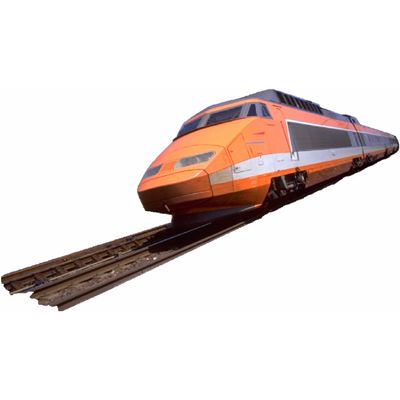 railway a set of several carriages that are connected to each other and pulled along a railway line by an engine기관차에 의해 끌려 철도 노선을 달리는 여러 객차의 연결체; 기차train to
 the train to Munich뮌헨행 기차by train We went all the way to Inverness by train.우리는 기차를 타고 인버네스까지 갔다. → boat train2series a train of something a series of events or actions that are related서로 관련된 일련의 사건이나 행동: The decision set off a train of events which led to his resignation.그 결정이 일련의 사건을 촉발시켜 그의 사임으로 이어졌다.3train of thought a related series of thoughts that are developing in your mind마음속에서 이어지며 발전하는 일련의 관련 생각들: The phone interrupted my train of thought.전화가 내 생각의 흐름을 끊었다. I’ve lost my train of thought.생각의 흐름을 잃어버렸다.4bring something in its train formal격식체 if an action or event brings something in its train, that thing happens as a result of it어떤 행동이나 사건이 무언가를 뒤따라 오게 하면, 그 일은 그것의 결과로 일어나다: a decision that brought disaster in its train재앙을 뒤따라 일으킨 결정5set something in train British English formal격식체 to make a process start happening어떤 과정이 시작되게 하다: Plans to modernize have been set in train.현대화 계획이 추진되기 시작했다.6people/animals a long line of moving people, animals, or vehicles이동하는 사람, 동물 또는 차량의 긴 행렬: a camel train낙타 행렬7dress a part of a long dress that spreads out over the ground behind the person wearing it착용자 뒤로 바닥에 펼쳐지는 긴 드레스의 부분; 트레인: a wedding dress with a long train긴 트레인이 달린 웨딩드레스8servants a group of servants or officers following an important person, especially in the past특히 과거에 중요한 인물을 따르던 하인이나 관원들의 무리; 수행단GRAMMAR: Patterns with train문법: train 관련 패턴• You usually say get on a train: · I got on the train at Bristol.• 보통 get on a train이라고 합니다: · 나는 브리스톨에서 기차를 탔다.• You usually say get off a train: · She got off the train in Geneva.• 보통 get off a train이라고 합니다: · 그녀는 제네바에서 기차를 내렸다.• You say that someone is on a train: · There were a lot of tourists on the train.• 누군가가 기차에 있다고 할 때는 on a train이라고 합니다: · 기차에는 관광객이 많았다.• You go somewhere by train: · He travels to work by train. ✗Don’t say: go by the train | travel by the train• 기차로 어딘가에 갈 때는 by train이라고 합니다: · 그는 기차로 출퇴근한다. ✗이렇게는 말하지 않습니다: go by the train | travel by the train• You often talk about the train: · It’s easier if you take the train.• 흔히 the train이라고 합니다: · 기차를 타는 게 더 편합니다.COLLOCATIONS연어verbs동사take/get a train· I took the first train home.나는 첫 번째 기차를 타고 집에 갔다.catch a train· He was in a hurry to catch a train.그는 기차를 타려고 서두르고 있었다.go by/travel by train· We decided to go by train.우리는 기차로 가기로 결정했다.get on/board a train· At Stoke, another passenger boarded the train.스토크에서 또 다른 승객이 기차에 탑승했다.get off a train· He got off the train at Flushing.그는 플러싱에서 기차를 내렸다.wait for a train· She sat on the railway platform for half an hour, waiting for a train.그녀는 기차를 기다리며 승강장에서 30분 동안 앉아 있었다.miss a train (=be too late to get on a train)· I just missed the last train.나는 막차를 놓쳤다.trains run (=take people from one place to another at fixed times)· Trains run from two main London stations, Victoria and Charing Cross, every hour.기차는 런던의 두 주요 역인 빅토리아 역과 채링 크로스 역에서 매 시간 출발한다.a train arrives· The train arrived on time.기차가 제시간에 도착했다.a train leaves/departs· Trains depart from Rugby at half-hourly intervals until 4.00 pm.기차는 오후 4시까지 30분 간격으로 럭비에서 출발한다.a train pulls into/out of a station· The train pulled into Euston station and I got off.기차가 유스턴 역으로 들어오자 나는 내렸다.a train derails/is derailed (=comes off the rails)· Most of the passengers escaped injury when their train was derailed.기차가 탈선했을 때 대부분의 승객은 부상을 피했다.ADJECTIVES/NOUN + train형용사/명사 + traina freight/goods train· a freight train carrying hazardous chemicals위험 화학물질을 운반하는 화물열차a passenger train· a passenger train bound for Geneva제네바행 여객열차a commuter train (=a train that people going to work use)· a crash involving two crowded commuter trains만원인 두 통근열차가 연루된 충돌 사고an express train/a fast train (=one that does not stop at many places)· He boarded the express train to London.그는 런던행 급행열차에 탑승했다.a slow train (also a stopping train British English) (=one that stops at a lot of places)· We got on the stopping train by mistake and it took hours to get home.우리는 실수로 완행열차를 타서 집에 오는 데 몇 시간이나 걸렸다.a steam train· Railway enthusiasts have the opportunity to take a nostalgic trip on a steam train.철도 애호가들은 증기기관차를 타고 향수 어린 여행을 즐길 기회가 있다.a tube/underground train (=one that runs under London)· The condition of many tube trains is a disgrace.많은 지하철 열차의 상태는 수치스러운 수준이다.train + NOUNtrain + 명사a train journey British English, a train trip American English· They were not looking forward to the long train journey.그들은 긴 기차 여행을 기대하지 않았다.a train fare· How much is the train fare to Derby?더비까지 기차 요금이 얼마예요?a train driver· The train driver apologized for the late departure.기관사가 출발 지연에 대해 사과했다.a train crash (also a train wreck American English)· Ten people were killed in the train crash.열차 충돌 사고로 10명이 사망했다.
모든 번역 보기1railway a set of several carriages that are connected to each other and pulled along a railway line by an engine기관차에 의해 끌려 철도 노선을 달리는 여러 객차의 연결체; 기차train to the train to Munich뮌헨행 기차by train We went all the way to Inverness by train.우리는 기차를 타고 인버네스까지 갔다. → boat train2series a train of something a series of events or actions that are related서로 관련된 일련의 사건이나 행동: The decision set off a train of events which led to his resignation.그 결정이 일련의 사건을 촉발시켜 그의 사임으로 이어졌다.3train of thought a related series of thoughts that are developing in your mind마음속에서 이어지며 발전하는 일련의 관련 생각들: The phone interrupted my train of thought.전화가 내 생각의 흐름을 끊었다. I’ve lost my train of thought.생각의 흐름을 잃어버렸다.4bring something in its train formal격식체 if an action or event brings something in its train, that thing happens as a result of it어떤 행동이나 사건이 무언가를 뒤따라 오게 하면, 그 일은 그것의 결과로 일어나다: a decision that brought disaster in its train재앙을 뒤따라 일으킨 결정5set something in train British English formal격식체 to make a process start happening어떤 과정이 시작되게 하다: Plans to modernize have been set in train.현대화 계획이 추진되기 시작했다.6people/animals a long line of moving people, animals, or vehicles이동하는 사람, 동물 또는 차량의 긴 행렬: a camel train낙타 행렬7dress a part of a long dress that spreads out over the ground behind the person wearing it착용자 뒤로 바닥에 펼쳐지는 긴 드레스의 부분; 트레인: a wedding dress with a long train긴 트레인이 달린 웨딩드레스8servants a group of servants or officers following an important person, especially in the past특히 과거에 중요한 인물을 따르던 하인이나 관원들의 무리; 수행단GRAMMAR: Patterns with train문법: train 관련 패턴• You usually say get on a train: · I got on the train at Bristol.• 보통 get on a train이라고 합니다: · 나는 브리스톨에서 기차를 탔다.• You usually say get off a train: · She got off the train in Geneva.• 보통 get off a train이라고 합니다: · 그녀는 제네바에서 기차를 내렸다.• You say that someone is on a train: · There were a lot of tourists on the train.• 누군가가 기차에 있다고 할 때는 on a train이라고 합니다: · 기차에는 관광객이 많았다.• You go somewhere by train: · He travels to work by train. ✗Don’t say: go by the train | travel by the train• 기차로 어딘가에 갈 때는 by train이라고 합니다: · 그는 기차로 출퇴근한다. ✗이렇게는 말하지 않습니다: go by the train | travel by the train• You often talk about the train: · It’s easier if you take the train.• 흔히 the train이라고 합니다: · 기차를 타는 게 더 편합니다.COLLOCATIONS연어verbs동사take/get a train· I took the first train home.나는 첫 번째 기차를 타고 집에 갔다.catch a train· He was in a hurry to catch a train.그는 기차를 타려고 서두르고 있었다.go by/travel by train· We decided to go by train.우리는 기차로 가기로 결정했다.get on/board a train· At Stoke, another passenger boarded the train.스토크에서 또 다른 승객이 기차에 탑승했다.get off a train· He got off the train at Flushing.그는 플러싱에서 기차를 내렸다.wait for a train· She sat on the railway platform for half an hour, waiting for a train.그녀는 기차를 기다리며 승강장에서 30분 동안 앉아 있었다.miss a train (=be too late to get on a train)· I just missed the last train.나는 막차를 놓쳤다.trains run (=take people from one place to another at fixed times)· Trains run from two main London stations, Victoria and Charing Cross, every hour.기차는 런던의 두 주요 역인 빅토리아 역과 채링 크로스 역에서 매 시간 출발한다.a train arrives· The train arrived on time.기차가 제시간에 도착했다.a train leaves/departs· Trains depart from Rugby at half-hourly intervals until 4.00 pm.기차는 오후 4시까지 30분 간격으로 럭비에서 출발한다.a train pulls into/out of a station· The train pulled into Euston station and I got off.기차가 유스턴 역으로 들어오자 나는 내렸다.a train derails/is derailed (=comes off the rails)· Most of the passengers escaped injury when their train was derailed.기차가 탈선했을 때 대부분의 승객은 부상을 피했다.ADJECTIVES/NOUN + train형용사/명사 + traina freight/goods train· a freight train carrying hazardous chemicals위험 화학물질을 운반하는 화물열차a passenger train· a passenger train bound for Geneva제네바행 여객열차a commuter train (=a train that people going to work use)· a crash involving two crowded commuter trains만원인 두 통근열차가 연루된 충돌 사고an express train/a fast train (=one that does not stop at many places)· He boarded the express train to London.그는 런던행 급행열차에 탑승했다.a slow train (also a stopping train British English) (=one that stops at a lot of places)· We got on the stopping train by mistake and it took hours to get home.우리는 실수로 완행열차를 타서 집에 오는 데 몇 시간이나 걸렸다.a steam train· Railway enthusiasts have the opportunity to take a nostalgic trip on a steam train.철도 애호가들은 증기기관차를 타고 향수 어린 여행을 즐길 기회가 있다.a tube/underground train (=one that runs under London)· The condition of many tube trains is a disgrace.많은 지하철 열차의 상태는 수치스러운 수준이다.train + NOUNtrain + 명사a train journey British English, a train trip American English· They were not looking forward to the long train journey.그들은 긴 기차 여행을 기대하지 않았다.a train fare· How much is the train fare to Derby?더비까지 기차 요금이 얼마예요?a train driver· The train driver apologized for the late departure.기관사가 출발 지연에 대해 사과했다.a train crash (also a train wreck American English)· Ten people were killed in the train crash.열차 충돌 사고로 10명이 사망했다.traintrain2 verb 1teach somebody [intransitive, transitive] to teach someone the skills of a particular job or activity, or to be taught these skills특정 직업이나 활동에 필요한 기술을 누군가에게 가르치거나 그 기술을 배우다train somebody in something All staff will be trained in customer service skills.모든 직원이 고객 서비스 기술 교육을 받을 것이다.train to do something She’s training to be a doctor.그녀는 의사가 되기 위해 훈련 중이다.train somebody to do something Employees are trained to deal with emergency situations.직원들은 긴급 상황에 대처하도록 훈련되어 있다.train as Nadia trained as a singer.나디아는 가수로 훈련을 받았다. a highly trained workforce고도로 훈련된 인력 Trained staff will be available to deal with your queries.훈련된 직원이 고객의 문의 사항을 처리할 것입니다.► see thesaurus at learn, teach2teach an animal [transitive] to teach an animal to do something or to behave correctly동물이 무언가를 하거나 올바르게 행동하도록 가르치다: a well-trained puppy잘 훈련된 강아지train something to do something These dogs are trained to detect drugs.이 개들은 마약을 탐지하도록 훈련되어 있다.3prepare for sport [intransitive, transitive] to prepare for a sports event or tell someone how to prepare for it, especially by exercising특히 운동을 통해 스포츠 행사에 대비하거나 다른 사람이 준비하는 방법을 알려 주다train for Brenda spends two hours a day training for the marathon.브렌다는 마라톤을 위해 하루에 두 시간씩 훈련한다.► see thesaurus at practise4aim something [transitive] to aim something such as a gun or camera at someone or something총이나 카메라 같은 것을 사람이나 사물에 겨누다train something on/at somebody/something She trained her binoculars on the bird.그녀는 쌍안경을 새에게 겨눴다.5develop something [transitive] to develop and improve a natural ability or quality타고난 능력이나 자질을 개발하고 향상시키다: You can train your mind to relax.마음이 긴장을 풀도록 훈련할 수 있다. To the trained eye the difference between these flowers is obvious (=the difference is clear to someone who has developed skills to notice something).숙련된 눈에는 이 꽃들 사이의 차이가 분명하다(=무언가를 알아채는 능력을 키운 사람에게는 차이가 명확하다).6plant [transitive] to make a plant grow in a particular direction by bending, cutting, or tying it구부리거나 자르거나 묶어서 식물이 특정 방향으로 자라도록 하다
1teach somebody [intransitive, transitive] to teach someone the skills of a particular job or activity, or to be taught these skills특정 직업이나 활동에 필요한 기술을 누군가에게 가르치거나 그 기술을 배우다train somebody in something All staff will be trained in customer service skills.모든 직원이 고객 서비스 기술 교육을 받을 것이다.train to do something She’s training to be a doctor.그녀는 의사가 되기 위해 훈련 중이다.train somebody to do something Employees are trained to deal with emergency situations.직원들은 긴급 상황에 대처하도록 훈련되어 있다.train as Nadia trained as a singer.나디아는 가수로 훈련을 받았다. a highly trained workforce고도로 훈련된 인력 Trained staff will be available to deal with your queries.훈련된 직원이 고객의 문의 사항을 처리할 것입니다.► see thesaurus at learn, teach2teach an animal [transitive] to teach an animal to do something or to behave correctly동물이 무언가를 하거나 올바르게 행동하도록 가르치다: a well-trained puppy잘 훈련된 강아지train something to do something These dogs are trained to detect drugs.이 개들은 마약을 탐지하도록 훈련되어 있다.3prepare for sport [intransitive, transitive] to prepare for a sports event or tell someone how to prepare for it, especially by exercising특히 운동을 통해 스포츠 행사에 대비하거나 다른 사람이 준비하는 방법을 알려 주다train for Brenda spends two hours a day training for the marathon.브렌다는 마라톤을 위해 하루에 두 시간씩 훈련한다.► see thesaurus at practise4aim something [transitive] to aim something such as a gun or camera at someone or something총이나 카메라 같은 것을 사람이나 사물에 겨누다train something on/at somebody/something She trained her binoculars on the bird.그녀는 쌍안경을 새에게 겨눴다.5develop something [transitive] to develop and improve a natural ability or quality타고난 능력이나 자질을 개발하고 향상시키다: You can train your mind to relax.마음이 긴장을 풀도록 훈련할 수 있다. To the trained eye the difference between these flowers is obvious (=the difference is clear to someone who has developed skills to notice something).숙련된 눈에는 이 꽃들 사이의 차이가 분명하다(=무언가를 알아채는 능력을 키운 사람에게는 차이가 명확하다).6plant [transitive] to make a plant grow in a particular direction by bending, cutting, or tying it구부리거나 자르거나 묶어서 식물이 특정 방향으로 자라도록 하다