
Significado de still em inglês
stillstill1 /stɪl/ adverb 
 Ver todas as traduções1used when saying that something continues to be the same as before, or has not happened yetusado para dizer que algo continua igual a antes, ou que ainda não aconteceu:
  He still lives with his parents.Ele ainda mora com os pais. Do you still have Julie’s phone number?Você ainda tem o número de telefone da Julie? I still haven’t finished painting the spare room.Ainda não terminei de pintar o quarto reserva.GRAMMAR: Word orderGRAMÁTICA: Ordem das palavras• Still comes before a main verb: · The system still works.· I still love you.• Still vem antes do verbo principal: · The system still works.· I still love you.• Still comes after ‘am’,‘ is’, ‘was’ etc: · I’m still angry.· It was still dark outside.· She is still not ready.• Still vem depois de 'am', 'is', 'was' etc.: · I'm still angry.· It was still dark outside.· She is still not ready.• Still can come before the verb ‘be’ when it is part of a contraction such as ‘isn’t’ or ‘wasn’t’: · She still isn’t ready.• Still pode vir antes do verbo 'be' quando ele faz parte de uma contração como 'isn't' ou 'wasn't': · She still isn't ready.• Still comes after the first auxiliary verb in positive sentences: · I can still remember them.· The marks can still be seen.• Still vem depois do primeiro verbo auxiliar em frases afirmativas: · I can still remember them.· The marks can still be seen.• Still comes before the first auxiliary verb in negative sentences: · I still can’t remember his name.· We still do not know exactly what happened.• Still vem antes do primeiro verbo auxiliar em frases negativas: · I still can't remember his name.· We still do not know exactly what happened.2in spite of what has just been said or doneapesar do que acabou de ser dito ou feito: Clare didn’t do much work, but she still passed the exam.Clare não estudou muito, mas mesmo assim passou na prova.[sentence adverb] The hotel was terrible. Still, we were lucky with the weather.O hotel era terrível. Mesmo assim, tivemos sorte com o tempo.3still more/further/another/other used to emphasize that something increases more, there is more of something etcusado para enfatizar que algo aumenta ainda mais, que há mais de algo, etc.: Kevin grew still more depressed.Kevin ficou ainda mais deprimido.4 better/harder/worse etc still (also still better/harder/worse etc) even better, harder etc than something elseainda melhor, mais difícil etc. do que outra coisa: Dan found biology difficult, and physics harder still.Dan achava biologia difícil, e física mais difícil ainda.
Ver todas as traduções1used when saying that something continues to be the same as before, or has not happened yetusado para dizer que algo continua igual a antes, ou que ainda não aconteceu: He still lives with his parents.Ele ainda mora com os pais. Do you still have Julie’s phone number?Você ainda tem o número de telefone da Julie? I still haven’t finished painting the spare room.Ainda não terminei de pintar o quarto reserva.GRAMMAR: Word orderGRAMÁTICA: Ordem das palavras• Still comes before a main verb: · The system still works.· I still love you.• Still vem antes do verbo principal: · The system still works.· I still love you.• Still comes after ‘am’,‘ is’, ‘was’ etc: · I’m still angry.· It was still dark outside.· She is still not ready.• Still vem depois de 'am', 'is', 'was' etc.: · I'm still angry.· It was still dark outside.· She is still not ready.• Still can come before the verb ‘be’ when it is part of a contraction such as ‘isn’t’ or ‘wasn’t’: · She still isn’t ready.• Still pode vir antes do verbo 'be' quando ele faz parte de uma contração como 'isn't' ou 'wasn't': · She still isn't ready.• Still comes after the first auxiliary verb in positive sentences: · I can still remember them.· The marks can still be seen.• Still vem depois do primeiro verbo auxiliar em frases afirmativas: · I can still remember them.· The marks can still be seen.• Still comes before the first auxiliary verb in negative sentences: · I still can’t remember his name.· We still do not know exactly what happened.• Still vem antes do primeiro verbo auxiliar em frases negativas: · I still can't remember his name.· We still do not know exactly what happened.2in spite of what has just been said or doneapesar do que acabou de ser dito ou feito: Clare didn’t do much work, but she still passed the exam.Clare não estudou muito, mas mesmo assim passou na prova.[sentence adverb] The hotel was terrible. Still, we were lucky with the weather.O hotel era terrível. Mesmo assim, tivemos sorte com o tempo.3still more/further/another/other used to emphasize that something increases more, there is more of something etcusado para enfatizar que algo aumenta ainda mais, que há mais de algo, etc.: Kevin grew still more depressed.Kevin ficou ainda mais deprimido.4 better/harder/worse etc still (also still better/harder/worse etc) even better, harder etc than something elseainda melhor, mais difícil etc. do que outra coisa: Dan found biology difficult, and physics harder still.Dan achava biologia difícil, e física mais difícil ainda.stillstill2 adjective 1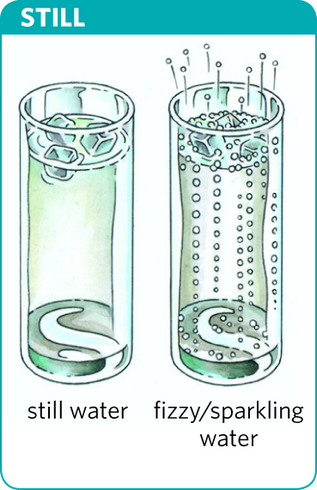 not movingimóvel; que não se move: We stood still and watched as the deer came closer.Ficamos parados e observamos o cervo se aproximar. Keep still while I tie your shoe.Fique quieto enquanto eu amarro o seu sapato. the still waters of the lakeas águas calmas do lago2quiet and calmquieto e calmo: The house was completely still.A casa estava completamente silenciosa.3not windysem vento: a hot still dayum dia quente e sem vento4British English a still drink does not contain gasuma bebida still não contém gás: still or sparkling mineral waterágua mineral sem gás ou com gás5still waters run deep used to say that someone who is quiet may have very strong feelings or a lot of knowledgeusado para dizer que uma pessoa quieta pode ter sentimentos muito intensos ou muito conhecimento—stillness noun [uncountable]: Somewhere in the stillness of the night, an owl hooted.Em algum lugar, no silêncio da noite, uma coruja piou.
1not movingimóvel; que não se move: We stood still and watched as the deer came closer.Ficamos parados e observamos o cervo se aproximar. Keep still while I tie your shoe.Fique quieto enquanto eu amarro o seu sapato. the still waters of the lakeas águas calmas do lago2quiet and calmquieto e calmo: The house was completely still.A casa estava completamente silenciosa.3not windysem vento: a hot still dayum dia quente e sem vento4British English a still drink does not contain gasuma bebida still não contém gás: still or sparkling mineral waterágua mineral sem gás ou com gás5still waters run deep used to say that someone who is quiet may have very strong feelings or a lot of knowledgeusado para dizer que uma pessoa quieta pode ter sentimentos muito intensos ou muito conhecimento—stillness noun [uncountable]: Somewhere in the stillness of the night, an owl hooted.Em algum lugar, no silêncio da noite, uma coruja piou.stillstill3 noun [countable] 1a photograph of a scene from a filmfotografia de uma cena de um filme2a piece of equipment for making alcoholic drinks from grain or potatoesequipamento para fabricar bebidas alcoólicas a partir de grãos ou batatas3the still of the night/evening etc literaryliterário the calm and quiet of the night etca calma e o silêncio da noite etc.
1a photograph of a scene from a filmfotografia de uma cena de um filme2a piece of equipment for making alcoholic drinks from grain or potatoesequipamento para fabricar bebidas alcoólicas a partir de grãos ou batatas3the still of the night/evening etc literaryliterário the calm and quiet of the night etca calma e o silêncio da noite etc.stillstill4 verb literaryliterário 1[intransitive, transitive] to stop moving, or make something stop movingparar de se mover, ou fazer algo parar de se mover: The ground beneath them trembled, then stilled.O chão sob eles tremeu e depois se aquietou.2[intransitive, transitive] if a noise stills or is stilled, it stopsse um ruído stills ou is stilled, significa que ele para: The murmurs stilled.Os murmúrios cessaram. He stilled their protests with a wave of his hands.Ele silenciou os protestos deles com um aceno das mãos.3[transitive] if a doubt or fear is stilled, it becomes weaker or goes awayse uma dúvida ou um medo is stilled, significa que enfraquece ou desaparece
1[intransitive, transitive] to stop moving, or make something stop movingparar de se mover, ou fazer algo parar de se mover: The ground beneath them trembled, then stilled.O chão sob eles tremeu e depois se aquietou.2[intransitive, transitive] if a noise stills or is stilled, it stopsse um ruído stills ou is stilled, significa que ele para: The murmurs stilled.Os murmúrios cessaram. He stilled their protests with a wave of his hands.Ele silenciou os protestos deles com um aceno das mãos.3[transitive] if a doubt or fear is stilled, it becomes weaker or goes awayse uma dúvida ou um medo is stilled, significa que enfraquece ou desaparece