
Significado de can en inglés
cancan1 /kən; strong kæn/ modal verb (negative short form can’t) 
 Ver todas las traducciones1ability to be able to do something or to know how to do somethingpoder hacer algo o saber cómo hacerlo:
  You can swim, can’t you?Sabes nadar, ¿verdad? Even a small personal computer can store vast amounts of information.Incluso una computadora personal pequeña puede almacenar grandes cantidades de información. Gabriella can speak French fluently.Gabriella habla francés con fluidez. I’m afraid Mr Harding can’t see you now – he’s busy.Me temo que el señor Harding no puede atenderle ahora; está ocupado. The police are doing all they can to find her.La policía está haciendo todo lo que puede para encontrarla.2requesting spokenoral used to ask someone to do something or give you somethingse usa para pedirle a alguien que haga algo o que te dé algo: Can I have a drink, please?¿Me puede dar algo de beber, por favor? Can you help me lift this box?¿Puedes ayudarme a levantar esta caja?3allowed to be allowed to do something or to have the right or power to do somethingtener permiso para hacer algo o tener el derecho o la autoridad para hacerlo: You can’t park here – it’s a no parking zone.No puedes estacionar aquí: es una zona de estacionamiento prohibido. ‘Can we go home now?’ ‘No we can’t.’"¿Podemos irnos a casa ahora?" "No, no podemos." A police officer can insist on seeing a driver’s license.Un agente de policía puede exigir que se le muestre el carné de conducir.4possibility used to say that something is possiblese usa para indicar que algo es posible: I am confident a solution can be found.Estoy seguro de que se puede encontrar una solución. There can be no doubt that he is guilty.No puede haber ninguna duda de que es culpable. The boxes can be stored flat.Las cajas se pueden guardar dobladas. Can he still be alive after all this time?¿Puede estar todavía vivo después de tanto tiempo?5seeing/hearing etc used with the verbs ‘see’, ‘hear’, ‘feel’, ‘taste’, and ‘smell’, and with verbs connected with thinking, to mean that someone sees something, hears something etcse usa con los verbos "see" (ver), "hear" (oír), "feel" (sentir), "taste" (saborear) y "smell" (oler), y con verbos relacionados con el pensamiento, para indicar que alguien ve algo, oye algo, etc.: Here they are – I can see their car.Aquí están: veo su auto. Can you smell something burning?¿Hueles algo quemándose? I can’t understand why you’re so upset.No entiendo por qué estás tan disgustado. He can’t remember where he put the tickets.No recuerda dónde puso las entradas.6not true [in negatives] used to say that you do not believe that something is truese usa para expresar que no se cree que algo sea verdad: This can’t be the right road.Esta no puede ser la carretera correcta. It can’t be easy caring for someone else’s children.No puede ser fácil cuidar a los hijos de otra persona.7should not [in questions and negatives] used to say that someone should not or must not do somethingse usa para indicar que alguien no debe o no tiene que hacer algo: You can’t expect the world to change overnight.No puedes esperar que el mundo cambie de la noche a la mañana. We can’t go on like this.No podemos seguir así. Jill’s left her husband, but can you blame her after the way he treated her?Jill ha dejado a su marido, pero ¿puedes culparla después de cómo la trató?8surprise/anger [usually in questions and negatives] spokenoral used when you are surprised or angryse usa cuando uno está sorprendido o enojado: You can’t be serious!¡No puedes hablar en serio! They can’t have arrived already, surely!¡No pueden haber llegado ya, seguro! How can you be so stupid!¡Cómo puedes ser tan estúpido!9sometimes used to say what sometimes happens or how someone sometimes behavesse usa para describir lo que ocurre a veces o cómo se comporta alguien en ocasiones: It can be quite cold here at night.Aquí puede hacer bastante frío por las noches. Peter can be really annoying.Peter puede resultar realmente irritante.10giving orders spokenoral used to tell someone in an angry way to do somethingse usa para decirle a alguien con enfado que haga algo: And you can stop that quarrelling, the pair of you.Y ustedes dos pueden dejar de pelearse de una vez. If you won’t keep quiet, you can get out.Si no te vas a callar, puedes salir de aquí.11no can do spokenoral used to say that it is impossible for you to do what someone has asked you to dose usa para indicar que es imposible hacer lo que alguien te ha pedido: Sorry, John, no can do.Lo siento, John, imposible.GRAMMAR: Patterns with canGRAMÁTICA: Estructuras con can• Like other modal verbs, you use can before the base form of the main verb (=the infinitive without ‘to’): · We can hear the birds singing.· You can go home now.· Sharks can be dangerous. ✗Don’t say: We can to go home. | We can going home.• Al igual que otros verbos modales, can va seguido de la forma base del verbo principal (= el infinitivo sin "to"): · We can hear the birds singing. (Podemos oír los pájaros cantando.) · You can go home now. (Puedes irte a casa ahora.) · Sharks can be dangerous. (Los tiburones pueden ser peligrosos.) ✗No digas: We can to go home. | We can going home.• The past tense of can is could: · We could hear the birds singing.· The teacher said we could go home.• El pasado de can es could: · We could hear the birds singing. (Podíamos oír los pájaros cantando.) · The teacher said we could go home. (El profesor dijo que podíamos irnos a casa.)• You also use was/were able to when talking about the ability to do something in the past, especially something that was difficult: · He was able to walk a few steps.• También se usa was/were able to al hablar de la capacidad para hacer algo en el pasado, especialmente algo difícil: · He was able to walk a few steps. (Pudo dar unos pasos.)• In questions you say Can I/he/she etc: · Can we go home?• En preguntas se usa Can I/he/she etc.: · Can we go home? (¿Podemos irnos a casa?)• In negatives you say can’t (spoken) or cannot (written): · I can’t hear you!· He cannot leave prison.• En las negaciones se usa can't (oral) o cannot (escrito): · I can't hear you! (¡No te oigo!) · He cannot leave prison. (No puede salir de la cárcel.)• You also use is/are unable to when saying that someone does not have the ability to do something: · He is unable to walk.Grammar guide ‒ VERBS• También se usa is/are unable to para indicar que alguien no tiene la capacidad de hacer algo: · He is unable to walk. (No puede caminar.) Guía gramatical ‒ VERBOSTHESAURUSSINÓNIMOSto be able to do somethingpoder hacer algocan do something to have the ability, opportunity, time, or equipment that you need in order to do something. Could is used as the past form, and is also used to say what is or may be possibletener la capacidad, la oportunidad, el tiempo o los medios necesarios para hacer algo. Could se usa como forma de pasado y también para indicar lo que es o puede ser posible: · ‘I don’t think Mike can drive.’ ‘Yes, he can.’· "No creo que Mike sepa conducir." "Claro que sabe."· He can run faster than me.· Puede correr más rápido que yo.· Can you see the TV, or should I move?· ¿Puedes ver la televisión, o me aparto?· This program can translate your e-mail into other languages.· Este programa puede traducir tu correo electrónico a otros idiomas.· How many hamburgers do you think you can eat?· ¿Cuántas hamburguesas crees que puedes comerte?· Adrian could read when he was four.· Adrian sabía leer cuando tenía cuatro años.· If we had a boat we could row across to the island.· Si tuviéramos un bote, podríamos remar hasta la isla.· Why didn’t they ask me? I could have done it for them for half the price.· ¿Por qué no me lo pidieron? Yo podría haberlo hecho por la mitad de precio.· She could win.· Podría ganar.be able to do something used when talking about ability or success in the past or ability in the future, or when you need to use an infinitive. It is also used instead of can in more formal Englishse usa al hablar de la capacidad o los logros en el pasado, de la capacidad en el futuro, o cuando se necesita un infinitivo. También se usa en lugar de can en un inglés más formal: · I was able to get a good job (=I got one).· Pude conseguir un buen trabajo (= lo conseguí).· Will you be able to carry those bags on your own?· ¿Podrás llevar esas bolsas tú solo?· If you want to join the expedition, you must be able to speak Spanish.· Si quieres unirte a la expedición, debes saber hablar español.· The young birds are now able to fly.· Los pájaros jóvenes ya son capaces de volar.be capable of something to have the ability, energy, or qualities needed to do something, especially something very difficult or unusual – use this about people or machinestener la capacidad, la energía o las cualidades necesarias para hacer algo, especialmente algo muy difícil o poco habitual — se usa para personas o máquinas: · She’s perfectly capable (=completely capable) of dealing with the situation.· Ella es perfectamente capaz (= totalmente capaz) de manejar la situación.· The car is capable of a top speed of 200 mph.· El coche es capaz de alcanzar una velocidad máxima de 200 mph.· No one thought he was capable of murder.· Nadie pensaba que fuera capaz de cometer un asesinato.have the ability to do something to be able to do something, especially something that is unusual or that most people cannot doser capaz de hacer algo, especialmente algo inusual o que la mayoría de la gente no puede hacer: · She seemed to have the ability to make people do anything she wanted.· Parecía tener la capacidad de hacer que la gente hiciera lo que ella quisiera.· I believe the team definitely has the ability to win the championship.· Creo que el equipo definitivamente tiene la capacidad de ganar el campeonato.be in a position to do something to be able to do something because you have enough knowledge, power, money, or equipment to do itpoder hacer algo porque se tiene el conocimiento, el poder, el dinero o los medios suficientes para ello: · We will have to run more tests before we are in a position to say whether the document is authentic or not.· Tendremos que realizar más pruebas antes de estar en posición de determinar si el documento es auténtico o no.· They expect be in a position to begin construction within two years.· Esperan estar en condiciones de iniciar la construcción en un plazo de dos años.manage to do something to succeed in doing something difficult, especially after trying very hardlograr hacer algo difícil, especialmente después de intentarlo con mucho esfuerzo: · He finally managed to find an apartment near his office.· Por fin logró encontrar un apartamento cerca de su oficina.· At least three of the hostages managed to escape.· Al menos tres de los rehenes lograron escapar.to be unable to do somethingser incapaz de hacer algo; no poder hacer algocan’t/cannot do something to be unable to do something because you do not have the ability, opportunity, time, or equipment that you need. Couldn’t/could not is used as the past formser incapaz de hacer algo porque no se tiene la capacidad, la oportunidad, el tiempo o los medios necesarios. Couldn't/could not se usa como forma de pasado: · Louise can’t see anything without her glasses.· Louise no puede ver nada sin sus gafas.· He couldn’t remember where he had left the car.· No recordaba dónde había dejado el auto.· ‘Will you help me move this?’ ‘I’m sorry, I can’t – my back’s still giving me trouble.’· "¿Me ayudas a mover esto?" "Lo siento, no puedo: todavía me duele la espalda."· I couldn’t have done it without your help.· No podría haberlo hecho sin tu ayuda.· I could never have climbed that ridge – I’m too out of shape.· Nunca habría podido escalar esa cresta: estoy demasiado fuera de forma.· Scientists still cannot explain exactly how the virus reproduces.· Los científicos<t id="85" lang="es">· Los científicos todavía no pueden explicar exactamente cómo se reproduce el virus.· Sarah could not understand why anyone would want to hurt her.· Sarah no podía entender por qué alguien querría hacerle daño.not be able to do something used when talking about inability in the past or the future, when you need to use an infinitive, and in more formal Englishse usa al hablar de incapacidad en el pasado o el futuro, cuando se necesita un infinitivo, y en un inglés más formal: · Unfortunately, I wasn’t able to help them.· Lamentablemente, no pude ayudarlos.· I don’t think I’ll be able to come to the meeting after all.· Creo que al final no podré ir a la reunión.· The doctor told Tina she wouldn’t be able to have children.· El médico le dijo a Tina que no podría tener hijos.· I’ve looked all over the house but I haven’t been able to find my keys anywhere.· He buscado por toda la casa, pero no he podido encontrar mis llaves en ningún sitio.be unable to do something especially writtenespecialmente en lenguaje escrito to not be able to do something, especially something important that you want to do or need to dono poder hacer algo, especialmente algo importante que uno quiere o necesita hacer: · He was unable to sleep and lay awake all night.· No podía dormir y estuvo despierto toda la noche.· Many passengers were unable to reach the lifeboats in time.· Muchos pasajeros no pudieron llegar a los botes salvavidas a tiempo.not be in a position to do something (also be in no position to do something) formalformal to not be able to do something because you do not have enough knowledge, power, money, or equipment to do itno poder hacer algo porque no se tiene el conocimiento, el poder, el dinero o los medios suficientes para ello: · I’m afraid I’m not in a position to answer your questions.· Me temo que no estoy en posición de responder a sus preguntas.· Having committed military force there, America is in no position to repeat this strategy elsewhere.· Habiendo comprometido fuerzas militares allí, Estados Unidos no está en posición de repetir esta estrategia en otros lugares.not be capable of something (also be incapable of something) to not have the physical strength or mental ability to do something – often used when criticizing someoneno tener la fuerza física ni la capacidad mental para hacer algo — se usa con frecuencia para criticar a alguien: · My son seems to be incapable of keeping a job.· Mi hijo parece ser incapaz de conservar un trabajo.· She’s not capable of looking after herself anymore.· Ya no es capaz de cuidarse sola.· Her father was a man who was utterly incapable of pity or sympathy.· Su padre era un hombre completamente incapaz de sentir lástima o compasión.
Ver todas las traducciones1ability to be able to do something or to know how to do somethingpoder hacer algo o saber cómo hacerlo: You can swim, can’t you?Sabes nadar, ¿verdad? Even a small personal computer can store vast amounts of information.Incluso una computadora personal pequeña puede almacenar grandes cantidades de información. Gabriella can speak French fluently.Gabriella habla francés con fluidez. I’m afraid Mr Harding can’t see you now – he’s busy.Me temo que el señor Harding no puede atenderle ahora; está ocupado. The police are doing all they can to find her.La policía está haciendo todo lo que puede para encontrarla.2requesting spokenoral used to ask someone to do something or give you somethingse usa para pedirle a alguien que haga algo o que te dé algo: Can I have a drink, please?¿Me puede dar algo de beber, por favor? Can you help me lift this box?¿Puedes ayudarme a levantar esta caja?3allowed to be allowed to do something or to have the right or power to do somethingtener permiso para hacer algo o tener el derecho o la autoridad para hacerlo: You can’t park here – it’s a no parking zone.No puedes estacionar aquí: es una zona de estacionamiento prohibido. ‘Can we go home now?’ ‘No we can’t.’"¿Podemos irnos a casa ahora?" "No, no podemos." A police officer can insist on seeing a driver’s license.Un agente de policía puede exigir que se le muestre el carné de conducir.4possibility used to say that something is possiblese usa para indicar que algo es posible: I am confident a solution can be found.Estoy seguro de que se puede encontrar una solución. There can be no doubt that he is guilty.No puede haber ninguna duda de que es culpable. The boxes can be stored flat.Las cajas se pueden guardar dobladas. Can he still be alive after all this time?¿Puede estar todavía vivo después de tanto tiempo?5seeing/hearing etc used with the verbs ‘see’, ‘hear’, ‘feel’, ‘taste’, and ‘smell’, and with verbs connected with thinking, to mean that someone sees something, hears something etcse usa con los verbos "see" (ver), "hear" (oír), "feel" (sentir), "taste" (saborear) y "smell" (oler), y con verbos relacionados con el pensamiento, para indicar que alguien ve algo, oye algo, etc.: Here they are – I can see their car.Aquí están: veo su auto. Can you smell something burning?¿Hueles algo quemándose? I can’t understand why you’re so upset.No entiendo por qué estás tan disgustado. He can’t remember where he put the tickets.No recuerda dónde puso las entradas.6not true [in negatives] used to say that you do not believe that something is truese usa para expresar que no se cree que algo sea verdad: This can’t be the right road.Esta no puede ser la carretera correcta. It can’t be easy caring for someone else’s children.No puede ser fácil cuidar a los hijos de otra persona.7should not [in questions and negatives] used to say that someone should not or must not do somethingse usa para indicar que alguien no debe o no tiene que hacer algo: You can’t expect the world to change overnight.No puedes esperar que el mundo cambie de la noche a la mañana. We can’t go on like this.No podemos seguir así. Jill’s left her husband, but can you blame her after the way he treated her?Jill ha dejado a su marido, pero ¿puedes culparla después de cómo la trató?8surprise/anger [usually in questions and negatives] spokenoral used when you are surprised or angryse usa cuando uno está sorprendido o enojado: You can’t be serious!¡No puedes hablar en serio! They can’t have arrived already, surely!¡No pueden haber llegado ya, seguro! How can you be so stupid!¡Cómo puedes ser tan estúpido!9sometimes used to say what sometimes happens or how someone sometimes behavesse usa para describir lo que ocurre a veces o cómo se comporta alguien en ocasiones: It can be quite cold here at night.Aquí puede hacer bastante frío por las noches. Peter can be really annoying.Peter puede resultar realmente irritante.10giving orders spokenoral used to tell someone in an angry way to do somethingse usa para decirle a alguien con enfado que haga algo: And you can stop that quarrelling, the pair of you.Y ustedes dos pueden dejar de pelearse de una vez. If you won’t keep quiet, you can get out.Si no te vas a callar, puedes salir de aquí.11no can do spokenoral used to say that it is impossible for you to do what someone has asked you to dose usa para indicar que es imposible hacer lo que alguien te ha pedido: Sorry, John, no can do.Lo siento, John, imposible.GRAMMAR: Patterns with canGRAMÁTICA: Estructuras con can• Like other modal verbs, you use can before the base form of the main verb (=the infinitive without ‘to’): · We can hear the birds singing.· You can go home now.· Sharks can be dangerous. ✗Don’t say: We can to go home. | We can going home.• Al igual que otros verbos modales, can va seguido de la forma base del verbo principal (= el infinitivo sin "to"): · We can hear the birds singing. (Podemos oír los pájaros cantando.) · You can go home now. (Puedes irte a casa ahora.) · Sharks can be dangerous. (Los tiburones pueden ser peligrosos.) ✗No digas: We can to go home. | We can going home.• The past tense of can is could: · We could hear the birds singing.· The teacher said we could go home.• El pasado de can es could: · We could hear the birds singing. (Podíamos oír los pájaros cantando.) · The teacher said we could go home. (El profesor dijo que podíamos irnos a casa.)• You also use was/were able to when talking about the ability to do something in the past, especially something that was difficult: · He was able to walk a few steps.• También se usa was/were able to al hablar de la capacidad para hacer algo en el pasado, especialmente algo difícil: · He was able to walk a few steps. (Pudo dar unos pasos.)• In questions you say Can I/he/she etc: · Can we go home?• En preguntas se usa Can I/he/she etc.: · Can we go home? (¿Podemos irnos a casa?)• In negatives you say can’t (spoken) or cannot (written): · I can’t hear you!· He cannot leave prison.• En las negaciones se usa can't (oral) o cannot (escrito): · I can't hear you! (¡No te oigo!) · He cannot leave prison. (No puede salir de la cárcel.)• You also use is/are unable to when saying that someone does not have the ability to do something: · He is unable to walk.Grammar guide ‒ VERBS• También se usa is/are unable to para indicar que alguien no tiene la capacidad de hacer algo: · He is unable to walk. (No puede caminar.) Guía gramatical ‒ VERBOSTHESAURUSSINÓNIMOSto be able to do somethingpoder hacer algocan do something to have the ability, opportunity, time, or equipment that you need in order to do something. Could is used as the past form, and is also used to say what is or may be possibletener la capacidad, la oportunidad, el tiempo o los medios necesarios para hacer algo. Could se usa como forma de pasado y también para indicar lo que es o puede ser posible: · ‘I don’t think Mike can drive.’ ‘Yes, he can.’· "No creo que Mike sepa conducir." "Claro que sabe."· He can run faster than me.· Puede correr más rápido que yo.· Can you see the TV, or should I move?· ¿Puedes ver la televisión, o me aparto?· This program can translate your e-mail into other languages.· Este programa puede traducir tu correo electrónico a otros idiomas.· How many hamburgers do you think you can eat?· ¿Cuántas hamburguesas crees que puedes comerte?· Adrian could read when he was four.· Adrian sabía leer cuando tenía cuatro años.· If we had a boat we could row across to the island.· Si tuviéramos un bote, podríamos remar hasta la isla.· Why didn’t they ask me? I could have done it for them for half the price.· ¿Por qué no me lo pidieron? Yo podría haberlo hecho por la mitad de precio.· She could win.· Podría ganar.be able to do something used when talking about ability or success in the past or ability in the future, or when you need to use an infinitive. It is also used instead of can in more formal Englishse usa al hablar de la capacidad o los logros en el pasado, de la capacidad en el futuro, o cuando se necesita un infinitivo. También se usa en lugar de can en un inglés más formal: · I was able to get a good job (=I got one).· Pude conseguir un buen trabajo (= lo conseguí).· Will you be able to carry those bags on your own?· ¿Podrás llevar esas bolsas tú solo?· If you want to join the expedition, you must be able to speak Spanish.· Si quieres unirte a la expedición, debes saber hablar español.· The young birds are now able to fly.· Los pájaros jóvenes ya son capaces de volar.be capable of something to have the ability, energy, or qualities needed to do something, especially something very difficult or unusual – use this about people or machinestener la capacidad, la energía o las cualidades necesarias para hacer algo, especialmente algo muy difícil o poco habitual — se usa para personas o máquinas: · She’s perfectly capable (=completely capable) of dealing with the situation.· Ella es perfectamente capaz (= totalmente capaz) de manejar la situación.· The car is capable of a top speed of 200 mph.· El coche es capaz de alcanzar una velocidad máxima de 200 mph.· No one thought he was capable of murder.· Nadie pensaba que fuera capaz de cometer un asesinato.have the ability to do something to be able to do something, especially something that is unusual or that most people cannot doser capaz de hacer algo, especialmente algo inusual o que la mayoría de la gente no puede hacer: · She seemed to have the ability to make people do anything she wanted.· Parecía tener la capacidad de hacer que la gente hiciera lo que ella quisiera.· I believe the team definitely has the ability to win the championship.· Creo que el equipo definitivamente tiene la capacidad de ganar el campeonato.be in a position to do something to be able to do something because you have enough knowledge, power, money, or equipment to do itpoder hacer algo porque se tiene el conocimiento, el poder, el dinero o los medios suficientes para ello: · We will have to run more tests before we are in a position to say whether the document is authentic or not.· Tendremos que realizar más pruebas antes de estar en posición de determinar si el documento es auténtico o no.· They expect be in a position to begin construction within two years.· Esperan estar en condiciones de iniciar la construcción en un plazo de dos años.manage to do something to succeed in doing something difficult, especially after trying very hardlograr hacer algo difícil, especialmente después de intentarlo con mucho esfuerzo: · He finally managed to find an apartment near his office.· Por fin logró encontrar un apartamento cerca de su oficina.· At least three of the hostages managed to escape.· Al menos tres de los rehenes lograron escapar.to be unable to do somethingser incapaz de hacer algo; no poder hacer algocan’t/cannot do something to be unable to do something because you do not have the ability, opportunity, time, or equipment that you need. Couldn’t/could not is used as the past formser incapaz de hacer algo porque no se tiene la capacidad, la oportunidad, el tiempo o los medios necesarios. Couldn't/could not se usa como forma de pasado: · Louise can’t see anything without her glasses.· Louise no puede ver nada sin sus gafas.· He couldn’t remember where he had left the car.· No recordaba dónde había dejado el auto.· ‘Will you help me move this?’ ‘I’m sorry, I can’t – my back’s still giving me trouble.’· "¿Me ayudas a mover esto?" "Lo siento, no puedo: todavía me duele la espalda."· I couldn’t have done it without your help.· No podría haberlo hecho sin tu ayuda.· I could never have climbed that ridge – I’m too out of shape.· Nunca habría podido escalar esa cresta: estoy demasiado fuera de forma.· Scientists still cannot explain exactly how the virus reproduces.· Los científicos<t id="85" lang="es">· Los científicos todavía no pueden explicar exactamente cómo se reproduce el virus.· Sarah could not understand why anyone would want to hurt her.· Sarah no podía entender por qué alguien querría hacerle daño.not be able to do something used when talking about inability in the past or the future, when you need to use an infinitive, and in more formal Englishse usa al hablar de incapacidad en el pasado o el futuro, cuando se necesita un infinitivo, y en un inglés más formal: · Unfortunately, I wasn’t able to help them.· Lamentablemente, no pude ayudarlos.· I don’t think I’ll be able to come to the meeting after all.· Creo que al final no podré ir a la reunión.· The doctor told Tina she wouldn’t be able to have children.· El médico le dijo a Tina que no podría tener hijos.· I’ve looked all over the house but I haven’t been able to find my keys anywhere.· He buscado por toda la casa, pero no he podido encontrar mis llaves en ningún sitio.be unable to do something especially writtenespecialmente en lenguaje escrito to not be able to do something, especially something important that you want to do or need to dono poder hacer algo, especialmente algo importante que uno quiere o necesita hacer: · He was unable to sleep and lay awake all night.· No podía dormir y estuvo despierto toda la noche.· Many passengers were unable to reach the lifeboats in time.· Muchos pasajeros no pudieron llegar a los botes salvavidas a tiempo.not be in a position to do something (also be in no position to do something) formalformal to not be able to do something because you do not have enough knowledge, power, money, or equipment to do itno poder hacer algo porque no se tiene el conocimiento, el poder, el dinero o los medios suficientes para ello: · I’m afraid I’m not in a position to answer your questions.· Me temo que no estoy en posición de responder a sus preguntas.· Having committed military force there, America is in no position to repeat this strategy elsewhere.· Habiendo comprometido fuerzas militares allí, Estados Unidos no está en posición de repetir esta estrategia en otros lugares.not be capable of something (also be incapable of something) to not have the physical strength or mental ability to do something – often used when criticizing someoneno tener la fuerza física ni la capacidad mental para hacer algo — se usa con frecuencia para criticar a alguien: · My son seems to be incapable of keeping a job.· Mi hijo parece ser incapaz de conservar un trabajo.· She’s not capable of looking after herself anymore.· Ya no es capaz de cuidarse sola.· Her father was a man who was utterly incapable of pity or sympathy.· Su padre era un hombre completamente incapaz de sentir lástima o compasión.cancan2 /kæn/ noun [countable] 1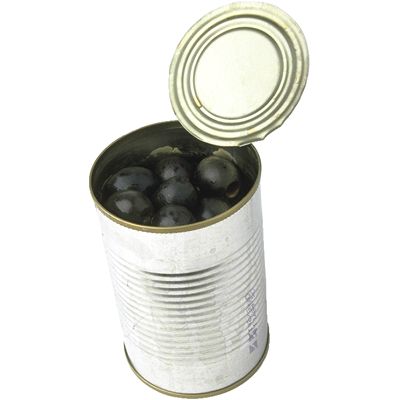 a metal container in which food or drink is preserved without airrecipiente de metal en el que se conservan alimentos o bebidas sin aire; lata: a Coke canuna lata de Coca-Colacan of All we’ve got is a couple of cans of soup.Solo tenemos un par de latas de sopa.2a special metal container that keeps the liquid inside it under pressure. The liquid is released as a spray when you press the buttonrecipiente de metal especial que mantiene el líquido en su interior bajo presión; al pulsar el botón, el líquido sale en forma de aerosolcan of a can of hairsprayun bote de laca para el cabello3especially American English a metal container with a lid that can be removed, used for holding liquidrecipiente de metal con tapa extraíble que se usa para contener líquidos: Two large cans of paint ought to be enough.Con dos latas grandes de pintura debería ser suficiente.4can of worms a very complicated situation that causes a lot of problems when you start to deal with itsituación muy complicada que genera muchos problemas en cuanto se empieza a tratar: I just don’t know what to do – every solution I can think of would just open up a whole new can of worms.Simplemente no sé qué hacer: cualquier solución que se me ocurra no haría más que crear un sinfín de problemas nuevos.5 in the can informalinformal a film that is in the can is complete and ready to be shownun filme "in the can" está terminado y listo para proyectarse6the can informalinformal a)a prisoncárcel b)American English a toiletbaño; retrete7cans [plural] informalinformal headphonesauriculares → carry the can at carry1(26)
1a metal container in which food or drink is preserved without airrecipiente de metal en el que se conservan alimentos o bebidas sin aire; lata: a Coke canuna lata de Coca-Colacan of All we’ve got is a couple of cans of soup.Solo tenemos un par de latas de sopa.2a special metal container that keeps the liquid inside it under pressure. The liquid is released as a spray when you press the buttonrecipiente de metal especial que mantiene el líquido en su interior bajo presión; al pulsar el botón, el líquido sale en forma de aerosolcan of a can of hairsprayun bote de laca para el cabello3especially American English a metal container with a lid that can be removed, used for holding liquidrecipiente de metal con tapa extraíble que se usa para contener líquidos: Two large cans of paint ought to be enough.Con dos latas grandes de pintura debería ser suficiente.4can of worms a very complicated situation that causes a lot of problems when you start to deal with itsituación muy complicada que genera muchos problemas en cuanto se empieza a tratar: I just don’t know what to do – every solution I can think of would just open up a whole new can of worms.Simplemente no sé qué hacer: cualquier solución que se me ocurra no haría más que crear un sinfín de problemas nuevos.5 in the can informalinformal a film that is in the can is complete and ready to be shownun filme "in the can" está terminado y listo para proyectarse6the can informalinformal a)a prisoncárcel b)American English a toiletbaño; retrete7cans [plural] informalinformal headphonesauriculares → carry the can at carry1(26)cancan3 verb (past tense and past participle canned, present participle canning) [transitive] American English 1to preserve food by putting it into a metal container from which all the air is removedconservar alimentos introduciéndolos en un recipiente de metal del que se extrae todo el aire; enlatar SYN tin British English2 informalinformal to dismiss someone from a jobdespedir a alguien de su trabajo SYN sack3can it! spokenoral used to tell someone to stop talking or making a noisese usa para decirle a alguien que deje de hablar o de hacer ruido
1to preserve food by putting it into a metal container from which all the air is removedconservar alimentos introduciéndolos en un recipiente de metal del que se extrae todo el aire; enlatar SYN tin British English2 informalinformal to dismiss someone from a jobdespedir a alguien de su trabajo SYN sack3can it! spokenoral used to tell someone to stop talking or making a noisese usa para decirle a alguien que deje de hablar o de hacer ruido