
bow の英語での意味
bowbow1 /baʊ/ verb 
 すべての翻訳を見る1[intransitive] to bend the top part of your body forward in order to show respect for someone important, or as a way of thanking an audience重要な人物への敬意を示すため、または観客への感謝として上半身を前に曲げる:
  She bowed and left the stage.彼女はお辞儀をして舞台を去った。 Corbett entered the room, bowing respectfully.コーベットは恭しくお辞儀をしながら部屋に入った。 The servant bowed low and handed his master the sealed note.召使いは深々とお辞儀をし、主人に封印された手紙を手渡した。bow before/to He bowed before the king.彼は王の前でお辞儀をした。2bow your head to bend your neck so that you are looking at the ground, especially because you want to show respect for God, or because you are embarrassed or upset地面を見るように首を垂れる。特に神への敬意を示すため、または恥ずかしさや悲しみから: She bowed her head and prayed.彼女は頭を垂れて祈った。 Phil stood, his head bowed in shame.フィルは恥ずかしさに頭を垂れて立っていた。3[intransitive, transitive] to bend your body over something, especially in order to see it more closely特によく見るために、何かの上に体を傾けるbow over Teague sat at his desk, bowed over a book.ティーグは自分の机に座り、本の上に身を傾けていた。4[intransitive, transitive] to bend, or to make something bend曲がる、または何かを曲げる: The trees bowed in the wind.木々は風にしなった。 His back was bowed under the weight of the heavy bag.重い荷物の重さで彼の背中は曲がっていた。5bow and scrape to show too much respect to someone in authority – used to show disapproval権力者に過度な敬意を示す――不満・非難を表すときに使うbow down phrasal verb1to bend your body forward, especially when you are already kneeling, in order to show respect特にひざまずいた状態から、敬意を示すために体を前に傾けるbow down before/to etc Maria bowed down before the statue.マリアは像の前にひれ伏した。 Come, let us bow down in worship.さあ、礼拝してひれ伏そう。2bow down to somebody literary文語 to let someone give you orders or tell you what to do – used to show disapproval他人に命令させたり指図を受け入れたりする――不満・非難を表すときに使うbow out phrasal verb1to stop taking part in an activity, job etc, especially one that you have been doing for a long time特に長く続けてきた活動や仕事などから退くbow out of Reeves thinks it is time for him to bow out of politics.リーブスは、自分が政界から退く時期だと考えている。2to not do something that you have promised or agreed to do約束したことや同意したことをしないでおくbow out of You’re not trying to bow out of this, are you?まさかこれから逃げようとしているんじゃないよね?bow to somebody/something phrasal verb to finally agree to do something, even though you do not want to do itしたくないにもかかわらず、最終的に何かをすることに同意する: Congress may bow to public pressure and lift the arms embargo.議会は世論の圧力に屈して武器禁輸を解除するかもしれない。 Myers finally bowed to the inevitable (=accepted something he could not change) and withdrew from the campaign.マイヤーズはついに避けられない現実に屈し(=変えられないことを受け入れ)、選挙戦から撤退した。
すべての翻訳を見る1[intransitive] to bend the top part of your body forward in order to show respect for someone important, or as a way of thanking an audience重要な人物への敬意を示すため、または観客への感謝として上半身を前に曲げる: She bowed and left the stage.彼女はお辞儀をして舞台を去った。 Corbett entered the room, bowing respectfully.コーベットは恭しくお辞儀をしながら部屋に入った。 The servant bowed low and handed his master the sealed note.召使いは深々とお辞儀をし、主人に封印された手紙を手渡した。bow before/to He bowed before the king.彼は王の前でお辞儀をした。2bow your head to bend your neck so that you are looking at the ground, especially because you want to show respect for God, or because you are embarrassed or upset地面を見るように首を垂れる。特に神への敬意を示すため、または恥ずかしさや悲しみから: She bowed her head and prayed.彼女は頭を垂れて祈った。 Phil stood, his head bowed in shame.フィルは恥ずかしさに頭を垂れて立っていた。3[intransitive, transitive] to bend your body over something, especially in order to see it more closely特によく見るために、何かの上に体を傾けるbow over Teague sat at his desk, bowed over a book.ティーグは自分の机に座り、本の上に身を傾けていた。4[intransitive, transitive] to bend, or to make something bend曲がる、または何かを曲げる: The trees bowed in the wind.木々は風にしなった。 His back was bowed under the weight of the heavy bag.重い荷物の重さで彼の背中は曲がっていた。5bow and scrape to show too much respect to someone in authority – used to show disapproval権力者に過度な敬意を示す――不満・非難を表すときに使うbow down phrasal verb1to bend your body forward, especially when you are already kneeling, in order to show respect特にひざまずいた状態から、敬意を示すために体を前に傾けるbow down before/to etc Maria bowed down before the statue.マリアは像の前にひれ伏した。 Come, let us bow down in worship.さあ、礼拝してひれ伏そう。2bow down to somebody literary文語 to let someone give you orders or tell you what to do – used to show disapproval他人に命令させたり指図を受け入れたりする――不満・非難を表すときに使うbow out phrasal verb1to stop taking part in an activity, job etc, especially one that you have been doing for a long time特に長く続けてきた活動や仕事などから退くbow out of Reeves thinks it is time for him to bow out of politics.リーブスは、自分が政界から退く時期だと考えている。2to not do something that you have promised or agreed to do約束したことや同意したことをしないでおくbow out of You’re not trying to bow out of this, are you?まさかこれから逃げようとしているんじゃないよね?bow to somebody/something phrasal verb to finally agree to do something, even though you do not want to do itしたくないにもかかわらず、最終的に何かをすることに同意する: Congress may bow to public pressure and lift the arms embargo.議会は世論の圧力に屈して武器禁輸を解除するかもしれない。 Myers finally bowed to the inevitable (=accepted something he could not change) and withdrew from the campaign.マイヤーズはついに避けられない現実に屈し(=変えられないことを受け入れ)、選挙戦から撤退した。bowbow2 /baʊ/ noun 1[countable] the act of bending the top part of your body forward to show respect for someone when you meet them, or as a way of thanking an audience出会った人への敬意を示すため、または観客への感謝として上半身を前に曲げる動作take/give a bow (=bow to the audience at the end of a performance)(=公演の最後に観客に向かってお辞儀をする) The music ended and the girl took a bow.音楽が終わり、少女は観客にお辞儀をした。 He gave a final bow just as the curtains came down.幕が下りる瞬間、彼は最後のお辞儀をした。 This is done with a formal bow to the king or queen.これは国王または女王への正式なお辞儀を伴って行われる。2 (also bows [plural]) [countable] the front part of a ship船首(せんしゅ)
1[countable] the act of bending the top part of your body forward to show respect for someone when you meet them, or as a way of thanking an audience出会った人への敬意を示すため、または観客への感謝として上半身を前に曲げる動作take/give a bow (=bow to the audience at the end of a performance)(=公演の最後に観客に向かってお辞儀をする) The music ended and the girl took a bow.音楽が終わり、少女は観客にお辞儀をした。 He gave a final bow just as the curtains came down.幕が下りる瞬間、彼は最後のお辞儀をした。 This is done with a formal bow to the king or queen.これは国王または女王への正式なお辞儀を伴って行われる。2 (also bows [plural]) [countable] the front part of a ship船首(せんしゅ)bowbow3 /bəʊ/ noun [countable] 1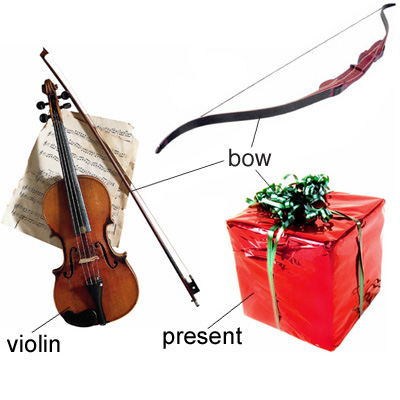 a weapon used for shooting arrows, made of a long thin piece of wood held in a curve by a tight string矢を射るための武器。細長い木を張った弦で弓なりにしたもの: a bow and arrow弓と矢2a knot of cloth or string, with a curved part on either side and two loose ends, worn in the hair as decoration or for tying shoelacesリボン結び。布やひもを結んだもので、両側に弧状の輪があり両端がたれている。髪飾りや靴ひも結びに使う: Ella wore a bow in her hair.エラは髪にリボンをつけていた。in a bow long chestnut hair tied back in a bowリボンで後ろにまとめた長い栗色の髪3a long thin piece of wood with a tight string fastened along it, used to play musical instruments such as the violin or cello細長い木に弦を張ったもので、バイオリンやチェロなどの弦楽器の演奏に使う弓 → have more than one string to your bow at string1(8)
1a weapon used for shooting arrows, made of a long thin piece of wood held in a curve by a tight string矢を射るための武器。細長い木を張った弦で弓なりにしたもの: a bow and arrow弓と矢2a knot of cloth or string, with a curved part on either side and two loose ends, worn in the hair as decoration or for tying shoelacesリボン結び。布やひもを結んだもので、両側に弧状の輪があり両端がたれている。髪飾りや靴ひも結びに使う: Ella wore a bow in her hair.エラは髪にリボンをつけていた。in a bow long chestnut hair tied back in a bowリボンで後ろにまとめた長い栗色の髪3a long thin piece of wood with a tight string fastened along it, used to play musical instruments such as the violin or cello細長い木に弦を張ったもので、バイオリンやチェロなどの弦楽器の演奏に使う弓 → have more than one string to your bow at string1(8)