
can의 영어 뜻
cancan1 /kən; strong kæn/ modal verb (negative short form can’t) 
 모든 번역 보기1ability to be able to do something or to know how to do something무언가를 할 수 있거나 하는 방법을 알다:
  You can swim, can’t you?수영할 수 있죠, 그렇죠? Even a small personal computer can store vast amounts of information.소형 개인용 컴퓨터조차도 방대한 양의 정보를 저장할 수 있다. Gabriella can speak French fluently.Gabriella는 프랑스어를 유창하게 말할 수 있다. I’m afraid Mr Harding can’t see you now – he’s busy.죄송하지만 Harding 씨는 지금 만나실 수 없습니다. 바쁘시거든요. The police are doing all they can to find her.경찰은 그녀를 찾기 위해 할 수 있는 모든 것을 하고 있다.2requesting spoken구어 used to ask someone to do something or give you something누군가에게 무언가를 해달라거나 주도록 요청할 때 사용: Can I have a drink, please?음료 한 잔 주실 수 있나요? Can you help me lift this box?이 상자 드는 것 좀 도와주실 수 있나요?3allowed to be allowed to do something or to have the right or power to do something무언가를 할 허가를 받거나 그 권리나 권한을 가지다: You can’t park here – it’s a no parking zone.여기에 주차할 수 없습니다. 주차 금지 구역입니다. ‘Can we go home now?’ ‘No we can’t.’"이제 집에 가도 되나요?" "안 됩니다." A police officer can insist on seeing a driver’s license.경찰관은 운전면허증 제시를 요구할 수 있다.4possibility used to say that something is possible어떤 일이 가능하다고 말할 때 사용: I am confident a solution can be found.나는 해결책을 찾을 수 있다고 확신한다. There can be no doubt that he is guilty.그가 유죄라는 것은 의심의 여지가 없다. The boxes can be stored flat.상자들은 납작하게 접어 보관할 수 있다. Can he still be alive after all this time?이렇게 긴 시간이 지난 후에도 그가 아직 살아 있을 수 있을까?5seeing/hearing etc used with the verbs ‘see’, ‘hear’, ‘feel’, ‘taste’, and ‘smell’, and with verbs connected with thinking, to mean that someone sees something, hears something etc'see'(보다), 'hear'(듣다), 'feel'(느끼다), 'taste'(맛보다), 'smell'(냄새 맡다) 및 사고 관련 동사와 함께 쓰여 누군가가 무언가를 보거나 듣는다는 것 등을 나타낼 때 사용: Here they are – I can see their car.저기 있네 — 그들의 차가 보여. Can you smell something burning?뭔가 타는 냄새 나요? I can’t understand why you’re so upset.왜 그렇게 화가 났는지 이해할 수 없어요. He can’t remember where he put the tickets.그는 표를 어디에 뒀는지 기억하지 못한다.6not true [in negatives] used to say that you do not believe that something is true어떤 것이 사실이라고 믿지 않을 때 사용: This can’t be the right road.이 길이 맞을 리가 없어. It can’t be easy caring for someone else’s children.다른 사람의 아이들을 돌보는 것이 쉬울 리 없다.7should not [in questions and negatives] used to say that someone should not or must not do something누군가가 어떤 일을 해서는 안 되거나 하면 안 된다고 말할 때 사용: You can’t expect the world to change overnight.세상이 하룻밤 사이에 바뀌기를 기대할 수는 없어. We can’t go on like this.우리는 이렇게 계속해 나갈 수 없어. Jill’s left her husband, but can you blame her after the way he treated her?Jill이 남편을 떠났지만, 그가 그녀를 대한 방식을 생각하면 그녀를 탓할 수 있겠어요?8surprise/anger [usually in questions and negatives] spoken구어 used when you are surprised or angry놀랐거나 화가 났을 때 사용: You can’t be serious!진심일 리가 없잖아요! They can’t have arrived already, surely!설마 벌써 도착했을 리가 없잖아요! How can you be so stupid!어떻게 이렇게 어리석을 수가 있어!9sometimes used to say what sometimes happens or how someone sometimes behaves때때로 일어나는 일이나 누군가가 때때로 행동하는 방식을 말할 때 사용: It can be quite cold here at night.여기는 밤에 꽤 추울 때가 있어. Peter can be really annoying.Peter는 정말 짜증스러울 때가 있어.10giving orders spoken구어 used to tell someone in an angry way to do something화가 나서 누군가에게 무언가를 하라고 말할 때 사용: And you can stop that quarrelling, the pair of you.너희 둘 다 그 싸움 좀 그만해. If you won’t keep quiet, you can get out.조용히 하지 않을 거라면 나가도 돼.11no can do spoken구어 used to say that it is impossible for you to do what someone has asked you to do누군가가 요청한 것을 하는 것이 불가능하다고 말할 때 사용: Sorry, John, no can do.미안해요, John, 안 되겠어요.GRAMMAR: Patterns with can문법: can을 사용하는 패턴• Like other modal verbs, you use can before the base form of the main verb (=the infinitive without ‘to’): · We can hear the birds singing.· You can go home now.· Sharks can be dangerous. ✗Don’t say: We can to go home. | We can going home.• 다른 조동사와 마찬가지로, can 뒤에는 주동사의 원형(즉 'to' 없는 부정사)을 사용합니다: · We can hear the birds singing.(새들이 노래하는 것을 들을 수 있다.) · You can go home now.(이제 집에 가도 된다.) · Sharks can be dangerous.(상어는 위험할 수 있다.) ✗이렇게 말하지 마세요: We can to go home. | We can going home.• The past tense of can is could: · We could hear the birds singing.· The teacher said we could go home.• can의 과거형은 could입니다: · We could hear the birds singing.(새들이 노래하는 것을 들을 수 있었다.) · The teacher said we could go home.(선생님은 우리가 집에 가도 된다고 했다.)• You also use was/were able to when talking about the ability to do something in the past, especially something that was difficult: · He was able to walk a few steps.• 과거에 무언가를 할 능력, 특히 어려운 일에 대해 말할 때 was/were able to도 사용합니다: · He was able to walk a few steps.(그는 몇 걸음 걸을 수 있었다.)• In questions you say Can I/he/she etc: · Can we go home?• 의문문에서는 Can I/he/she 등을 사용합니다: · Can we go home?(우리 집에 가도 되나요?)• In negatives you say can’t (spoken) or cannot (written): · I can’t hear you!· He cannot leave prison.• 부정문에서는 can't(구어) 또는 cannot(문어)을 사용합니다: · I can't hear you!(목소리가 안 들려요!) · He cannot leave prison.(그는 감옥을 떠날 수 없다.)• You also use is/are unable to when saying that someone does not have the ability to do something: · He is unable to walk.Grammar guide ‒ VERBS• 누군가가 무언가를 할 능력이 없다고 말할 때 is/are unable to도 사용합니다: · He is unable to walk.(그는 걸을 수 없다.) 문법 안내 ‒ 동사THESAURUS유의어to be able to do something무언가를 할 수 있다can do something to have the ability, opportunity, time, or equipment that you need in order to do something. Could is used as the past form, and is also used to say what is or may be possible무언가를 하기 위해 필요한 능력, 기회, 시간 또는 장비를 갖추다. could는 과거형으로 사용되며 무언가가 가능하거나 가능할 수도 있음을 나타낼 때도 사용됨: · ‘I don’t think Mike can drive.’ ‘Yes, he can.’· "Mike는 운전할 줄 모르는 것 같아." "아니, 할 수 있어."· He can run faster than me.· 그는 나보다 더 빨리 달릴 수 있다.· Can you see the TV, or should I move?· TV가 보여요, 아니면 제가 비켜드릴까요?· This program can translate your e-mail into other languages.· 이 프로그램은 이메일을 다른 언어로 번역할 수 있다.· How many hamburgers do you think you can eat?· 햄버거를 몇 개나 먹을 수 있을 것 같아요?· Adrian could read when he was four.· Adrian은 네 살 때 이미 글을 읽을 수 있었다.· If we had a boat we could row across to the island.· 배가 있다면 섬까지 노를 저어 갈 수 있을 텐데.· Why didn’t they ask me? I could have done it for them for half the price.· 왜 나한테 부탁하지 않았을까? 절반 가격에 해줄 수 있었는데.· She could win.· 그녀가 이길 수도 있다.be able to do something used when talking about ability or success in the past or ability in the future, or when you need to use an infinitive. It is also used instead of can in more formal English과거의 능력이나 성공, 또는 미래의 능력에 대해 말하거나 부정사를 사용해야 할 때 쓰임. 더 격식 있는 영어에서 can 대신 사용되기도 함: · I was able to get a good job (=I got one).· 나는 좋은 직장을 얻을 수 있었다(= 실제로 얻었다).· Will you be able to carry those bags on your own?· 그 가방들을 혼자 들고 갈 수 있겠어요?· If you want to join the expedition, you must be able to speak Spanish.· 탐험에 참가하고 싶다면 스페인어를 할 수 있어야 한다.· The young birds are now able to fly.· 어린 새들은 이제 날 수 있게 되었다.be capable of something to have the ability, energy, or qualities needed to do something, especially something very difficult or unusual – use this about people or machines무언가를 하는 데 필요한 능력, 에너지 또는 자질을 갖추다. 특히 매우 어렵거나 특이한 일에 대해 — 사람이나 기계에 대해 씀: · She’s perfectly capable (=completely capable) of dealing with the situation.· 그녀는 그 상황을 완벽하게(= 완전히) 처리할 능력이 있다.· The car is capable of a top speed of 200 mph.· 그 차는 최고 시속 200마일을 낼 수 있다.· No one thought he was capable of murder.· 아무도 그가 살인을 저지를 수 있다고 생각하지 않았다.have the ability to do something to be able to do something, especially something that is unusual or that most people cannot do무언가를 할 수 있다. 특히 특이하거나 대부분의 사람들이 할 수 없는 것에 대해: · She seemed to have the ability to make people do anything she wanted.· 그녀는 사람들이 자신이 원하는 것을 무엇이든 하게 만드는 능력이 있는 것 같았다.· I believe the team definitely has the ability to win the championship.· 나는 그 팀이 우승할 능력이 분명히 있다고 믿는다.be in a position to do something to be able to do something because you have enough knowledge, power, money, or equipment to do it충분한 지식, 권력, 돈 또는 장비가 있어서 무언가를 할 수 있다: · We will have to run more tests before we are in a position to say whether the document is authentic or not.· 그 문서가 진본인지 아닌지 말할 수 있는 입장이 되기 전에 더 많은 검사를 실시해야 할 것이다.· They expect be in a position to begin construction within two years.· 그들은 2년 안에 건설을 시작할 수 있는 입장이 될 것으로 예상한다.manage to do something to succeed in doing something difficult, especially after trying very hard어려운 일을 해내다. 특히 매우 열심히 노력한 후에: · He finally managed to find an apartment near his office.· 그는 마침내 사무실 근처에 아파트를 구하는 데 성공했다.· At least three of the hostages managed to escape.· 인질 중 적어도 세 명이 탈출에 성공했다.to be unable to do something무언가를 할 수 없다can’t/cannot do something to be unable to do something because you do not have the ability, opportunity, time, or equipment that you need. Couldn’t/could not is used as the past form필요한 능력, 기회, 시간 또는 장비가 없어서 무언가를 할 수 없다. couldn't/could not은 과거형으로 사용됨: · Louise can’t see anything without her glasses.· Louise는 안경 없이는 아무것도 볼 수 없다.· He couldn’t remember where he had left the car.· 그는 차를 어디에 두었는지 기억할 수 없었다.· ‘Will you help me move this?’ ‘I’m sorry, I can’t – my back’s still giving me trouble.’· "이것 옮기는 것 좀 도와줄 수 있어요?" "죄송해요, 안 되겠어요 — 허리가 아직도 말썽이라서요."· I couldn’t have done it without your help.· 당신의 도움 없이는 해낼 수 없었을 거예요.· I could never have climbed that ridge – I’m too out of shape.· 저 산등성이를 결코 오를 수 없었을 거야 — 몸 상태가 너무 안 좋거든.· Scientists still cannot explain exactly how the virus reproduces.· 과학자들은 아직도 그 바이러스가 어떻게 복제되는지 정확히 설명할 수 없다.· Sarah could not understand why anyone would want to hurt her.· Sarah는 왜 누군가가 자신을 해치려 하는지 이해할 수 없었다.not be able to do something used when talking about inability in the past or the future, when you need to use an infinitive, and in more formal English과거 또는 미래의 불능에 대해 말할 때, 부정사를 사용해야 할 때, 그리고 더 격식 있는 영어에서 사용됨: · Unfortunately, I wasn’t able to help them.· 안타깝게도 그들을 도울 수 없었다.· I don’t think I’ll be able to come to the meeting after all.· 결국 회의에 참석할 수 없을 것 같다.· The doctor told Tina she wouldn’t be able to have children.· 의사는 Tina에게 아이를 가질 수 없을 것이라고 말했다.· I’ve looked all over the house but I haven’t been able to find my keys anywhere.· 집 안을 샅샅이 찾아봤지만 어디에서도 열쇠를 찾을 수 없었다.be unable to do something especially written특히 문어체에서 to not be able to do something, especially something important that you want to do or need to do무언가를 할 수 없다. 특히 하고 싶거나 해야 하는 중요한 일에 대해: · He was unable to sleep and lay awake all night.· 그는 잠을 이룰 수 없어 밤새 깨어 누워 있었다.· Many passengers were unable to reach the lifeboats in time.· 많은 승객들이 제때 구명정에 도달할 수 없었다.not be in a position to do something (also be in no position to do something) formal격식체 to not be able to do something because you do not have enough knowledge, power, money, or equipment to do it충분한 지식, 권력, 돈 또는 장비가 없어서 무언가를 할 수 없다: · I’m afraid I’m not in a position to answer your questions.· 죄송하지만 저는 귀하의 질문에 답할 수 있는 입장이 아닙니다.· Having committed military force there, America is in no position to repeat this strategy elsewhere.· 그곳에 군사력을 투입한 이상, 미국은 다른 곳에서 이 전략을 반복할 입장이 아니다.not be capable of something (also be incapable of something) to not have the physical strength or mental ability to do something – often used when criticizing someone무언가를 할 신체적 힘이나 정신적 능력이 없다 — 종종 누군가를 비판할 때 사용됨: · My son seems to be incapable of keeping a job.· 내 아들은 직장을 유지하지 못하는 것 같다.· She’s not capable of looking after herself anymore.· 그녀는 더 이상 스스로를 돌볼 능력이 없다.· Her father was a man who was utterly incapable of pity or sympathy.· 그녀의 아버지는 연민이나 동정심이 전혀 없는 사람이었다.
모든 번역 보기1ability to be able to do something or to know how to do something무언가를 할 수 있거나 하는 방법을 알다: You can swim, can’t you?수영할 수 있죠, 그렇죠? Even a small personal computer can store vast amounts of information.소형 개인용 컴퓨터조차도 방대한 양의 정보를 저장할 수 있다. Gabriella can speak French fluently.Gabriella는 프랑스어를 유창하게 말할 수 있다. I’m afraid Mr Harding can’t see you now – he’s busy.죄송하지만 Harding 씨는 지금 만나실 수 없습니다. 바쁘시거든요. The police are doing all they can to find her.경찰은 그녀를 찾기 위해 할 수 있는 모든 것을 하고 있다.2requesting spoken구어 used to ask someone to do something or give you something누군가에게 무언가를 해달라거나 주도록 요청할 때 사용: Can I have a drink, please?음료 한 잔 주실 수 있나요? Can you help me lift this box?이 상자 드는 것 좀 도와주실 수 있나요?3allowed to be allowed to do something or to have the right or power to do something무언가를 할 허가를 받거나 그 권리나 권한을 가지다: You can’t park here – it’s a no parking zone.여기에 주차할 수 없습니다. 주차 금지 구역입니다. ‘Can we go home now?’ ‘No we can’t.’"이제 집에 가도 되나요?" "안 됩니다." A police officer can insist on seeing a driver’s license.경찰관은 운전면허증 제시를 요구할 수 있다.4possibility used to say that something is possible어떤 일이 가능하다고 말할 때 사용: I am confident a solution can be found.나는 해결책을 찾을 수 있다고 확신한다. There can be no doubt that he is guilty.그가 유죄라는 것은 의심의 여지가 없다. The boxes can be stored flat.상자들은 납작하게 접어 보관할 수 있다. Can he still be alive after all this time?이렇게 긴 시간이 지난 후에도 그가 아직 살아 있을 수 있을까?5seeing/hearing etc used with the verbs ‘see’, ‘hear’, ‘feel’, ‘taste’, and ‘smell’, and with verbs connected with thinking, to mean that someone sees something, hears something etc'see'(보다), 'hear'(듣다), 'feel'(느끼다), 'taste'(맛보다), 'smell'(냄새 맡다) 및 사고 관련 동사와 함께 쓰여 누군가가 무언가를 보거나 듣는다는 것 등을 나타낼 때 사용: Here they are – I can see their car.저기 있네 — 그들의 차가 보여. Can you smell something burning?뭔가 타는 냄새 나요? I can’t understand why you’re so upset.왜 그렇게 화가 났는지 이해할 수 없어요. He can’t remember where he put the tickets.그는 표를 어디에 뒀는지 기억하지 못한다.6not true [in negatives] used to say that you do not believe that something is true어떤 것이 사실이라고 믿지 않을 때 사용: This can’t be the right road.이 길이 맞을 리가 없어. It can’t be easy caring for someone else’s children.다른 사람의 아이들을 돌보는 것이 쉬울 리 없다.7should not [in questions and negatives] used to say that someone should not or must not do something누군가가 어떤 일을 해서는 안 되거나 하면 안 된다고 말할 때 사용: You can’t expect the world to change overnight.세상이 하룻밤 사이에 바뀌기를 기대할 수는 없어. We can’t go on like this.우리는 이렇게 계속해 나갈 수 없어. Jill’s left her husband, but can you blame her after the way he treated her?Jill이 남편을 떠났지만, 그가 그녀를 대한 방식을 생각하면 그녀를 탓할 수 있겠어요?8surprise/anger [usually in questions and negatives] spoken구어 used when you are surprised or angry놀랐거나 화가 났을 때 사용: You can’t be serious!진심일 리가 없잖아요! They can’t have arrived already, surely!설마 벌써 도착했을 리가 없잖아요! How can you be so stupid!어떻게 이렇게 어리석을 수가 있어!9sometimes used to say what sometimes happens or how someone sometimes behaves때때로 일어나는 일이나 누군가가 때때로 행동하는 방식을 말할 때 사용: It can be quite cold here at night.여기는 밤에 꽤 추울 때가 있어. Peter can be really annoying.Peter는 정말 짜증스러울 때가 있어.10giving orders spoken구어 used to tell someone in an angry way to do something화가 나서 누군가에게 무언가를 하라고 말할 때 사용: And you can stop that quarrelling, the pair of you.너희 둘 다 그 싸움 좀 그만해. If you won’t keep quiet, you can get out.조용히 하지 않을 거라면 나가도 돼.11no can do spoken구어 used to say that it is impossible for you to do what someone has asked you to do누군가가 요청한 것을 하는 것이 불가능하다고 말할 때 사용: Sorry, John, no can do.미안해요, John, 안 되겠어요.GRAMMAR: Patterns with can문법: can을 사용하는 패턴• Like other modal verbs, you use can before the base form of the main verb (=the infinitive without ‘to’): · We can hear the birds singing.· You can go home now.· Sharks can be dangerous. ✗Don’t say: We can to go home. | We can going home.• 다른 조동사와 마찬가지로, can 뒤에는 주동사의 원형(즉 'to' 없는 부정사)을 사용합니다: · We can hear the birds singing.(새들이 노래하는 것을 들을 수 있다.) · You can go home now.(이제 집에 가도 된다.) · Sharks can be dangerous.(상어는 위험할 수 있다.) ✗이렇게 말하지 마세요: We can to go home. | We can going home.• The past tense of can is could: · We could hear the birds singing.· The teacher said we could go home.• can의 과거형은 could입니다: · We could hear the birds singing.(새들이 노래하는 것을 들을 수 있었다.) · The teacher said we could go home.(선생님은 우리가 집에 가도 된다고 했다.)• You also use was/were able to when talking about the ability to do something in the past, especially something that was difficult: · He was able to walk a few steps.• 과거에 무언가를 할 능력, 특히 어려운 일에 대해 말할 때 was/were able to도 사용합니다: · He was able to walk a few steps.(그는 몇 걸음 걸을 수 있었다.)• In questions you say Can I/he/she etc: · Can we go home?• 의문문에서는 Can I/he/she 등을 사용합니다: · Can we go home?(우리 집에 가도 되나요?)• In negatives you say can’t (spoken) or cannot (written): · I can’t hear you!· He cannot leave prison.• 부정문에서는 can't(구어) 또는 cannot(문어)을 사용합니다: · I can't hear you!(목소리가 안 들려요!) · He cannot leave prison.(그는 감옥을 떠날 수 없다.)• You also use is/are unable to when saying that someone does not have the ability to do something: · He is unable to walk.Grammar guide ‒ VERBS• 누군가가 무언가를 할 능력이 없다고 말할 때 is/are unable to도 사용합니다: · He is unable to walk.(그는 걸을 수 없다.) 문법 안내 ‒ 동사THESAURUS유의어to be able to do something무언가를 할 수 있다can do something to have the ability, opportunity, time, or equipment that you need in order to do something. Could is used as the past form, and is also used to say what is or may be possible무언가를 하기 위해 필요한 능력, 기회, 시간 또는 장비를 갖추다. could는 과거형으로 사용되며 무언가가 가능하거나 가능할 수도 있음을 나타낼 때도 사용됨: · ‘I don’t think Mike can drive.’ ‘Yes, he can.’· "Mike는 운전할 줄 모르는 것 같아." "아니, 할 수 있어."· He can run faster than me.· 그는 나보다 더 빨리 달릴 수 있다.· Can you see the TV, or should I move?· TV가 보여요, 아니면 제가 비켜드릴까요?· This program can translate your e-mail into other languages.· 이 프로그램은 이메일을 다른 언어로 번역할 수 있다.· How many hamburgers do you think you can eat?· 햄버거를 몇 개나 먹을 수 있을 것 같아요?· Adrian could read when he was four.· Adrian은 네 살 때 이미 글을 읽을 수 있었다.· If we had a boat we could row across to the island.· 배가 있다면 섬까지 노를 저어 갈 수 있을 텐데.· Why didn’t they ask me? I could have done it for them for half the price.· 왜 나한테 부탁하지 않았을까? 절반 가격에 해줄 수 있었는데.· She could win.· 그녀가 이길 수도 있다.be able to do something used when talking about ability or success in the past or ability in the future, or when you need to use an infinitive. It is also used instead of can in more formal English과거의 능력이나 성공, 또는 미래의 능력에 대해 말하거나 부정사를 사용해야 할 때 쓰임. 더 격식 있는 영어에서 can 대신 사용되기도 함: · I was able to get a good job (=I got one).· 나는 좋은 직장을 얻을 수 있었다(= 실제로 얻었다).· Will you be able to carry those bags on your own?· 그 가방들을 혼자 들고 갈 수 있겠어요?· If you want to join the expedition, you must be able to speak Spanish.· 탐험에 참가하고 싶다면 스페인어를 할 수 있어야 한다.· The young birds are now able to fly.· 어린 새들은 이제 날 수 있게 되었다.be capable of something to have the ability, energy, or qualities needed to do something, especially something very difficult or unusual – use this about people or machines무언가를 하는 데 필요한 능력, 에너지 또는 자질을 갖추다. 특히 매우 어렵거나 특이한 일에 대해 — 사람이나 기계에 대해 씀: · She’s perfectly capable (=completely capable) of dealing with the situation.· 그녀는 그 상황을 완벽하게(= 완전히) 처리할 능력이 있다.· The car is capable of a top speed of 200 mph.· 그 차는 최고 시속 200마일을 낼 수 있다.· No one thought he was capable of murder.· 아무도 그가 살인을 저지를 수 있다고 생각하지 않았다.have the ability to do something to be able to do something, especially something that is unusual or that most people cannot do무언가를 할 수 있다. 특히 특이하거나 대부분의 사람들이 할 수 없는 것에 대해: · She seemed to have the ability to make people do anything she wanted.· 그녀는 사람들이 자신이 원하는 것을 무엇이든 하게 만드는 능력이 있는 것 같았다.· I believe the team definitely has the ability to win the championship.· 나는 그 팀이 우승할 능력이 분명히 있다고 믿는다.be in a position to do something to be able to do something because you have enough knowledge, power, money, or equipment to do it충분한 지식, 권력, 돈 또는 장비가 있어서 무언가를 할 수 있다: · We will have to run more tests before we are in a position to say whether the document is authentic or not.· 그 문서가 진본인지 아닌지 말할 수 있는 입장이 되기 전에 더 많은 검사를 실시해야 할 것이다.· They expect be in a position to begin construction within two years.· 그들은 2년 안에 건설을 시작할 수 있는 입장이 될 것으로 예상한다.manage to do something to succeed in doing something difficult, especially after trying very hard어려운 일을 해내다. 특히 매우 열심히 노력한 후에: · He finally managed to find an apartment near his office.· 그는 마침내 사무실 근처에 아파트를 구하는 데 성공했다.· At least three of the hostages managed to escape.· 인질 중 적어도 세 명이 탈출에 성공했다.to be unable to do something무언가를 할 수 없다can’t/cannot do something to be unable to do something because you do not have the ability, opportunity, time, or equipment that you need. Couldn’t/could not is used as the past form필요한 능력, 기회, 시간 또는 장비가 없어서 무언가를 할 수 없다. couldn't/could not은 과거형으로 사용됨: · Louise can’t see anything without her glasses.· Louise는 안경 없이는 아무것도 볼 수 없다.· He couldn’t remember where he had left the car.· 그는 차를 어디에 두었는지 기억할 수 없었다.· ‘Will you help me move this?’ ‘I’m sorry, I can’t – my back’s still giving me trouble.’· "이것 옮기는 것 좀 도와줄 수 있어요?" "죄송해요, 안 되겠어요 — 허리가 아직도 말썽이라서요."· I couldn’t have done it without your help.· 당신의 도움 없이는 해낼 수 없었을 거예요.· I could never have climbed that ridge – I’m too out of shape.· 저 산등성이를 결코 오를 수 없었을 거야 — 몸 상태가 너무 안 좋거든.· Scientists still cannot explain exactly how the virus reproduces.· 과학자들은 아직도 그 바이러스가 어떻게 복제되는지 정확히 설명할 수 없다.· Sarah could not understand why anyone would want to hurt her.· Sarah는 왜 누군가가 자신을 해치려 하는지 이해할 수 없었다.not be able to do something used when talking about inability in the past or the future, when you need to use an infinitive, and in more formal English과거 또는 미래의 불능에 대해 말할 때, 부정사를 사용해야 할 때, 그리고 더 격식 있는 영어에서 사용됨: · Unfortunately, I wasn’t able to help them.· 안타깝게도 그들을 도울 수 없었다.· I don’t think I’ll be able to come to the meeting after all.· 결국 회의에 참석할 수 없을 것 같다.· The doctor told Tina she wouldn’t be able to have children.· 의사는 Tina에게 아이를 가질 수 없을 것이라고 말했다.· I’ve looked all over the house but I haven’t been able to find my keys anywhere.· 집 안을 샅샅이 찾아봤지만 어디에서도 열쇠를 찾을 수 없었다.be unable to do something especially written특히 문어체에서 to not be able to do something, especially something important that you want to do or need to do무언가를 할 수 없다. 특히 하고 싶거나 해야 하는 중요한 일에 대해: · He was unable to sleep and lay awake all night.· 그는 잠을 이룰 수 없어 밤새 깨어 누워 있었다.· Many passengers were unable to reach the lifeboats in time.· 많은 승객들이 제때 구명정에 도달할 수 없었다.not be in a position to do something (also be in no position to do something) formal격식체 to not be able to do something because you do not have enough knowledge, power, money, or equipment to do it충분한 지식, 권력, 돈 또는 장비가 없어서 무언가를 할 수 없다: · I’m afraid I’m not in a position to answer your questions.· 죄송하지만 저는 귀하의 질문에 답할 수 있는 입장이 아닙니다.· Having committed military force there, America is in no position to repeat this strategy elsewhere.· 그곳에 군사력을 투입한 이상, 미국은 다른 곳에서 이 전략을 반복할 입장이 아니다.not be capable of something (also be incapable of something) to not have the physical strength or mental ability to do something – often used when criticizing someone무언가를 할 신체적 힘이나 정신적 능력이 없다 — 종종 누군가를 비판할 때 사용됨: · My son seems to be incapable of keeping a job.· 내 아들은 직장을 유지하지 못하는 것 같다.· She’s not capable of looking after herself anymore.· 그녀는 더 이상 스스로를 돌볼 능력이 없다.· Her father was a man who was utterly incapable of pity or sympathy.· 그녀의 아버지는 연민이나 동정심이 전혀 없는 사람이었다.cancan2 /kæn/ noun [countable] 1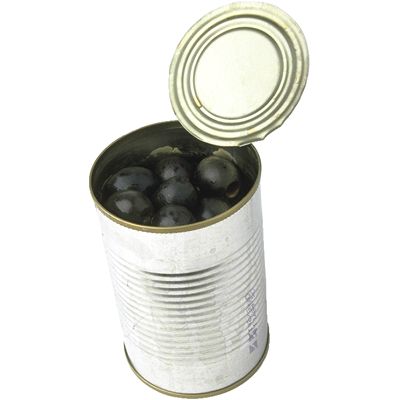 a metal container in which food or drink is preserved without air공기 없이 식품이나 음료를 보존하는 금속 용기;캔: a Coke can콜라 캔can of All we’ve got is a couple of cans of soup.우리가 가진 것이라곤 수프 캔 두어 개뿐이다.2a special metal container that keeps the liquid inside it under pressure. The liquid is released as a spray when you press the button내부 액체를 압력 상태로 유지하는 특수 금속 용기. 버튼을 누르면 액체가 분무 형태로 분사됨can of a can of hairspray헤어 스프레이 한 캔3especially American English a metal container with a lid that can be removed, used for holding liquid분리 가능한 뚜껑이 있는 금속 용기로 액체를 담는 데 사용됨: Two large cans of paint ought to be enough.페인트 큰 캔 두 개면 충분할 것이다.4can of worms a very complicated situation that causes a lot of problems when you start to deal with it다루기 시작하면 많은 문제를 일으키는 매우 복잡한 상황: I just don’t know what to do – every solution I can think of would just open up a whole new can of worms.어떻게 해야 할지 모르겠어 — 생각해낼 수 있는 해결책마다 새로운 문제 덩어리만 만들 뿐이야.5 in the can informal비격식 a film that is in the can is complete and ready to be shown영화가 "in the can"이라는 것은 완성되어 상영 준비가 된 상태를 의미함6the can informal비격식 a)a prison감옥 b)American English a toilet화장실7cans [plural] informal비격식 headphones헤드폰 → carry the can at carry1(26)
1a metal container in which food or drink is preserved without air공기 없이 식품이나 음료를 보존하는 금속 용기;캔: a Coke can콜라 캔can of All we’ve got is a couple of cans of soup.우리가 가진 것이라곤 수프 캔 두어 개뿐이다.2a special metal container that keeps the liquid inside it under pressure. The liquid is released as a spray when you press the button내부 액체를 압력 상태로 유지하는 특수 금속 용기. 버튼을 누르면 액체가 분무 형태로 분사됨can of a can of hairspray헤어 스프레이 한 캔3especially American English a metal container with a lid that can be removed, used for holding liquid분리 가능한 뚜껑이 있는 금속 용기로 액체를 담는 데 사용됨: Two large cans of paint ought to be enough.페인트 큰 캔 두 개면 충분할 것이다.4can of worms a very complicated situation that causes a lot of problems when you start to deal with it다루기 시작하면 많은 문제를 일으키는 매우 복잡한 상황: I just don’t know what to do – every solution I can think of would just open up a whole new can of worms.어떻게 해야 할지 모르겠어 — 생각해낼 수 있는 해결책마다 새로운 문제 덩어리만 만들 뿐이야.5 in the can informal비격식 a film that is in the can is complete and ready to be shown영화가 "in the can"이라는 것은 완성되어 상영 준비가 된 상태를 의미함6the can informal비격식 a)a prison감옥 b)American English a toilet화장실7cans [plural] informal비격식 headphones헤드폰 → carry the can at carry1(26)cancan3 verb (past tense and past participle canned, present participle canning) [transitive] American English 1to preserve food by putting it into a metal container from which all the air is removed공기를 모두 제거한 금속 용기에 식품을 넣어 보존하다; 통조림으로 만들다 SYN tin British English2 informal비격식 to dismiss someone from a job누군가를 해고하다 SYN sack3can it! spoken구어 used to tell someone to stop talking or making a noise누군가에게 말하거나 소음을 내는 것을 멈추라고 말할 때 사용
1to preserve food by putting it into a metal container from which all the air is removed공기를 모두 제거한 금속 용기에 식품을 넣어 보존하다; 통조림으로 만들다 SYN tin British English2 informal비격식 to dismiss someone from a job누군가를 해고하다 SYN sack3can it! spoken구어 used to tell someone to stop talking or making a noise누군가에게 말하거나 소음을 내는 것을 멈추라고 말할 때 사용