
can 的英语意思
cancan1 /kən; strong kæn/ modal verb (negative short form can’t) 
 查看全部语言翻译1ability to be able to do something or to know how to do something能够做某事;或知道如何做某事:
  You can swim, can’t you?你会游泳,不是吗? Even a small personal computer can store vast amounts of information.即使是一台小型个人电脑也能存储大量信息。 Gabriella can speak French fluently.Gabriella 能流利地说法语。 I’m afraid Mr Harding can’t see you now – he’s busy.恐怕 Harding 先生现在无法见您——他很忙。 The police are doing all they can to find her.警方正在尽一切努力寻找她。2requesting spoken口语 used to ask someone to do something or give you something用于请求别人做某事或给你某物: Can I have a drink, please?请给我一杯喝的好吗? Can you help me lift this box?你能帮我抬这个箱子吗?3allowed to be allowed to do something or to have the right or power to do something被允许做某事;有权利或有权力做某事: You can’t park here – it’s a no parking zone.你不能在这里停车——这是禁止停车区。 ‘Can we go home now?’ ‘No we can’t.’"我们现在可以回家了吗?""不行。" A police officer can insist on seeing a driver’s license.警察有权坚持要求查看驾驶证。4possibility used to say that something is possible用于表示某事是有可能的: I am confident a solution can be found.我相信是能够找到解决方案的。 There can be no doubt that he is guilty.他有罪是毋庸置疑的。 The boxes can be stored flat.这些箱子可以折叠平放存储。 Can he still be alive after all this time?经过这么长时间,他还能活着吗?5seeing/hearing etc used with the verbs ‘see’, ‘hear’, ‘feel’, ‘taste’, and ‘smell’, and with verbs connected with thinking, to mean that someone sees something, hears something etc与动词 see(看见)、hear(听见)、feel(感觉)、taste(尝到)、smell(闻到)以及与思维相关的动词连用,表示某人看到某物、听到某物等: Here they are – I can see their car.他们来了——我看见他们的车了。 Can you smell something burning?你能闻到有东西在燃烧吗? I can’t understand why you’re so upset.我不明白你为什么这么沮丧。 He can’t remember where he put the tickets.他记不得把票放在哪里了。6not true [in negatives] used to say that you do not believe that something is true用于表示不相信某事是真的: This can’t be the right road.这条路一定是走错了。 It can’t be easy caring for someone else’s children.照看别人的孩子一定不容易。7should not [in questions and negatives] used to say that someone should not or must not do something用于表示某人不应该或不能做某事: You can’t expect the world to change overnight.你不能指望世界一夜之间改变。 We can’t go on like this.我们不能这样继续下去。 Jill’s left her husband, but can you blame her after the way he treated her?Jill 离开了她的丈夫,但考虑到他对待她的方式,你能怪她吗?8surprise/anger [usually in questions and negatives] spoken口语 used when you are surprised or angry用于表示惊讶或愤怒: You can’t be serious!你不是在认真的吧! They can’t have arrived already, surely!他们肯定不可能已经到了吧! How can you be so stupid!你怎么可以这么蠢!9sometimes used to say what sometimes happens or how someone sometimes behaves用于描述有时会发生的事或某人有时的行为方式: It can be quite cold here at night.这里夜间有时相当冷。 Peter can be really annoying.Peter 有时真的很烦人。10giving orders spoken口语 used to tell someone in an angry way to do something用于生气地命令某人做某事: And you can stop that quarrelling, the pair of you.你们两个也给我停止争吵。 If you won’t keep quiet, you can get out.如果你不肯安静,就给我出去。11no can do spoken口语 used to say that it is impossible for you to do what someone has asked you to do用于表示无法完成别人要求你做的事: Sorry, John, no can do.抱歉,John,办不到。GRAMMAR: Patterns with can语法:can 的用法结构• Like other modal verbs, you use can before the base form of the main verb (=the infinitive without ‘to’): · We can hear the birds singing.· You can go home now.· Sharks can be dangerous. ✗Don’t say: We can to go home. | We can going home.• 与其他情态动词一样,can 后接主动词的原形(即不带 to 的不定式):· We can hear the birds singing.(我们能听到鸟在唱歌。)· You can go home now.(你现在可以回家了。)· Sharks can be dangerous.(鲨鱼可能很危险。)✗不要说:We can to go home. | We can going home.• The past tense of can is could: · We could hear the birds singing.· The teacher said we could go home.• can 的过去时是 could:· We could hear the birds singing.(我们能听到鸟在唱歌。)· The teacher said we could go home.(老师说我们可以回家了。)• You also use was/were able to when talking about the ability to do something in the past, especially something that was difficult: · He was able to walk a few steps.• 谈到过去某种能力,尤其是较难的事情时,也可以用 was/were able to:· He was able to walk a few steps.(他能走几步。)• In questions you say Can I/he/she etc: · Can we go home?• 疑问句中用 Can I/he/she 等:· Can we go home?(我们可以回家吗?)• In negatives you say can’t (spoken) or cannot (written): · I can’t hear you!· He cannot leave prison.• 否定句中用 can't(口语)或 cannot(书面语):· I can't hear you!(我听不见你!)· He cannot leave prison.(他不能离开监狱。)• You also use is/are unable to when saying that someone does not have the ability to do something: · He is unable to walk.Grammar guide ‒ VERBS• 表示某人没有能力做某事时,也可用 is/are unable to:· He is unable to walk.(他不能走路。)语法指南 ‒ 动词THESAURUS同义词辨析to be able to do something能够做某事can do something to have the ability, opportunity, time, or equipment that you need in order to do something. Could is used as the past form, and is also used to say what is or may be possible拥有做某事所需的能力、机会、时间或设备。could 用作过去式,也用于表示某事是或可能是可能的: · ‘I don’t think Mike can drive.’ ‘Yes, he can.’· "我觉得 Mike 不会开车。""不,他会的。"· He can run faster than me.· 他跑得比我快。· Can you see the TV, or should I move?· 你能看见电视吗,还是我挪一下?· This program can translate your e-mail into other languages.· 这个程序可以将你的电子邮件翻译成其他语言。· How many hamburgers do you think you can eat?· 你觉得你能吃几个汉堡?· Adrian could read when he was four.· Adrian 四岁时就能读书了。· If we had a boat we could row across to the island.· 如果我们有船,就可以划到那个岛上去。· Why didn’t they ask me? I could have done it for them for half the price.· 他们为什么不来问我?我可以用一半的价格帮他们做的。· She could win.· 她可能会赢。be able to do something used when talking about ability or success in the past or ability in the future, or when you need to use an infinitive. It is also used instead of can in more formal English用于谈论过去的能力或成就、或将来的能力,或需要使用不定式时。也可在较正式的英语中替代 can: · I was able to get a good job (=I got one).· 我找到了一份好工作(即真的找到了)。· Will you be able to carry those bags on your own?· 你能独自拿那些包吗?· If you want to join the expedition, you must be able to speak Spanish.· 如果你想参加这次探险,必须会说西班牙语。· The young birds are now able to fly.· 幼鸟现在已经能飞了。be capable of something to have the ability, energy, or qualities needed to do something, especially something very difficult or unusual – use this about people or machines具备做某事所需的能力、精力或特质,尤指极为困难或罕见的事——用于人或机器: · She’s perfectly capable (=completely capable) of dealing with the situation.· 她完全有能力应对这种情况。· The car is capable of a top speed of 200 mph.· 这辆车最高时速可达 200 英里。· No one thought he was capable of murder.· 没有人认为他能杀人。have the ability to do something to be able to do something, especially something that is unusual or that most people cannot do能够做某事,尤指不寻常的或大多数人做不到的事: · She seemed to have the ability to make people do anything she wanted.· 她似乎有能力让人们做任何她想让他们做的事。· I believe the team definitely has the ability to win the championship.· 我相信这支球队绝对有能力赢得冠军。be in a position to do something to be able to do something because you have enough knowledge, power, money, or equipment to do it因拥有足够的知识、权力、金钱或设备而能够做某事: · We will have to run more tests before we are in a position to say whether the document is authentic or not.· 在能够判断该文件是否真实之前,我们还需要进行更多检测。· They expect be in a position to begin construction within two years.· 他们预计将在两年内具备开始建设的条件。manage to do something to succeed in doing something difficult, especially after trying very hard成功做到某件困难的事,尤指经过努力尝试之后: · He finally managed to find an apartment near his office.· 他终于在办公室附近找到了一套公寓。· At least three of the hostages managed to escape.· 至少有三名人质成功逃脱。to be unable to do something无法做某事can’t/cannot do something to be unable to do something because you do not have the ability, opportunity, time, or equipment that you need. Couldn’t/could not is used as the past form因缺乏所需的能力、机会、时间或设备而无法做某事。couldn't/could not 用作过去式: · Louise can’t see anything without her glasses.· Louise 不戴眼镜什么都看不见。· He couldn’t remember where he had left the car.· 他记不起把车停在哪儿了。· ‘Will you help me move this?’ ‘I’m sorry, I can’t – my back’s still giving me trouble.’· "你能帮我搬这个吗?""对不起,不行——我的背还是不舒服。"· I couldn’t have done it without your help.· 没有你的帮助,我不可能做到。· I could never have climbed that ridge – I’m too out of shape.· 我根本爬不上那道山脊——我太不在状态了。· Scientists still cannot explain exactly how the virus reproduces.· 科学家仍无法确切解释这种病毒如何繁殖。· Sarah could not understand why anyone would want to hurt her.· Sarah 无法理解为什么有人要伤害她。not be able to do something used when talking about inability in the past or the future, when you need to use an infinitive, and in more formal English用于谈论过去或未来的无力状况,以及需要使用不定式时,也用于较正式的英语: · Unfortunately, I wasn’t able to help them.· 遗憾的是,我没能帮上他们。· I don’t think I’ll be able to come to the meeting after all.· 我想我终究还是没办法参加会议了。· The doctor told Tina she wouldn’t be able to have children.· 医生告诉 Tina,她将无法生育。· I’ve looked all over the house but I haven’t been able to find my keys anywhere.· 我把整个房子都找遍了,但就是找不到我的钥匙。be unable to do something especially written尤用于书面语 to not be able to do something, especially something important that you want to do or need to do无法做某事,尤指自己想做或需要做的重要事情: · He was unable to sleep and lay awake all night.· 他无法入睡,整夜都躺着睡不着。· Many passengers were unable to reach the lifeboats in time.· 许多乘客无法及时抵达救生艇。not be in a position to do something (also be in no position to do something) formal正式 to not be able to do something because you do not have enough knowledge, power, money, or equipment to do it因缺乏足够的知识、权力、金钱或设备而无法做某事: · I’m afraid I’m not in a position to answer your questions.· 恐怕我没有立场回答您的问题。· Having committed military force there, America is in no position to repeat this strategy elsewhere.· 由于已在那里动用了军事力量,美国没有条件在其他地方重复这一战略。not be capable of something (also be incapable of something) to not have the physical strength or mental ability to do something – often used when criticizing someone没有做某事所需的体力或精神能力——常用于批评某人: · My son seems to be incapable of keeping a job.· 我儿子似乎根本无法保住一份工作。· She’s not capable of looking after herself anymore.· 她已经无法自己照顾自己了。· Her father was a man who was utterly incapable of pity or sympathy.· 她的父亲是一个完全没有怜悯心或同情心的人。
查看全部语言翻译1ability to be able to do something or to know how to do something能够做某事;或知道如何做某事: You can swim, can’t you?你会游泳,不是吗? Even a small personal computer can store vast amounts of information.即使是一台小型个人电脑也能存储大量信息。 Gabriella can speak French fluently.Gabriella 能流利地说法语。 I’m afraid Mr Harding can’t see you now – he’s busy.恐怕 Harding 先生现在无法见您——他很忙。 The police are doing all they can to find her.警方正在尽一切努力寻找她。2requesting spoken口语 used to ask someone to do something or give you something用于请求别人做某事或给你某物: Can I have a drink, please?请给我一杯喝的好吗? Can you help me lift this box?你能帮我抬这个箱子吗?3allowed to be allowed to do something or to have the right or power to do something被允许做某事;有权利或有权力做某事: You can’t park here – it’s a no parking zone.你不能在这里停车——这是禁止停车区。 ‘Can we go home now?’ ‘No we can’t.’"我们现在可以回家了吗?""不行。" A police officer can insist on seeing a driver’s license.警察有权坚持要求查看驾驶证。4possibility used to say that something is possible用于表示某事是有可能的: I am confident a solution can be found.我相信是能够找到解决方案的。 There can be no doubt that he is guilty.他有罪是毋庸置疑的。 The boxes can be stored flat.这些箱子可以折叠平放存储。 Can he still be alive after all this time?经过这么长时间,他还能活着吗?5seeing/hearing etc used with the verbs ‘see’, ‘hear’, ‘feel’, ‘taste’, and ‘smell’, and with verbs connected with thinking, to mean that someone sees something, hears something etc与动词 see(看见)、hear(听见)、feel(感觉)、taste(尝到)、smell(闻到)以及与思维相关的动词连用,表示某人看到某物、听到某物等: Here they are – I can see their car.他们来了——我看见他们的车了。 Can you smell something burning?你能闻到有东西在燃烧吗? I can’t understand why you’re so upset.我不明白你为什么这么沮丧。 He can’t remember where he put the tickets.他记不得把票放在哪里了。6not true [in negatives] used to say that you do not believe that something is true用于表示不相信某事是真的: This can’t be the right road.这条路一定是走错了。 It can’t be easy caring for someone else’s children.照看别人的孩子一定不容易。7should not [in questions and negatives] used to say that someone should not or must not do something用于表示某人不应该或不能做某事: You can’t expect the world to change overnight.你不能指望世界一夜之间改变。 We can’t go on like this.我们不能这样继续下去。 Jill’s left her husband, but can you blame her after the way he treated her?Jill 离开了她的丈夫,但考虑到他对待她的方式,你能怪她吗?8surprise/anger [usually in questions and negatives] spoken口语 used when you are surprised or angry用于表示惊讶或愤怒: You can’t be serious!你不是在认真的吧! They can’t have arrived already, surely!他们肯定不可能已经到了吧! How can you be so stupid!你怎么可以这么蠢!9sometimes used to say what sometimes happens or how someone sometimes behaves用于描述有时会发生的事或某人有时的行为方式: It can be quite cold here at night.这里夜间有时相当冷。 Peter can be really annoying.Peter 有时真的很烦人。10giving orders spoken口语 used to tell someone in an angry way to do something用于生气地命令某人做某事: And you can stop that quarrelling, the pair of you.你们两个也给我停止争吵。 If you won’t keep quiet, you can get out.如果你不肯安静,就给我出去。11no can do spoken口语 used to say that it is impossible for you to do what someone has asked you to do用于表示无法完成别人要求你做的事: Sorry, John, no can do.抱歉,John,办不到。GRAMMAR: Patterns with can语法:can 的用法结构• Like other modal verbs, you use can before the base form of the main verb (=the infinitive without ‘to’): · We can hear the birds singing.· You can go home now.· Sharks can be dangerous. ✗Don’t say: We can to go home. | We can going home.• 与其他情态动词一样,can 后接主动词的原形(即不带 to 的不定式):· We can hear the birds singing.(我们能听到鸟在唱歌。)· You can go home now.(你现在可以回家了。)· Sharks can be dangerous.(鲨鱼可能很危险。)✗不要说:We can to go home. | We can going home.• The past tense of can is could: · We could hear the birds singing.· The teacher said we could go home.• can 的过去时是 could:· We could hear the birds singing.(我们能听到鸟在唱歌。)· The teacher said we could go home.(老师说我们可以回家了。)• You also use was/were able to when talking about the ability to do something in the past, especially something that was difficult: · He was able to walk a few steps.• 谈到过去某种能力,尤其是较难的事情时,也可以用 was/were able to:· He was able to walk a few steps.(他能走几步。)• In questions you say Can I/he/she etc: · Can we go home?• 疑问句中用 Can I/he/she 等:· Can we go home?(我们可以回家吗?)• In negatives you say can’t (spoken) or cannot (written): · I can’t hear you!· He cannot leave prison.• 否定句中用 can't(口语)或 cannot(书面语):· I can't hear you!(我听不见你!)· He cannot leave prison.(他不能离开监狱。)• You also use is/are unable to when saying that someone does not have the ability to do something: · He is unable to walk.Grammar guide ‒ VERBS• 表示某人没有能力做某事时,也可用 is/are unable to:· He is unable to walk.(他不能走路。)语法指南 ‒ 动词THESAURUS同义词辨析to be able to do something能够做某事can do something to have the ability, opportunity, time, or equipment that you need in order to do something. Could is used as the past form, and is also used to say what is or may be possible拥有做某事所需的能力、机会、时间或设备。could 用作过去式,也用于表示某事是或可能是可能的: · ‘I don’t think Mike can drive.’ ‘Yes, he can.’· "我觉得 Mike 不会开车。""不,他会的。"· He can run faster than me.· 他跑得比我快。· Can you see the TV, or should I move?· 你能看见电视吗,还是我挪一下?· This program can translate your e-mail into other languages.· 这个程序可以将你的电子邮件翻译成其他语言。· How many hamburgers do you think you can eat?· 你觉得你能吃几个汉堡?· Adrian could read when he was four.· Adrian 四岁时就能读书了。· If we had a boat we could row across to the island.· 如果我们有船,就可以划到那个岛上去。· Why didn’t they ask me? I could have done it for them for half the price.· 他们为什么不来问我?我可以用一半的价格帮他们做的。· She could win.· 她可能会赢。be able to do something used when talking about ability or success in the past or ability in the future, or when you need to use an infinitive. It is also used instead of can in more formal English用于谈论过去的能力或成就、或将来的能力,或需要使用不定式时。也可在较正式的英语中替代 can: · I was able to get a good job (=I got one).· 我找到了一份好工作(即真的找到了)。· Will you be able to carry those bags on your own?· 你能独自拿那些包吗?· If you want to join the expedition, you must be able to speak Spanish.· 如果你想参加这次探险,必须会说西班牙语。· The young birds are now able to fly.· 幼鸟现在已经能飞了。be capable of something to have the ability, energy, or qualities needed to do something, especially something very difficult or unusual – use this about people or machines具备做某事所需的能力、精力或特质,尤指极为困难或罕见的事——用于人或机器: · She’s perfectly capable (=completely capable) of dealing with the situation.· 她完全有能力应对这种情况。· The car is capable of a top speed of 200 mph.· 这辆车最高时速可达 200 英里。· No one thought he was capable of murder.· 没有人认为他能杀人。have the ability to do something to be able to do something, especially something that is unusual or that most people cannot do能够做某事,尤指不寻常的或大多数人做不到的事: · She seemed to have the ability to make people do anything she wanted.· 她似乎有能力让人们做任何她想让他们做的事。· I believe the team definitely has the ability to win the championship.· 我相信这支球队绝对有能力赢得冠军。be in a position to do something to be able to do something because you have enough knowledge, power, money, or equipment to do it因拥有足够的知识、权力、金钱或设备而能够做某事: · We will have to run more tests before we are in a position to say whether the document is authentic or not.· 在能够判断该文件是否真实之前,我们还需要进行更多检测。· They expect be in a position to begin construction within two years.· 他们预计将在两年内具备开始建设的条件。manage to do something to succeed in doing something difficult, especially after trying very hard成功做到某件困难的事,尤指经过努力尝试之后: · He finally managed to find an apartment near his office.· 他终于在办公室附近找到了一套公寓。· At least three of the hostages managed to escape.· 至少有三名人质成功逃脱。to be unable to do something无法做某事can’t/cannot do something to be unable to do something because you do not have the ability, opportunity, time, or equipment that you need. Couldn’t/could not is used as the past form因缺乏所需的能力、机会、时间或设备而无法做某事。couldn't/could not 用作过去式: · Louise can’t see anything without her glasses.· Louise 不戴眼镜什么都看不见。· He couldn’t remember where he had left the car.· 他记不起把车停在哪儿了。· ‘Will you help me move this?’ ‘I’m sorry, I can’t – my back’s still giving me trouble.’· "你能帮我搬这个吗?""对不起,不行——我的背还是不舒服。"· I couldn’t have done it without your help.· 没有你的帮助,我不可能做到。· I could never have climbed that ridge – I’m too out of shape.· 我根本爬不上那道山脊——我太不在状态了。· Scientists still cannot explain exactly how the virus reproduces.· 科学家仍无法确切解释这种病毒如何繁殖。· Sarah could not understand why anyone would want to hurt her.· Sarah 无法理解为什么有人要伤害她。not be able to do something used when talking about inability in the past or the future, when you need to use an infinitive, and in more formal English用于谈论过去或未来的无力状况,以及需要使用不定式时,也用于较正式的英语: · Unfortunately, I wasn’t able to help them.· 遗憾的是,我没能帮上他们。· I don’t think I’ll be able to come to the meeting after all.· 我想我终究还是没办法参加会议了。· The doctor told Tina she wouldn’t be able to have children.· 医生告诉 Tina,她将无法生育。· I’ve looked all over the house but I haven’t been able to find my keys anywhere.· 我把整个房子都找遍了,但就是找不到我的钥匙。be unable to do something especially written尤用于书面语 to not be able to do something, especially something important that you want to do or need to do无法做某事,尤指自己想做或需要做的重要事情: · He was unable to sleep and lay awake all night.· 他无法入睡,整夜都躺着睡不着。· Many passengers were unable to reach the lifeboats in time.· 许多乘客无法及时抵达救生艇。not be in a position to do something (also be in no position to do something) formal正式 to not be able to do something because you do not have enough knowledge, power, money, or equipment to do it因缺乏足够的知识、权力、金钱或设备而无法做某事: · I’m afraid I’m not in a position to answer your questions.· 恐怕我没有立场回答您的问题。· Having committed military force there, America is in no position to repeat this strategy elsewhere.· 由于已在那里动用了军事力量,美国没有条件在其他地方重复这一战略。not be capable of something (also be incapable of something) to not have the physical strength or mental ability to do something – often used when criticizing someone没有做某事所需的体力或精神能力——常用于批评某人: · My son seems to be incapable of keeping a job.· 我儿子似乎根本无法保住一份工作。· She’s not capable of looking after herself anymore.· 她已经无法自己照顾自己了。· Her father was a man who was utterly incapable of pity or sympathy.· 她的父亲是一个完全没有怜悯心或同情心的人。cancan2 /kæn/ noun [countable] 1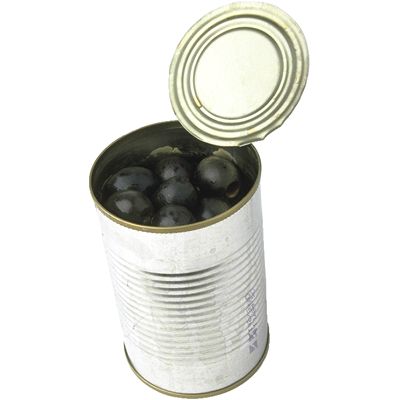 a metal container in which food or drink is preserved without air密封金属容器,用于在无空气的状态下保存食物或饮料: a Coke can一罐可乐can of All we’ve got is a couple of cans of soup.我们只有几罐汤。2a special metal container that keeps the liquid inside it under pressure. The liquid is released as a spray when you press the button一种特殊的金属容器,使内部液体保持加压状态,按下按钮时液体以喷雾形式释放can of a can of hairspray一罐发胶(喷雾型)3especially American English a metal container with a lid that can be removed, used for holding liquid带有可拆卸盖子的金属容器,用于盛放液体: Two large cans of paint ought to be enough.两大桶油漆应该够了。4can of worms a very complicated situation that causes a lot of problems when you start to deal with it一旦着手处理便会引发大量问题的复杂局面: I just don’t know what to do – every solution I can think of would just open up a whole new can of worms.我真不知道该怎么办——我能想到的每一个解决方案都只会引出一大堆新麻烦。5 in the can informal非正式 a film that is in the can is complete and ready to be shown影片"in the can"即指已拍摄完成、准备就绪可以放映6the can informal非正式 a)a prison监狱 b)American English a toilet厕所7cans [plural] informal非正式 headphones耳机 → carry the can at carry1(26)
1a metal container in which food or drink is preserved without air密封金属容器,用于在无空气的状态下保存食物或饮料: a Coke can一罐可乐can of All we’ve got is a couple of cans of soup.我们只有几罐汤。2a special metal container that keeps the liquid inside it under pressure. The liquid is released as a spray when you press the button一种特殊的金属容器,使内部液体保持加压状态,按下按钮时液体以喷雾形式释放can of a can of hairspray一罐发胶(喷雾型)3especially American English a metal container with a lid that can be removed, used for holding liquid带有可拆卸盖子的金属容器,用于盛放液体: Two large cans of paint ought to be enough.两大桶油漆应该够了。4can of worms a very complicated situation that causes a lot of problems when you start to deal with it一旦着手处理便会引发大量问题的复杂局面: I just don’t know what to do – every solution I can think of would just open up a whole new can of worms.我真不知道该怎么办——我能想到的每一个解决方案都只会引出一大堆新麻烦。5 in the can informal非正式 a film that is in the can is complete and ready to be shown影片"in the can"即指已拍摄完成、准备就绪可以放映6the can informal非正式 a)a prison监狱 b)American English a toilet厕所7cans [plural] informal非正式 headphones耳机 → carry the can at carry1(26)cancan3 verb (past tense and past participle canned, present participle canning) [transitive] American English 1to preserve food by putting it into a metal container from which all the air is removed将食物装入排尽空气的金属容器中保存;将食物罐装 SYN tin British English2 informal非正式 to dismiss someone from a job解雇某人 SYN sack3can it! spoken口语 used to tell someone to stop talking or making a noise用于命令某人停止说话或制造噪音
1to preserve food by putting it into a metal container from which all the air is removed将食物装入排尽空气的金属容器中保存;将食物罐装 SYN tin British English2 informal非正式 to dismiss someone from a job解雇某人 SYN sack3can it! spoken口语 used to tell someone to stop talking or making a noise用于命令某人停止说话或制造噪音