
train 的英语意思
traintrain1 /treɪn/ noun [countable] 
 查看全部语言翻译1
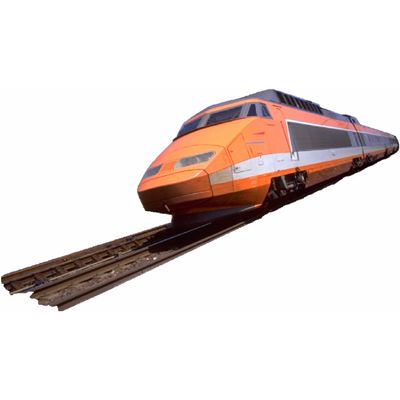 railway a set of several carriages that are connected to each other and pulled along a railway line by an engine由机车牵引、沿铁路线行驶的若干节相互连接的车厢;列车train to
 the train to Munich开往慕尼黑的火车by train We went all the way to Inverness by train.我们乘火车一路去了因弗内斯。 → boat train2series a train of something a series of events or actions that are related一系列相互关联的事件或行动: The decision set off a train of events which led to his resignation.这个决定引发了一系列事件,最终导致他辞职。3train of thought a related series of thoughts that are developing in your mind在脑海中不断展开的一系列相互关联的思绪: The phone interrupted my train of thought.电话打断了我的思路。 I’ve lost my train of thought.我的思路断了。4bring something in its train formal正式 if an action or event brings something in its train, that thing happens as a result of it若某一行动或事件带来某事,则该事是作为其结果而发生的: a decision that brought disaster in its train随之引发灾难的决定5set something in train British English formal正式 to make a process start happening使某一过程开始进行: Plans to modernize have been set in train.现代化计划已经启动。6people/animals a long line of moving people, animals, or vehicles移动中的人、动物或车辆的长列: a camel train骆驼队7dress a part of a long dress that spreads out over the ground behind the person wearing it长礼服拖在穿着者身后地面上的部分;裙摆: a wedding dress with a long train拖着长裙摆的婚纱8servants a group of servants or officers following an important person, especially in the past尤指旧时随从于重要人物的一群仆从或随员;随从GRAMMAR: Patterns with train语法:train 的搭配模式• You usually say get on a train: · I got on the train at Bristol.• 通常说 get on a train(上火车):· 我在布里斯托上了火车。• You usually say get off a train: · She got off the train in Geneva.• 通常说 get off a train(下火车):· 她在日内瓦下了火车。• You say that someone is on a train: · There were a lot of tourists on the train.• 说某人在火车上用 on a train:· 火车上有很多游客。• You go somewhere by train: · He travels to work by train. ✗Don’t say: go by the train | travel by the train• 乘火车去某地用 by train:· 他乘火车上班。✗不说:go by the train | travel by the train• You often talk about the train: · It’s easier if you take the train.• 常说 the train:· 坐火车更方便。COLLOCATIONS词语搭配verbs动词take/get a train· I took the first train home.我乘第一班火车回了家。catch a train· He was in a hurry to catch a train.他急着要赶火车。go by/travel by train· We decided to go by train.我们决定乘火车去。get on/board a train· At Stoke, another passenger boarded the train.在斯托克,又有一位乘客上了火车。get off a train· He got off the train at Flushing.他在弗拉辛下了火车。wait for a train· She sat on the railway platform for half an hour, waiting for a train.她在站台上坐了半个小时,等候火车。miss a train (=be too late to get on a train)· I just missed the last train.我刚刚错过了最后一班火车。trains run (=take people from one place to another at fixed times)· Trains run from two main London stations, Victoria and Charing Cross, every hour.列车每小时从伦敦的两个主要车站——维多利亚站和查令十字站出发。a train arrives· The train arrived on time.火车准时到达。a train leaves/departs· Trains depart from Rugby at half-hourly intervals until 4.00 pm.列车从拉格比每隔半小时发车,直至下午4时。a train pulls into/out of a station· The train pulled into Euston station and I got off.火车驶入尤斯顿站,我随即下了车。a train derails/is derailed (=comes off the rails)· Most of the passengers escaped injury when their train was derailed.火车出轨时,大多数乘客幸免于伤。ADJECTIVES/NOUN + train形容词/名词 + traina freight/goods train· a freight train carrying hazardous chemicals运载危险化学品的货运列车a passenger train· a passenger train bound for Geneva开往日内瓦的旅客列车a commuter train (=a train that people going to work use)· a crash involving two crowded commuter trains涉及两列拥挤通勤列车的撞车事故an express train/a fast train (=one that does not stop at many places)· He boarded the express train to London.他乘上了开往伦敦的特快列车。a slow train (also a stopping train British English) (=one that stops at a lot of places)· We got on the stopping train by mistake and it took hours to get home.我们误上了各站停靠的慢车,花了好几个小时才到家。a steam train· Railway enthusiasts have the opportunity to take a nostalgic trip on a steam train.铁路爱好者有机会乘坐蒸汽火车,享受一次充满怀旧情怀的旅程。a tube/underground train (=one that runs under London)· The condition of many tube trains is a disgrace.许多地铁列车的状况令人不堪。train + NOUNtrain + 名词a train journey British English, a train trip American English· They were not looking forward to the long train journey.他们对那段漫长的火车旅程并不期待。a train fare· How much is the train fare to Derby?去德比的火车票多少钱?a train driver· The train driver apologized for the late departure.火车司机为晚点出发道歉。a train crash (also a train wreck American English)· Ten people were killed in the train crash.十人在这次火车事故中遇难。
查看全部语言翻译1railway a set of several carriages that are connected to each other and pulled along a railway line by an engine由机车牵引、沿铁路线行驶的若干节相互连接的车厢;列车train to the train to Munich开往慕尼黑的火车by train We went all the way to Inverness by train.我们乘火车一路去了因弗内斯。 → boat train2series a train of something a series of events or actions that are related一系列相互关联的事件或行动: The decision set off a train of events which led to his resignation.这个决定引发了一系列事件,最终导致他辞职。3train of thought a related series of thoughts that are developing in your mind在脑海中不断展开的一系列相互关联的思绪: The phone interrupted my train of thought.电话打断了我的思路。 I’ve lost my train of thought.我的思路断了。4bring something in its train formal正式 if an action or event brings something in its train, that thing happens as a result of it若某一行动或事件带来某事,则该事是作为其结果而发生的: a decision that brought disaster in its train随之引发灾难的决定5set something in train British English formal正式 to make a process start happening使某一过程开始进行: Plans to modernize have been set in train.现代化计划已经启动。6people/animals a long line of moving people, animals, or vehicles移动中的人、动物或车辆的长列: a camel train骆驼队7dress a part of a long dress that spreads out over the ground behind the person wearing it长礼服拖在穿着者身后地面上的部分;裙摆: a wedding dress with a long train拖着长裙摆的婚纱8servants a group of servants or officers following an important person, especially in the past尤指旧时随从于重要人物的一群仆从或随员;随从GRAMMAR: Patterns with train语法:train 的搭配模式• You usually say get on a train: · I got on the train at Bristol.• 通常说 get on a train(上火车):· 我在布里斯托上了火车。• You usually say get off a train: · She got off the train in Geneva.• 通常说 get off a train(下火车):· 她在日内瓦下了火车。• You say that someone is on a train: · There were a lot of tourists on the train.• 说某人在火车上用 on a train:· 火车上有很多游客。• You go somewhere by train: · He travels to work by train. ✗Don’t say: go by the train | travel by the train• 乘火车去某地用 by train:· 他乘火车上班。✗不说:go by the train | travel by the train• You often talk about the train: · It’s easier if you take the train.• 常说 the train:· 坐火车更方便。COLLOCATIONS词语搭配verbs动词take/get a train· I took the first train home.我乘第一班火车回了家。catch a train· He was in a hurry to catch a train.他急着要赶火车。go by/travel by train· We decided to go by train.我们决定乘火车去。get on/board a train· At Stoke, another passenger boarded the train.在斯托克,又有一位乘客上了火车。get off a train· He got off the train at Flushing.他在弗拉辛下了火车。wait for a train· She sat on the railway platform for half an hour, waiting for a train.她在站台上坐了半个小时,等候火车。miss a train (=be too late to get on a train)· I just missed the last train.我刚刚错过了最后一班火车。trains run (=take people from one place to another at fixed times)· Trains run from two main London stations, Victoria and Charing Cross, every hour.列车每小时从伦敦的两个主要车站——维多利亚站和查令十字站出发。a train arrives· The train arrived on time.火车准时到达。a train leaves/departs· Trains depart from Rugby at half-hourly intervals until 4.00 pm.列车从拉格比每隔半小时发车,直至下午4时。a train pulls into/out of a station· The train pulled into Euston station and I got off.火车驶入尤斯顿站,我随即下了车。a train derails/is derailed (=comes off the rails)· Most of the passengers escaped injury when their train was derailed.火车出轨时,大多数乘客幸免于伤。ADJECTIVES/NOUN + train形容词/名词 + traina freight/goods train· a freight train carrying hazardous chemicals运载危险化学品的货运列车a passenger train· a passenger train bound for Geneva开往日内瓦的旅客列车a commuter train (=a train that people going to work use)· a crash involving two crowded commuter trains涉及两列拥挤通勤列车的撞车事故an express train/a fast train (=one that does not stop at many places)· He boarded the express train to London.他乘上了开往伦敦的特快列车。a slow train (also a stopping train British English) (=one that stops at a lot of places)· We got on the stopping train by mistake and it took hours to get home.我们误上了各站停靠的慢车,花了好几个小时才到家。a steam train· Railway enthusiasts have the opportunity to take a nostalgic trip on a steam train.铁路爱好者有机会乘坐蒸汽火车,享受一次充满怀旧情怀的旅程。a tube/underground train (=one that runs under London)· The condition of many tube trains is a disgrace.许多地铁列车的状况令人不堪。train + NOUNtrain + 名词a train journey British English, a train trip American English· They were not looking forward to the long train journey.他们对那段漫长的火车旅程并不期待。a train fare· How much is the train fare to Derby?去德比的火车票多少钱?a train driver· The train driver apologized for the late departure.火车司机为晚点出发道歉。a train crash (also a train wreck American English)· Ten people were killed in the train crash.十人在这次火车事故中遇难。traintrain2 verb 1teach somebody [intransitive, transitive] to teach someone the skills of a particular job or activity, or to be taught these skills教授某人从事特定工作或活动所需的技能,或接受此类技能培训train somebody in something All staff will be trained in customer service skills.所有员工都将接受客户服务技能培训。train to do something She’s training to be a doctor.她正在接受培训,准备成为一名医生。train somebody to do something Employees are trained to deal with emergency situations.员工经过培训,能够处理紧急情况。train as Nadia trained as a singer.纳迪亚接受过声乐培训。 a highly trained workforce训练有素的劳动力 Trained staff will be available to deal with your queries.受过专业培训的工作人员将随时为您解答问题。► see thesaurus at learn, teach2teach an animal [transitive] to teach an animal to do something or to behave correctly训练动物做某事或行为端正: a well-trained puppy训练有素的小狗train something to do something These dogs are trained to detect drugs.这些狗被训练来探测毒品。3prepare for sport [intransitive, transitive] to prepare for a sports event or tell someone how to prepare for it, especially by exercising为体育赛事进行备战(尤指通过锻炼),或指导他人如何备战train for Brenda spends two hours a day training for the marathon.布伦达每天花两个小时为马拉松训练。► see thesaurus at practise4aim something [transitive] to aim something such as a gun or camera at someone or something将枪或摄像机等对准某人或某物train something on/at somebody/something She trained her binoculars on the bird.她用双筒望远镜对准那只鸟。5develop something [transitive] to develop and improve a natural ability or quality培养和提升某种天赋能力或品质: You can train your mind to relax.你可以训练自己的思维学会放松。 To the trained eye the difference between these flowers is obvious (=the difference is clear to someone who has developed skills to notice something).对行家之眼而言,这些花之间的差异显而易见(=对于已培养出观察能力的人来说,差异一目了然)。6plant [transitive] to make a plant grow in a particular direction by bending, cutting, or tying it通过弯曲、修剪或捆绑使植物朝特定方向生长
1teach somebody [intransitive, transitive] to teach someone the skills of a particular job or activity, or to be taught these skills教授某人从事特定工作或活动所需的技能,或接受此类技能培训train somebody in something All staff will be trained in customer service skills.所有员工都将接受客户服务技能培训。train to do something She’s training to be a doctor.她正在接受培训,准备成为一名医生。train somebody to do something Employees are trained to deal with emergency situations.员工经过培训,能够处理紧急情况。train as Nadia trained as a singer.纳迪亚接受过声乐培训。 a highly trained workforce训练有素的劳动力 Trained staff will be available to deal with your queries.受过专业培训的工作人员将随时为您解答问题。► see thesaurus at learn, teach2teach an animal [transitive] to teach an animal to do something or to behave correctly训练动物做某事或行为端正: a well-trained puppy训练有素的小狗train something to do something These dogs are trained to detect drugs.这些狗被训练来探测毒品。3prepare for sport [intransitive, transitive] to prepare for a sports event or tell someone how to prepare for it, especially by exercising为体育赛事进行备战(尤指通过锻炼),或指导他人如何备战train for Brenda spends two hours a day training for the marathon.布伦达每天花两个小时为马拉松训练。► see thesaurus at practise4aim something [transitive] to aim something such as a gun or camera at someone or something将枪或摄像机等对准某人或某物train something on/at somebody/something She trained her binoculars on the bird.她用双筒望远镜对准那只鸟。5develop something [transitive] to develop and improve a natural ability or quality培养和提升某种天赋能力或品质: You can train your mind to relax.你可以训练自己的思维学会放松。 To the trained eye the difference between these flowers is obvious (=the difference is clear to someone who has developed skills to notice something).对行家之眼而言,这些花之间的差异显而易见(=对于已培养出观察能力的人来说,差异一目了然)。6plant [transitive] to make a plant grow in a particular direction by bending, cutting, or tying it通过弯曲、修剪或捆绑使植物朝特定方向生长