
Significado de train en inglés
traintrain1 /treɪn/ noun [countable] 
 Ver todas las traducciones1
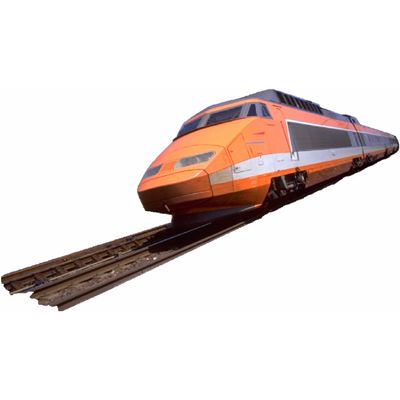 railway a set of several carriages that are connected to each other and pulled along a railway line by an engineconjunto de vagones conectados entre sí y arrastrados por una locomotora a lo largo de una vía de ferrocarriltrain to
 the train to Munichel tren a Múnichby train We went all the way to Inverness by train.Fuimos hasta Inverness en tren. → boat train2series a train of something a series of events or actions that are relatedserie de eventos o acciones relacionados entre sí: The decision set off a train of events which led to his resignation.La decisión desencadenó una serie de eventos que lo llevaron a renunciar.3train of thought a related series of thoughts that are developing in your mindserie de pensamientos relacionados que se van desarrollando en la mente: The phone interrupted my train of thought.El teléfono interrumpió mi hilo de pensamiento. I’ve lost my train of thought.He perdido el hilo de mis pensamientos.4bring something in its train formalformal if an action or event brings something in its train, that thing happens as a result of itsi una acción o evento trae algo en su estela, eso ocurre como consecuencia de ello: a decision that brought disaster in its trainuna decisión que trajo el desastre en su estela5set something in train British English formalformal to make a process start happeninghacer que un proceso comience a ocurrir: Plans to modernize have been set in train.Los planes de modernización han sido puestos en marcha.6people/animals a long line of moving people, animals, or vehicleslarga fila de personas, animales o vehículos en movimiento: a camel trainuna caravana de camellos7dress a part of a long dress that spreads out over the ground behind the person wearing itparte de un vestido largo que se extiende por el suelo detrás de quien lo lleva; cola: a wedding dress with a long trainun vestido de novia con una larga cola8servants a group of servants or officers following an important person, especially in the pastgrupo de sirvientes u oficiales que acompañaban a una persona importante, especialmente en el pasado; séquitoGRAMMAR: Patterns with trainGRAMÁTICA: Patrones con train• You usually say get on a train: · I got on the train at Bristol.• Normalmente se dice get on a train: · Subí al tren en Bristol.• You usually say get off a train: · She got off the train in Geneva.• Normalmente se dice get off a train: · Ella se bajó del tren en Ginebra.• You say that someone is on a train: · There were a lot of tourists on the train.• Se dice que alguien está on a train: · Había muchos turistas en el tren.• You go somewhere by train: · He travels to work by train. ✗Don’t say: go by the train | travel by the train• Para ir a algún lugar en tren se dice by train: · Él viaja al trabajo en tren. ✗No se dice: go by the train | travel by the train• You often talk about the train: · It’s easier if you take the train.• A menudo se usa the train: · Es más fácil si tomas el tren.COLLOCATIONSCOLOCACIONESverbsverbostake/get a train· I took the first train home.Tomé el primer tren a casa.catch a train· He was in a hurry to catch a train.Tenía prisa por tomar un tren.go by/travel by train· We decided to go by train.Decidimos ir en tren.get on/board a train· At Stoke, another passenger boarded the train.En Stoke, otro pasajero subió al tren.get off a train· He got off the train at Flushing.Él se bajó del tren en Flushing.wait for a train· She sat on the railway platform for half an hour, waiting for a train.Ella estuvo sentada en el andén media hora, esperando un tren.miss a train (=be too late to get on a train)· I just missed the last train.Acabo de perder el último tren.trains run (=take people from one place to another at fixed times)· Trains run from two main London stations, Victoria and Charing Cross, every hour.Los trenes salen cada hora desde dos estaciones principales de Londres, Victoria y Charing Cross.a train arrives· The train arrived on time.El tren llegó a tiempo.a train leaves/departs· Trains depart from Rugby at half-hourly intervals until 4.00 pm.Los trenes salen de Rugby cada media hora hasta las 4:00 p.m.a train pulls into/out of a station· The train pulled into Euston station and I got off.El tren llegó a la estación de Euston y yo me bajé.a train derails/is derailed (=comes off the rails)· Most of the passengers escaped injury when their train was derailed.La mayoría de los pasajeros no resultaron heridos cuando su tren descarriló.ADJECTIVES/NOUN + trainADJETIVOS/SUSTANTIVO + traina freight/goods train· a freight train carrying hazardous chemicalsun tren de carga que transporta productos químicos peligrososa passenger train· a passenger train bound for Genevaun tren de pasajeros con destino a Ginebraa commuter train (=a train that people going to work use)· a crash involving two crowded commuter trainsun accidente que involucró a dos trenes de cercanías abarrotadosan express train/a fast train (=one that does not stop at many places)· He boarded the express train to London.Él subió al tren expreso a Londres.a slow train (also a stopping train British English) (=one that stops at a lot of places)· We got on the stopping train by mistake and it took hours to get home.Tomamos el tren local por error y tardamos horas en llegar a casa.a steam train· Railway enthusiasts have the opportunity to take a nostalgic trip on a steam train.Los entusiastas del ferrocarril tienen la oportunidad de hacer un nostálgico viaje en tren de vapor.a tube/underground train (=one that runs under London)· The condition of many tube trains is a disgrace.El estado de muchos trenes del metro es una vergüenza.train + NOUNtrain + SUSTANTIVOa train journey British English, a train trip American English· They were not looking forward to the long train journey.No esperaban con agrado el largo viaje en tren.a train fare· How much is the train fare to Derby?¿Cuánto cuesta el pasaje de tren a Derby?a train driver· The train driver apologized for the late departure.El maquinista se disculpó por la salida con retraso.a train crash (also a train wreck American English)· Ten people were killed in the train crash.Diez personas murieron en el accidente de tren.
Ver todas las traducciones1railway a set of several carriages that are connected to each other and pulled along a railway line by an engineconjunto de vagones conectados entre sí y arrastrados por una locomotora a lo largo de una vía de ferrocarriltrain to the train to Munichel tren a Múnichby train We went all the way to Inverness by train.Fuimos hasta Inverness en tren. → boat train2series a train of something a series of events or actions that are relatedserie de eventos o acciones relacionados entre sí: The decision set off a train of events which led to his resignation.La decisión desencadenó una serie de eventos que lo llevaron a renunciar.3train of thought a related series of thoughts that are developing in your mindserie de pensamientos relacionados que se van desarrollando en la mente: The phone interrupted my train of thought.El teléfono interrumpió mi hilo de pensamiento. I’ve lost my train of thought.He perdido el hilo de mis pensamientos.4bring something in its train formalformal if an action or event brings something in its train, that thing happens as a result of itsi una acción o evento trae algo en su estela, eso ocurre como consecuencia de ello: a decision that brought disaster in its trainuna decisión que trajo el desastre en su estela5set something in train British English formalformal to make a process start happeninghacer que un proceso comience a ocurrir: Plans to modernize have been set in train.Los planes de modernización han sido puestos en marcha.6people/animals a long line of moving people, animals, or vehicleslarga fila de personas, animales o vehículos en movimiento: a camel trainuna caravana de camellos7dress a part of a long dress that spreads out over the ground behind the person wearing itparte de un vestido largo que se extiende por el suelo detrás de quien lo lleva; cola: a wedding dress with a long trainun vestido de novia con una larga cola8servants a group of servants or officers following an important person, especially in the pastgrupo de sirvientes u oficiales que acompañaban a una persona importante, especialmente en el pasado; séquitoGRAMMAR: Patterns with trainGRAMÁTICA: Patrones con train• You usually say get on a train: · I got on the train at Bristol.• Normalmente se dice get on a train: · Subí al tren en Bristol.• You usually say get off a train: · She got off the train in Geneva.• Normalmente se dice get off a train: · Ella se bajó del tren en Ginebra.• You say that someone is on a train: · There were a lot of tourists on the train.• Se dice que alguien está on a train: · Había muchos turistas en el tren.• You go somewhere by train: · He travels to work by train. ✗Don’t say: go by the train | travel by the train• Para ir a algún lugar en tren se dice by train: · Él viaja al trabajo en tren. ✗No se dice: go by the train | travel by the train• You often talk about the train: · It’s easier if you take the train.• A menudo se usa the train: · Es más fácil si tomas el tren.COLLOCATIONSCOLOCACIONESverbsverbostake/get a train· I took the first train home.Tomé el primer tren a casa.catch a train· He was in a hurry to catch a train.Tenía prisa por tomar un tren.go by/travel by train· We decided to go by train.Decidimos ir en tren.get on/board a train· At Stoke, another passenger boarded the train.En Stoke, otro pasajero subió al tren.get off a train· He got off the train at Flushing.Él se bajó del tren en Flushing.wait for a train· She sat on the railway platform for half an hour, waiting for a train.Ella estuvo sentada en el andén media hora, esperando un tren.miss a train (=be too late to get on a train)· I just missed the last train.Acabo de perder el último tren.trains run (=take people from one place to another at fixed times)· Trains run from two main London stations, Victoria and Charing Cross, every hour.Los trenes salen cada hora desde dos estaciones principales de Londres, Victoria y Charing Cross.a train arrives· The train arrived on time.El tren llegó a tiempo.a train leaves/departs· Trains depart from Rugby at half-hourly intervals until 4.00 pm.Los trenes salen de Rugby cada media hora hasta las 4:00 p.m.a train pulls into/out of a station· The train pulled into Euston station and I got off.El tren llegó a la estación de Euston y yo me bajé.a train derails/is derailed (=comes off the rails)· Most of the passengers escaped injury when their train was derailed.La mayoría de los pasajeros no resultaron heridos cuando su tren descarriló.ADJECTIVES/NOUN + trainADJETIVOS/SUSTANTIVO + traina freight/goods train· a freight train carrying hazardous chemicalsun tren de carga que transporta productos químicos peligrososa passenger train· a passenger train bound for Genevaun tren de pasajeros con destino a Ginebraa commuter train (=a train that people going to work use)· a crash involving two crowded commuter trainsun accidente que involucró a dos trenes de cercanías abarrotadosan express train/a fast train (=one that does not stop at many places)· He boarded the express train to London.Él subió al tren expreso a Londres.a slow train (also a stopping train British English) (=one that stops at a lot of places)· We got on the stopping train by mistake and it took hours to get home.Tomamos el tren local por error y tardamos horas en llegar a casa.a steam train· Railway enthusiasts have the opportunity to take a nostalgic trip on a steam train.Los entusiastas del ferrocarril tienen la oportunidad de hacer un nostálgico viaje en tren de vapor.a tube/underground train (=one that runs under London)· The condition of many tube trains is a disgrace.El estado de muchos trenes del metro es una vergüenza.train + NOUNtrain + SUSTANTIVOa train journey British English, a train trip American English· They were not looking forward to the long train journey.No esperaban con agrado el largo viaje en tren.a train fare· How much is the train fare to Derby?¿Cuánto cuesta el pasaje de tren a Derby?a train driver· The train driver apologized for the late departure.El maquinista se disculpó por la salida con retraso.a train crash (also a train wreck American English)· Ten people were killed in the train crash.Diez personas murieron en el accidente de tren.traintrain2 verb 1teach somebody [intransitive, transitive] to teach someone the skills of a particular job or activity, or to be taught these skillsenseñar a alguien las habilidades propias de un trabajo o actividad determinados, o adquirir dichas habilidadestrain somebody in something All staff will be trained in customer service skills.Todo el personal recibirá capacitación en habilidades de atención al cliente.train to do something She’s training to be a doctor.Ella se está formando para ser médica.train somebody to do something Employees are trained to deal with emergency situations.Los empleados están capacitados para manejar situaciones de emergencia.train as Nadia trained as a singer.Nadia se formó como cantante. a highly trained workforceuna fuerza laboral altamente capacitada Trained staff will be available to deal with your queries.Habrá personal capacitado disponible para atender sus consultas.► see thesaurus at learn, teach2teach an animal [transitive] to teach an animal to do something or to behave correctlyenseñar a un animal a hacer algo o a comportarse correctamente: a well-trained puppyun cachorro bien adiestradotrain something to do something These dogs are trained to detect drugs.Estos perros están entrenados para detectar drogas.3prepare for sport [intransitive, transitive] to prepare for a sports event or tell someone how to prepare for it, especially by exercisingprepararse para un evento deportivo o indicar a alguien cómo prepararse, especialmente mediante el ejercicio; entrenartrain for Brenda spends two hours a day training for the marathon.Brenda dedica dos horas al día a entrenarse para el maratón.► see thesaurus at practise4aim something [transitive] to aim something such as a gun or camera at someone or somethingapuntar algo, como un arma o una cámara, hacia alguien o algotrain something on/at somebody/something She trained her binoculars on the bird.Ella apuntó sus binoculares hacia el pájaro.5develop something [transitive] to develop and improve a natural ability or qualitydesarrollar y mejorar una habilidad o cualidad natural: You can train your mind to relax.Puedes entrenar tu mente para que se relaje. To the trained eye the difference between these flowers is obvious (=the difference is clear to someone who has developed skills to notice something).Para el ojo experto, la diferencia entre estas flores es evidente (=la diferencia es clara para quien ha desarrollado habilidades para observar).6plant [transitive] to make a plant grow in a particular direction by bending, cutting, or tying ithacer que una planta crezca en una dirección determinada doblándola, cortándola o atándola
1teach somebody [intransitive, transitive] to teach someone the skills of a particular job or activity, or to be taught these skillsenseñar a alguien las habilidades propias de un trabajo o actividad determinados, o adquirir dichas habilidadestrain somebody in something All staff will be trained in customer service skills.Todo el personal recibirá capacitación en habilidades de atención al cliente.train to do something She’s training to be a doctor.Ella se está formando para ser médica.train somebody to do something Employees are trained to deal with emergency situations.Los empleados están capacitados para manejar situaciones de emergencia.train as Nadia trained as a singer.Nadia se formó como cantante. a highly trained workforceuna fuerza laboral altamente capacitada Trained staff will be available to deal with your queries.Habrá personal capacitado disponible para atender sus consultas.► see thesaurus at learn, teach2teach an animal [transitive] to teach an animal to do something or to behave correctlyenseñar a un animal a hacer algo o a comportarse correctamente: a well-trained puppyun cachorro bien adiestradotrain something to do something These dogs are trained to detect drugs.Estos perros están entrenados para detectar drogas.3prepare for sport [intransitive, transitive] to prepare for a sports event or tell someone how to prepare for it, especially by exercisingprepararse para un evento deportivo o indicar a alguien cómo prepararse, especialmente mediante el ejercicio; entrenartrain for Brenda spends two hours a day training for the marathon.Brenda dedica dos horas al día a entrenarse para el maratón.► see thesaurus at practise4aim something [transitive] to aim something such as a gun or camera at someone or somethingapuntar algo, como un arma o una cámara, hacia alguien o algotrain something on/at somebody/something She trained her binoculars on the bird.Ella apuntó sus binoculares hacia el pájaro.5develop something [transitive] to develop and improve a natural ability or qualitydesarrollar y mejorar una habilidad o cualidad natural: You can train your mind to relax.Puedes entrenar tu mente para que se relaje. To the trained eye the difference between these flowers is obvious (=the difference is clear to someone who has developed skills to notice something).Para el ojo experto, la diferencia entre estas flores es evidente (=la diferencia es clara para quien ha desarrollado habilidades para observar).6plant [transitive] to make a plant grow in a particular direction by bending, cutting, or tying ithacer que una planta crezca en una dirección determinada doblándola, cortándola o atándola