
Significado de can em inglês
cancan1 /kən; strong kæn/ modal verb (negative short form can’t) 
 Ver todas as traduções1ability to be able to do something or to know how to do somethingser capaz de fazer algo ou saber como fazer algo:
  You can swim, can’t you?Você sabe nadar, não sabe? Even a small personal computer can store vast amounts of information.Até um computador pessoal pequeno pode armazenar grandes quantidades de informação. Gabriella can speak French fluently.Gabriella fala francês fluentemente. I’m afraid Mr Harding can’t see you now – he’s busy.Temo que o Sr. Harding não possa atendê-lo agora — ele está ocupado. The police are doing all they can to find her.A polícia está fazendo tudo o que pode para encontrá-la.2requesting spokenoral used to ask someone to do something or give you somethingusado para pedir a alguém que faça algo ou lhe dê algo: Can I have a drink, please?Pode me dar algo para beber, por favor? Can you help me lift this box?Você pode me ajudar a levantar esta caixa?3allowed to be allowed to do something or to have the right or power to do somethingter permissão para fazer algo ou ter o direito ou o poder de fazer algo: You can’t park here – it’s a no parking zone.Você não pode estacionar aqui — é uma área de estacionamento proibido. ‘Can we go home now?’ ‘No we can’t.’"Podemos ir para casa agora?" "Não, não podemos." A police officer can insist on seeing a driver’s license.Um policial pode exigir ver a carteira de motorista.4possibility used to say that something is possibleusado para indicar que algo é possível: I am confident a solution can be found.Estou confiante de que uma solução pode ser encontrada. There can be no doubt that he is guilty.Não pode haver nenhuma dúvida de que ele é culpado. The boxes can be stored flat.As caixas podem ser guardadas dobradas. Can he still be alive after all this time?Será que ele ainda pode estar vivo depois de todo esse tempo?5seeing/hearing etc used with the verbs ‘see’, ‘hear’, ‘feel’, ‘taste’, and ‘smell’, and with verbs connected with thinking, to mean that someone sees something, hears something etcusado com os verbos "see" (ver), "hear" (ouvir), "feel" (sentir), "taste" (saborear) e "smell" (cheirar), e com verbos relacionados ao pensamento, para indicar que alguém vê algo, ouve algo, etc.: Here they are – I can see their car.Lá estão eles — consigo ver o carro deles. Can you smell something burning?Você está sentindo cheiro de algo queimando? I can’t understand why you’re so upset.Não consigo entender por que você está tão chateado. He can’t remember where he put the tickets.Ele não consegue lembrar onde colocou os ingressos.6not true [in negatives] used to say that you do not believe that something is trueusado para expressar que não se acredita que algo seja verdade: This can’t be the right road.Esse não pode ser o caminho certo. It can’t be easy caring for someone else’s children.Cuidar dos filhos de outra pessoa não deve ser fácil.7should not [in questions and negatives] used to say that someone should not or must not do somethingusado para indicar que alguém não deve ou não pode fazer algo: You can’t expect the world to change overnight.Você não pode esperar que o mundo mude da noite para o dia. We can’t go on like this.Não podemos continuar assim. Jill’s left her husband, but can you blame her after the way he treated her?Jill deixou o marido, mas você consegue culpá-la depois da forma como ele a tratou?8surprise/anger [usually in questions and negatives] spokenoral used when you are surprised or angryusado quando se está surpreso ou com raiva: You can’t be serious!Você não pode estar falando sério! They can’t have arrived already, surely!Eles não podem ter chegado já, com certeza! How can you be so stupid!Como você pode ser tão estúpido!9sometimes used to say what sometimes happens or how someone sometimes behavesusado para descrever o que às vezes acontece ou como alguém se comporta às vezes: It can be quite cold here at night.Pode fazer bastante frio aqui à noite. Peter can be really annoying.Peter pode ser muito irritante às vezes.10giving orders spokenoral used to tell someone in an angry way to do somethingusado para dizer a alguém com raiva que faça algo: And you can stop that quarrelling, the pair of you.E vocês dois podem parar de brigar agora. If you won’t keep quiet, you can get out.Se você não vai ficar quieto, pode sair.11no can do spokenoral used to say that it is impossible for you to do what someone has asked you to dousado para indicar que é impossível fazer o que alguém pediu: Sorry, John, no can do.Desculpe, John, não tem como.GRAMMAR: Patterns with canGRAMÁTICA: Padrões com can• Like other modal verbs, you use can before the base form of the main verb (=the infinitive without ‘to’): · We can hear the birds singing.· You can go home now.· Sharks can be dangerous. ✗Don’t say: We can to go home. | We can going home.• Assim como outros verbos modais, can é seguido da forma base do verbo principal (= o infinitivo sem "to"): · We can hear the birds singing. (Podemos ouvir os pássaros cantando.) · You can go home now. (Você pode ir para casa agora.) · Sharks can be dangerous. (Tubarões podem ser perigosos.) ✗Não diga: We can to go home. | We can going home.• The past tense of can is could: · We could hear the birds singing.· The teacher said we could go home.• O passado de can é could: · We could hear the birds singing. (Podíamos ouvir os pássaros cantando.) · The teacher said we could go home. (O professor disse que poderíamos ir para casa.)• You also use was/were able to when talking about the ability to do something in the past, especially something that was difficult: · He was able to walk a few steps.• Também se usa was/were able to ao falar sobre a capacidade de fazer algo no passado, especialmente algo difícil: · He was able to walk a few steps. (Ele conseguiu dar alguns passos.)• In questions you say Can I/he/she etc: · Can we go home?• Em perguntas, usa-se Can I/he/she etc.: · Can we go home? (Podemos ir para casa?)• In negatives you say can’t (spoken) or cannot (written): · I can’t hear you!· He cannot leave prison.• Nas negativas usa-se can't (oral) ou cannot (escrito): · I can't hear you! (Não consigo ouvir você!) · He cannot leave prison. (Ele não pode sair da prisão.)• You also use is/are unable to when saying that someone does not have the ability to do something: · He is unable to walk.Grammar guide ‒ VERBS• Também se usa is/are unable to para dizer que alguém não tem capacidade de fazer algo: · He is unable to walk. (Ele não consegue andar.) Guia gramatical ‒ VERBOSTHESAURUSSINÔNIMOSto be able to do somethingser capaz de fazer algocan do something to have the ability, opportunity, time, or equipment that you need in order to do something. Could is used as the past form, and is also used to say what is or may be possibleter a habilidade, oportunidade, tempo ou equipamento necessários para fazer algo. Could é usado como forma de passado e também para indicar o que é ou pode ser possível: · ‘I don’t think Mike can drive.’ ‘Yes, he can.’· "Não acho que Mike saiba dirigir." "Ele sabe, sim."· He can run faster than me.· Ele consegue correr mais rápido do que eu.· Can you see the TV, or should I move?· Você consegue ver a TV, ou devo me afastar?· This program can translate your e-mail into other languages.· Este programa pode traduzir seu e-mail para outros idiomas.· How many hamburgers do you think you can eat?· Quantos hambúrgueres você acha que consegue comer?· Adrian could read when he was four.· Adrian conseguia ler quando tinha quatro anos.· If we had a boat we could row across to the island.· Se tivéssemos um barco, poderíamos remar até a ilha.· Why didn’t they ask me? I could have done it for them for half the price.· Por que eles não me pediram? Eu poderia ter feito por metade do preço.· She could win.· Ela pode ganhar.be able to do something used when talking about ability or success in the past or ability in the future, or when you need to use an infinitive. It is also used instead of can in more formal Englishusado ao falar sobre capacidade ou sucesso no passado ou capacidade no futuro, ou quando se precisa de um infinitivo. Também é usado em lugar de can em inglês mais formal: · I was able to get a good job (=I got one).· Eu consegui um bom emprego (= eu realmente consegui).· Will you be able to carry those bags on your own?· Você vai conseguir carregar essas bolsas sozinho?· If you want to join the expedition, you must be able to speak Spanish.· Se você quiser participar da expedição, deve saber falar espanhol.· The young birds are now able to fly.· Os pássaros jovens agora são capazes de voar.be capable of something to have the ability, energy, or qualities needed to do something, especially something very difficult or unusual – use this about people or machinester a habilidade, energia ou qualidades necessárias para fazer algo, especialmente algo muito difícil ou incomum — use sobre pessoas ou máquinas: · She’s perfectly capable (=completely capable) of dealing with the situation.· Ela é perfeitamente capaz (= completamente capaz) de lidar com a situação.· The car is capable of a top speed of 200 mph.· O carro é capaz de atingir uma velocidade máxima de 200 mph.· No one thought he was capable of murder.· Ninguém achava que ele fosse capaz de cometer um assassinato.have the ability to do something to be able to do something, especially something that is unusual or that most people cannot doser capaz de fazer algo, especialmente algo incomum ou que a maioria das pessoas não consegue fazer: · She seemed to have the ability to make people do anything she wanted.· Ela parecia ter a habilidade de fazer as pessoas fazerem qualquer coisa que ela quisesse.· I believe the team definitely has the ability to win the championship.· Acredito que o time definitivamente tem a capacidade de ganhar o campeonato.be in a position to do something to be able to do something because you have enough knowledge, power, money, or equipment to do itser capaz de fazer algo porque se tem conhecimento, poder, dinheiro ou equipamento suficientes para isso: · We will have to run more tests before we are in a position to say whether the document is authentic or not.· Teremos que fazer mais testes antes de estarmos em posição de dizer se o documento é autêntico ou não.· They expect be in a position to begin construction within two years.· Eles esperam estar em posição de começar a construção em dois anos.manage to do something to succeed in doing something difficult, especially after trying very hardconseguir fazer algo difícil, especialmente depois de tentar muito: · He finally managed to find an apartment near his office.· Ele finalmente conseguiu encontrar um apartamento perto do seu escritório.· At least three of the hostages managed to escape.· Pelo menos três dos reféns conseguiram escapar.to be unable to do somethingser incapaz de fazer algocan’t/cannot do something to be unable to do something because you do not have the ability, opportunity, time, or equipment that you need. Couldn’t/could not is used as the past formser incapaz de fazer algo porque não se tem a habilidade, oportunidade, tempo ou equipamento necessários. Couldn't/could not é usado como forma de passado: · Louise can’t see anything without her glasses.· Louise não consegue ver nada sem os óculos.· He couldn’t remember where he had left the car.· Ele não conseguia lembrar onde tinha deixado o carro.· ‘Will you help me move this?’ ‘I’m sorry, I can’t – my back’s still giving me trouble.’· "Você pode me ajudar a mover isso?" "Desculpe, não posso — minhas costas ainda estão me dando problema."· I couldn’t have done it without your help.· Eu não teria conseguido sem a sua ajuda.· I could never have climbed that ridge – I’m too out of shape.· Eu nunca teria conseguido escalar aquela crista — estou fora de forma demais.· Scientists still cannot explain exactly how the virus reproduces.· Os cientistas ainda não conseguem explicar exatamente como o vírus se reproduz.· Sarah could not understand why anyone would want to hurt her.· Sarah não conseguia entender por que alguém quereria machucá-la.not be able to do something used when talking about inability in the past or the future, when you need to use an infinitive, and in more formal Englishusado ao falar sobre incapacidade no passado ou no futuro, quando se precisa de um infinitivo, e em inglês mais formal: · Unfortunately, I wasn’t able to help them.· Infelizmente, não consegui ajudá-los.· I don’t think I’ll be able to come to the meeting after all.· Acho que afinal não vou conseguir ir à reunião.· The doctor told Tina she wouldn’t be able to have children.· O médico disse a Tina que ela não conseguiria ter filhos.· I’ve looked all over the house but I haven’t been able to find my keys anywhere.· Procurei por toda a casa, mas não consegui encontrar minhas chaves em lugar nenhum.be unable to do something especially writtenespecialmente na linguagem escrita to not be able to do something, especially something important that you want to do or need to donão conseguir fazer algo, especialmente algo importante que se quer ou precisa fazer: · He was unable to sleep and lay awake all night.· Ele não conseguia dormir e ficou acordado a noite toda.· Many passengers were unable to reach the lifeboats in time.· Muitos passageiros não conseguiram chegar aos botes salva-vidas a tempo.not be in a position to do something (also be in no position to do something) formalformal to not be able to do something because you do not have enough knowledge, power, money, or equipment to do itnão conseguir fazer algo porque não se tem conhecimento, poder, dinheiro ou equipamento suficientes para isso: · I’m afraid I’m not in a position to answer your questions.· Temo que não estou em posição de responder às suas perguntas.· Having committed military force there, America is in no position to repeat this strategy elsewhere.· Tendo comprometido força militar ali, os Estados Unidos não estão em posição de repetir essa estratégia em outro lugar.not be capable of something (also be incapable of something) to not have the physical strength or mental ability to do something – often used when criticizing someonenão ter a força física ou a capacidade mental para fazer algo — frequentemente usado ao criticar alguém: · My son seems to be incapable of keeping a job.· Meu filho parece ser incapaz de manter um emprego.· She’s not capable of looking after herself anymore.· Ela não é mais capaz de cuidar de si mesma.· Her father was a man who was utterly incapable of pity or sympathy.· O pai dela era um homem completamente incapaz de sentir pena ou compaixão.
Ver todas as traduções1ability to be able to do something or to know how to do somethingser capaz de fazer algo ou saber como fazer algo: You can swim, can’t you?Você sabe nadar, não sabe? Even a small personal computer can store vast amounts of information.Até um computador pessoal pequeno pode armazenar grandes quantidades de informação. Gabriella can speak French fluently.Gabriella fala francês fluentemente. I’m afraid Mr Harding can’t see you now – he’s busy.Temo que o Sr. Harding não possa atendê-lo agora — ele está ocupado. The police are doing all they can to find her.A polícia está fazendo tudo o que pode para encontrá-la.2requesting spokenoral used to ask someone to do something or give you somethingusado para pedir a alguém que faça algo ou lhe dê algo: Can I have a drink, please?Pode me dar algo para beber, por favor? Can you help me lift this box?Você pode me ajudar a levantar esta caixa?3allowed to be allowed to do something or to have the right or power to do somethingter permissão para fazer algo ou ter o direito ou o poder de fazer algo: You can’t park here – it’s a no parking zone.Você não pode estacionar aqui — é uma área de estacionamento proibido. ‘Can we go home now?’ ‘No we can’t.’"Podemos ir para casa agora?" "Não, não podemos." A police officer can insist on seeing a driver’s license.Um policial pode exigir ver a carteira de motorista.4possibility used to say that something is possibleusado para indicar que algo é possível: I am confident a solution can be found.Estou confiante de que uma solução pode ser encontrada. There can be no doubt that he is guilty.Não pode haver nenhuma dúvida de que ele é culpado. The boxes can be stored flat.As caixas podem ser guardadas dobradas. Can he still be alive after all this time?Será que ele ainda pode estar vivo depois de todo esse tempo?5seeing/hearing etc used with the verbs ‘see’, ‘hear’, ‘feel’, ‘taste’, and ‘smell’, and with verbs connected with thinking, to mean that someone sees something, hears something etcusado com os verbos "see" (ver), "hear" (ouvir), "feel" (sentir), "taste" (saborear) e "smell" (cheirar), e com verbos relacionados ao pensamento, para indicar que alguém vê algo, ouve algo, etc.: Here they are – I can see their car.Lá estão eles — consigo ver o carro deles. Can you smell something burning?Você está sentindo cheiro de algo queimando? I can’t understand why you’re so upset.Não consigo entender por que você está tão chateado. He can’t remember where he put the tickets.Ele não consegue lembrar onde colocou os ingressos.6not true [in negatives] used to say that you do not believe that something is trueusado para expressar que não se acredita que algo seja verdade: This can’t be the right road.Esse não pode ser o caminho certo. It can’t be easy caring for someone else’s children.Cuidar dos filhos de outra pessoa não deve ser fácil.7should not [in questions and negatives] used to say that someone should not or must not do somethingusado para indicar que alguém não deve ou não pode fazer algo: You can’t expect the world to change overnight.Você não pode esperar que o mundo mude da noite para o dia. We can’t go on like this.Não podemos continuar assim. Jill’s left her husband, but can you blame her after the way he treated her?Jill deixou o marido, mas você consegue culpá-la depois da forma como ele a tratou?8surprise/anger [usually in questions and negatives] spokenoral used when you are surprised or angryusado quando se está surpreso ou com raiva: You can’t be serious!Você não pode estar falando sério! They can’t have arrived already, surely!Eles não podem ter chegado já, com certeza! How can you be so stupid!Como você pode ser tão estúpido!9sometimes used to say what sometimes happens or how someone sometimes behavesusado para descrever o que às vezes acontece ou como alguém se comporta às vezes: It can be quite cold here at night.Pode fazer bastante frio aqui à noite. Peter can be really annoying.Peter pode ser muito irritante às vezes.10giving orders spokenoral used to tell someone in an angry way to do somethingusado para dizer a alguém com raiva que faça algo: And you can stop that quarrelling, the pair of you.E vocês dois podem parar de brigar agora. If you won’t keep quiet, you can get out.Se você não vai ficar quieto, pode sair.11no can do spokenoral used to say that it is impossible for you to do what someone has asked you to dousado para indicar que é impossível fazer o que alguém pediu: Sorry, John, no can do.Desculpe, John, não tem como.GRAMMAR: Patterns with canGRAMÁTICA: Padrões com can• Like other modal verbs, you use can before the base form of the main verb (=the infinitive without ‘to’): · We can hear the birds singing.· You can go home now.· Sharks can be dangerous. ✗Don’t say: We can to go home. | We can going home.• Assim como outros verbos modais, can é seguido da forma base do verbo principal (= o infinitivo sem "to"): · We can hear the birds singing. (Podemos ouvir os pássaros cantando.) · You can go home now. (Você pode ir para casa agora.) · Sharks can be dangerous. (Tubarões podem ser perigosos.) ✗Não diga: We can to go home. | We can going home.• The past tense of can is could: · We could hear the birds singing.· The teacher said we could go home.• O passado de can é could: · We could hear the birds singing. (Podíamos ouvir os pássaros cantando.) · The teacher said we could go home. (O professor disse que poderíamos ir para casa.)• You also use was/were able to when talking about the ability to do something in the past, especially something that was difficult: · He was able to walk a few steps.• Também se usa was/were able to ao falar sobre a capacidade de fazer algo no passado, especialmente algo difícil: · He was able to walk a few steps. (Ele conseguiu dar alguns passos.)• In questions you say Can I/he/she etc: · Can we go home?• Em perguntas, usa-se Can I/he/she etc.: · Can we go home? (Podemos ir para casa?)• In negatives you say can’t (spoken) or cannot (written): · I can’t hear you!· He cannot leave prison.• Nas negativas usa-se can't (oral) ou cannot (escrito): · I can't hear you! (Não consigo ouvir você!) · He cannot leave prison. (Ele não pode sair da prisão.)• You also use is/are unable to when saying that someone does not have the ability to do something: · He is unable to walk.Grammar guide ‒ VERBS• Também se usa is/are unable to para dizer que alguém não tem capacidade de fazer algo: · He is unable to walk. (Ele não consegue andar.) Guia gramatical ‒ VERBOSTHESAURUSSINÔNIMOSto be able to do somethingser capaz de fazer algocan do something to have the ability, opportunity, time, or equipment that you need in order to do something. Could is used as the past form, and is also used to say what is or may be possibleter a habilidade, oportunidade, tempo ou equipamento necessários para fazer algo. Could é usado como forma de passado e também para indicar o que é ou pode ser possível: · ‘I don’t think Mike can drive.’ ‘Yes, he can.’· "Não acho que Mike saiba dirigir." "Ele sabe, sim."· He can run faster than me.· Ele consegue correr mais rápido do que eu.· Can you see the TV, or should I move?· Você consegue ver a TV, ou devo me afastar?· This program can translate your e-mail into other languages.· Este programa pode traduzir seu e-mail para outros idiomas.· How many hamburgers do you think you can eat?· Quantos hambúrgueres você acha que consegue comer?· Adrian could read when he was four.· Adrian conseguia ler quando tinha quatro anos.· If we had a boat we could row across to the island.· Se tivéssemos um barco, poderíamos remar até a ilha.· Why didn’t they ask me? I could have done it for them for half the price.· Por que eles não me pediram? Eu poderia ter feito por metade do preço.· She could win.· Ela pode ganhar.be able to do something used when talking about ability or success in the past or ability in the future, or when you need to use an infinitive. It is also used instead of can in more formal Englishusado ao falar sobre capacidade ou sucesso no passado ou capacidade no futuro, ou quando se precisa de um infinitivo. Também é usado em lugar de can em inglês mais formal: · I was able to get a good job (=I got one).· Eu consegui um bom emprego (= eu realmente consegui).· Will you be able to carry those bags on your own?· Você vai conseguir carregar essas bolsas sozinho?· If you want to join the expedition, you must be able to speak Spanish.· Se você quiser participar da expedição, deve saber falar espanhol.· The young birds are now able to fly.· Os pássaros jovens agora são capazes de voar.be capable of something to have the ability, energy, or qualities needed to do something, especially something very difficult or unusual – use this about people or machinester a habilidade, energia ou qualidades necessárias para fazer algo, especialmente algo muito difícil ou incomum — use sobre pessoas ou máquinas: · She’s perfectly capable (=completely capable) of dealing with the situation.· Ela é perfeitamente capaz (= completamente capaz) de lidar com a situação.· The car is capable of a top speed of 200 mph.· O carro é capaz de atingir uma velocidade máxima de 200 mph.· No one thought he was capable of murder.· Ninguém achava que ele fosse capaz de cometer um assassinato.have the ability to do something to be able to do something, especially something that is unusual or that most people cannot doser capaz de fazer algo, especialmente algo incomum ou que a maioria das pessoas não consegue fazer: · She seemed to have the ability to make people do anything she wanted.· Ela parecia ter a habilidade de fazer as pessoas fazerem qualquer coisa que ela quisesse.· I believe the team definitely has the ability to win the championship.· Acredito que o time definitivamente tem a capacidade de ganhar o campeonato.be in a position to do something to be able to do something because you have enough knowledge, power, money, or equipment to do itser capaz de fazer algo porque se tem conhecimento, poder, dinheiro ou equipamento suficientes para isso: · We will have to run more tests before we are in a position to say whether the document is authentic or not.· Teremos que fazer mais testes antes de estarmos em posição de dizer se o documento é autêntico ou não.· They expect be in a position to begin construction within two years.· Eles esperam estar em posição de começar a construção em dois anos.manage to do something to succeed in doing something difficult, especially after trying very hardconseguir fazer algo difícil, especialmente depois de tentar muito: · He finally managed to find an apartment near his office.· Ele finalmente conseguiu encontrar um apartamento perto do seu escritório.· At least three of the hostages managed to escape.· Pelo menos três dos reféns conseguiram escapar.to be unable to do somethingser incapaz de fazer algocan’t/cannot do something to be unable to do something because you do not have the ability, opportunity, time, or equipment that you need. Couldn’t/could not is used as the past formser incapaz de fazer algo porque não se tem a habilidade, oportunidade, tempo ou equipamento necessários. Couldn't/could not é usado como forma de passado: · Louise can’t see anything without her glasses.· Louise não consegue ver nada sem os óculos.· He couldn’t remember where he had left the car.· Ele não conseguia lembrar onde tinha deixado o carro.· ‘Will you help me move this?’ ‘I’m sorry, I can’t – my back’s still giving me trouble.’· "Você pode me ajudar a mover isso?" "Desculpe, não posso — minhas costas ainda estão me dando problema."· I couldn’t have done it without your help.· Eu não teria conseguido sem a sua ajuda.· I could never have climbed that ridge – I’m too out of shape.· Eu nunca teria conseguido escalar aquela crista — estou fora de forma demais.· Scientists still cannot explain exactly how the virus reproduces.· Os cientistas ainda não conseguem explicar exatamente como o vírus se reproduz.· Sarah could not understand why anyone would want to hurt her.· Sarah não conseguia entender por que alguém quereria machucá-la.not be able to do something used when talking about inability in the past or the future, when you need to use an infinitive, and in more formal Englishusado ao falar sobre incapacidade no passado ou no futuro, quando se precisa de um infinitivo, e em inglês mais formal: · Unfortunately, I wasn’t able to help them.· Infelizmente, não consegui ajudá-los.· I don’t think I’ll be able to come to the meeting after all.· Acho que afinal não vou conseguir ir à reunião.· The doctor told Tina she wouldn’t be able to have children.· O médico disse a Tina que ela não conseguiria ter filhos.· I’ve looked all over the house but I haven’t been able to find my keys anywhere.· Procurei por toda a casa, mas não consegui encontrar minhas chaves em lugar nenhum.be unable to do something especially writtenespecialmente na linguagem escrita to not be able to do something, especially something important that you want to do or need to donão conseguir fazer algo, especialmente algo importante que se quer ou precisa fazer: · He was unable to sleep and lay awake all night.· Ele não conseguia dormir e ficou acordado a noite toda.· Many passengers were unable to reach the lifeboats in time.· Muitos passageiros não conseguiram chegar aos botes salva-vidas a tempo.not be in a position to do something (also be in no position to do something) formalformal to not be able to do something because you do not have enough knowledge, power, money, or equipment to do itnão conseguir fazer algo porque não se tem conhecimento, poder, dinheiro ou equipamento suficientes para isso: · I’m afraid I’m not in a position to answer your questions.· Temo que não estou em posição de responder às suas perguntas.· Having committed military force there, America is in no position to repeat this strategy elsewhere.· Tendo comprometido força militar ali, os Estados Unidos não estão em posição de repetir essa estratégia em outro lugar.not be capable of something (also be incapable of something) to not have the physical strength or mental ability to do something – often used when criticizing someonenão ter a força física ou a capacidade mental para fazer algo — frequentemente usado ao criticar alguém: · My son seems to be incapable of keeping a job.· Meu filho parece ser incapaz de manter um emprego.· She’s not capable of looking after herself anymore.· Ela não é mais capaz de cuidar de si mesma.· Her father was a man who was utterly incapable of pity or sympathy.· O pai dela era um homem completamente incapaz de sentir pena ou compaixão.cancan2 /kæn/ noun [countable] 1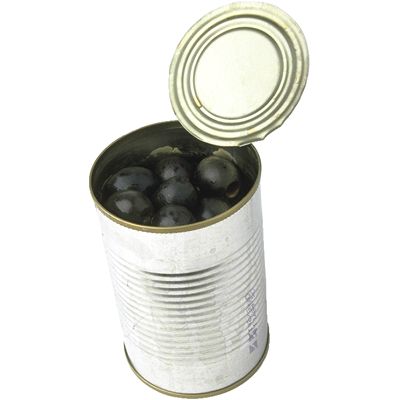 a metal container in which food or drink is preserved without airrecipiente de metal no qual alimentos ou bebidas são conservados sem ar; lata: a Coke canuma lata de Coca-Colacan of All we’ve got is a couple of cans of soup.Tudo que temos é um par de latas de sopa.2a special metal container that keeps the liquid inside it under pressure. The liquid is released as a spray when you press the buttonrecipiente de metal especial que mantém o líquido em seu interior sob pressão; ao pressionar o botão, o líquido é liberado como spraycan of a can of hairsprayuma lata de spray de cabelo3especially American English a metal container with a lid that can be removed, used for holding liquidrecipiente de metal com tampa removível, usado para conter líquido: Two large cans of paint ought to be enough.Duas latas grandes de tinta devem ser suficientes.4can of worms a very complicated situation that causes a lot of problems when you start to deal with itsituação muito complicada que causa muitos problemas quando você começa a lidar com ela: I just don’t know what to do – every solution I can think of would just open up a whole new can of worms.Simplesmente não sei o que fazer — toda solução que consigo pensar só abriria um novo emaranhado de problemas.5 in the can informalinformal a film that is in the can is complete and ready to be shownum filme "in the can" está concluído e pronto para ser exibido6the can informalinformal a)a prisonprisão b)American English a toiletbanheiro7cans [plural] informalinformal headphonesfones de ouvido → carry the can at carry1(26)
1a metal container in which food or drink is preserved without airrecipiente de metal no qual alimentos ou bebidas são conservados sem ar; lata: a Coke canuma lata de Coca-Colacan of All we’ve got is a couple of cans of soup.Tudo que temos é um par de latas de sopa.2a special metal container that keeps the liquid inside it under pressure. The liquid is released as a spray when you press the buttonrecipiente de metal especial que mantém o líquido em seu interior sob pressão; ao pressionar o botão, o líquido é liberado como spraycan of a can of hairsprayuma lata de spray de cabelo3especially American English a metal container with a lid that can be removed, used for holding liquidrecipiente de metal com tampa removível, usado para conter líquido: Two large cans of paint ought to be enough.Duas latas grandes de tinta devem ser suficientes.4can of worms a very complicated situation that causes a lot of problems when you start to deal with itsituação muito complicada que causa muitos problemas quando você começa a lidar com ela: I just don’t know what to do – every solution I can think of would just open up a whole new can of worms.Simplesmente não sei o que fazer — toda solução que consigo pensar só abriria um novo emaranhado de problemas.5 in the can informalinformal a film that is in the can is complete and ready to be shownum filme "in the can" está concluído e pronto para ser exibido6the can informalinformal a)a prisonprisão b)American English a toiletbanheiro7cans [plural] informalinformal headphonesfones de ouvido → carry the can at carry1(26)cancan3 verb (past tense and past participle canned, present participle canning) [transitive] American English 1to preserve food by putting it into a metal container from which all the air is removedconservar alimentos colocando-os em um recipiente de metal do qual todo o ar é removido; enlatar SYN tin British English2 informalinformal to dismiss someone from a jobdemitir alguém do emprego SYN sack3can it! spokenoral used to tell someone to stop talking or making a noiseusado para dizer a alguém para parar de falar ou fazer barulho
1to preserve food by putting it into a metal container from which all the air is removedconservar alimentos colocando-os em um recipiente de metal do qual todo o ar é removido; enlatar SYN tin British English2 informalinformal to dismiss someone from a jobdemitir alguém do emprego SYN sack3can it! spokenoral used to tell someone to stop talking or making a noiseusado para dizer a alguém para parar de falar ou fazer barulho